
Why Some Homes Sell Fast — and Others Sit on the Market

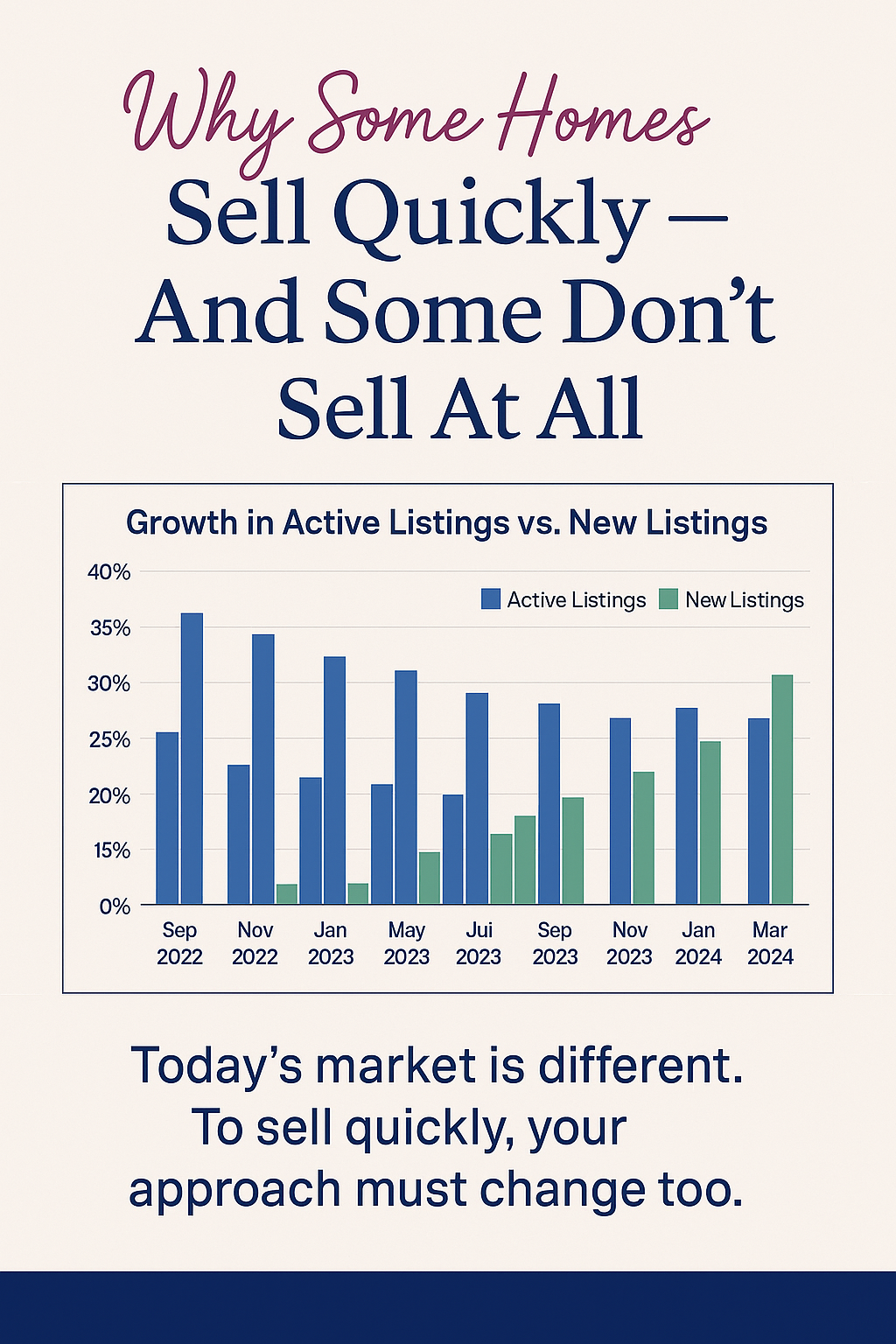
A few years ago, homes were flying off the market. With record-low inventory, nearly anything sold — and fast. But today’s real estate landscape looks different. Inventory is up nearly 20% compared to last year, and in many areas, supply has returned to pre-2020 levels.

So, what does that mean for sellers?
👉 Your home needs to stand out from the moment it hits the market.

🔍 Why Homes Sit on the Market

Most of today’s inventory growth comes from homes that are still active — the ones that haven’t sold yet — rather than new listings. According to Realtor.com, many of these homes are taking longer to sell, which tells us something important:
It’s not just about listing your home — it’s about how you list it.

Common reasons homes linger on the market include:

  • Pricing too high based on old market conditions
  • Skipping essential repairs or updates
  • Poor listing photos or staging
  • Limited showing availability
  • Weak marketing strategies

A few years ago, sellers could list “as-is” and still attract multiple offers. Not anymore. Today’s buyers are choosier, more informed, and have more options.

💡 What Makes a Home Sell Quickly

Selling quickly in this market isn’t about luck — it’s about strategy.
Here’s what successful sellers have in common:

  1. Pricing Realistically – A competitive price based on today’s market, not yesterday’s headlines.
  2. Curb Appeal and Condition – Small upgrades and clean presentation go a long way.
  3. Professional Marketing – High-quality photos, social media visibility, and listing optimization matter.
  4. Accessibility – The easier it is to show, the faster it sells.

Remember: your first few weeks on the market are crucial. That’s when your listing gets the most exposure online. Nail your presentation early, and buyers will act fast.

🤝 Why the Right Agent Makes All the Difference

Working with an experienced REALTOR® means having someone who understands local trends, buyer behavior, and pricing strategy. According to the National Association of REALTORS® (NAR), sellers who work with agents are twice as likely to get an offer within a month compared to those who list on their own.

An expert agent will:

  • Recommend the right listing price using local comparable sales
  • Help you prep and stage for maximum impact
  • Use professional marketing that reaches buyers where they’re searching

Bottom Line

Even with more homes for sale, your property can still sell quickly — if it’s priced right, presented beautifully, and marketed strategically.

If you’re thinking about selling in Hampton Roads, Chesapeake, or Newport News, let’s connect! I’ll help you position your home to attract attention — and offers — from day one.

If you’re looking to sell, call Michele! If you’re looking to acquire — I’m your hire!

Michele Salyer, REALTOR®
Salyer Wilmoth Homes | A Better Way Realty
📞 7575023671 | 🌐 www.salyerwilmothhomes.com

March 21, 2026

VA Appraisal Changes Could Make It Easier for Veteran Buyers This Spring

Reported VA appraisal changes starting May 1 could help make VA home purchases smoother for buyers, sellers, and agents.

Why This Matters for VA Buyers and Sellers

If you are a Veteran planning to buy a home, or a seller deciding whether to accept a VA-financed offer, there is an important update worth watching.

There has been a lot of discussion in the mortgage and real estate space about upcoming changes to certain VA appraisal-related requirements beginning May 1. If these updates work as expected, they could help reduce some of the issues that have historically slowed VA transactions down.

For many buyers and sellers, that could mean a smoother process, fewer repair-related concerns, and less stress between contract and closing.

Why VA Loans Have Sometimes Been Misunderstood

VA loans have long been one of the most valuable home financing benefits available to eligible Veterans and active-duty service members. They can offer major advantages, including no down payment in many cases and competitive financing options.

The challenge has not usually been the loan itself.

In many situations, the hesitation comes from the transaction process. Some sellers and listing agents have been wary of VA offers because of appraisal-related conditions that could trigger extra repairs, added negotiations, or delays.

That created a reputation that made some VA buyers feel like they were competing at a disadvantage, even when they were well-qualified and ready to move forward.

What Is Reportedly Changing on May 1

Industry professionals are reporting that several appraisal-related items may become less restrictive starting May 1.

These reported changes include:

  • peeling paint repair requirements being removed for homes built after 1978
  • less concern over compliance items related to sheds and outbuildings
  • removal of certain radon-related requirements for builders
  • elimination of oxygen depletion sensor and fireplace certification requirements

If these updates are applied as expected, they could remove some of the checklist-style issues that have frustrated buyers, sellers, and agents in past VA transactions.

What These Changes Could Mean for Veteran Buyers

For Veteran buyers, this may be a very positive shift.

A less restrictive appraisal process could mean fewer unexpected repair requests, less back-and-forth during negotiations, and a more efficient path to closing. That can make the entire homebuying experience feel more manageable, especially for buyers who are already balancing relocation timelines, financing steps, and moving logistics.

VA buyers have always had a strong loan product available to them. If the process becomes more practical and less cumbersome, that only strengthens the value of using the benefit you earned.

What This Could Mean for Sellers

Sellers may also benefit from these changes.

One reason some sellers hesitated when receiving a VA offer was the fear that the appraisal process would create extra work, delay closing, or lead to repair requests they were not expecting.

If some of those concerns are reduced, sellers may start viewing VA offers with more confidence. That could create a better experience for everyone involved and open the door for more Veteran buyers to compete successfully in the market.

For sellers, this is a reminder that a VA offer is not automatically a difficult offer. Often, the difference comes down to the strength of the buyer, the property, and the professionals guiding the transaction.

Why This Matters in Chesapeake and Coastal Virginia

In areas with a strong military presence, updates like this matter even more.

Many buyers in Chesapeake, Virginia Beach, Norfolk, and nearby communities use VA financing when purchasing a home. Because of that, changes that make VA transactions easier can have a real impact on the local market.

For buyers relocating to the area, especially military households and Veterans, a smoother VA process could make homeownership feel more accessible. For sellers, it may mean being more open to offers from qualified Veteran buyers.


In a market where timing, preparation, and confidence matter, reducing unnecessary friction is always a good thing.

The Right Team Still Makes a Difference

Even with positive changes, guidance still matters.

VA loans work best when buyers and sellers are supported by professionals who understand the process, communicate clearly, and know how to navigate timelines from start to finish. An experienced agent and lender can help set expectations early, avoid unnecessary surprises, and keep the transaction moving.


That is especially important in military-heavy markets where VA financing is common and buyers need clear advice they can trust.

Final Thoughts on the VA Appraisal Update


If you are a Veteran thinking about buying, a seller preparing to list, or a real estate professional guiding clients through the market, this is an update worth paying attention to.

VA loans have always been a powerful benefit. If these appraisal-related changes reduce some of the obstacles that have slowed deals in the past, that could create a better experience for buyers, sellers, agents, and builders alike.

If you are a Realtor or builder who has avoided VA offers because of appraisal headaches in the past, this may be the right time to reconsider. With the right team in place, VA loans can move quickly and smoothly. We close VA loans in 15 to 20 days, and the process works when you work with people who truly know it.

If you have questions, or if you have a Veteran client who is ready to buy, reach out. I am already having these conversations with my Veteran clients and would be glad to help.

Michele Salyer, REALTOR®
📞 757-502-3671
“If you are looking to sell, Call Michele! If you are looking to acquire, I’m your hire!”
Salyer Wilmoth Homes | A Better Way Realty
Equal Housing Opportunity


March 20, 2026

Is Chesapeake, VA Affordable for First-Time Homebuyers?

Chesapeake, VA can be affordable for first-time homebuyers depending on budget, financing, and housing choices.

Understanding Affordability in Chesapeake, VA

Affordability in Chesapeake, Virginia is relative—it depends on your income, loan type, and the kind of property you’re targeting. Compared to many coastal markets, Chesapeake often presents a middle-ground option: not the cheapest in the region, but typically more accessible than nearby high-demand coastal areas.

For a deeper look into the local lifestyle and why many buyers consider the area, you can explore what it’s like living in Chesapeake, Virginia.


For first-time homebuyers, this balance can be appealing. You’ll find a range of home types, from entry-level townhomes to newer construction communities, giving buyers flexibility when entering the market.

Housing Options for First-Time Buyers

One reason many first-time buyers consider Chesapeake is the variety of housing options available.

Common entry-level options include:

  • Townhomes and condominiums

  • Smaller single-family homes

  • Older homes with renovation potential

  • New construction with builder incentives

If you're still comparing what types of homes may fit your budget, exploring different housing options in Chesapeake or Virginia Beach can help you better understand what’s available in the market.


Townhomes and condos often come with lower purchase prices and less maintenance, making them a common starting point for buyers with limited budgets.

Cost of Living Considerations

Affordability isn’t just about the purchase price—it’s also about the overall cost of living.

In Chesapeake, buyers should consider:

  • Property taxes

  • Homeowners insurance

  • Transportation costs

  • Utilities and HOA fees

These recurring costs can significantly impact your monthly budget.


If you're planning your move, this moving checklist for Chesapeake home buyers can help you stay organized throughout the process.


Financing Options That Can Improve Affordability

Financing plays a major role in whether Chesapeake feels affordable.

First-time buyers often explore:

  • Conventional loans

  • FHA loans

  • VA loans

Understanding how financing impacts affordability is essential. This breakdown of how financing conditions shape the housing market provides helpful insight.

Before starting your home search, getting pre-approved before buying is one of the most important steps you can take.


For military buyers, this first-time military homebuyer guide in Chesapeake offers additional insights into financing benefits.

Is Chesapeake a Good Market for First-Time Buyers?

Chesapeake is often considered a practical market for first-time buyers because it offers diverse housing inventory and suburban-style living.

Many buyers also compare on-base vs off-base housing costs to determine what makes the most financial sense.

For those commuting, buying near Naval Station Norfolk is another factor that can influence affordability.

Additionally, many families explore PCS relocation to Chesapeake when considering the area.


However, affordability depends on timing, inventory, and competition.

Frequently Asked Questions


What is the least expensive type of house to build?

The least expensive type of house to build is typically a smaller, simple-structure home such as a ranch-style house or a basic rectangular layout. Homes with fewer corners, minimal customization, and standard materials generally cost less per square foot.


In many cases, however, buying an existing home—especially a townhome or older property—can be more cost-effective than building from scratch.

Are move-in ready homes worth it?

Move-in ready homes can be worth it for buyers who prioritize convenience and immediate occupancy. These homes often require little to no renovation, saving time and reducing unexpected repair costs.

However, they may come at a higher purchase price compared to homes that need updates. Buyers should weigh upfront costs versus long-term savings.


If you're deciding between move-in ready and fixer-upper options, exploring available listings can help you compare what fits your budget and timeline.

What decreases property value the most?

Several factors can decrease property value, including:

  • Poor location or nearby undesirable developments

  • Lack of maintenance or visible structural issues

  • Outdated interiors and major systems

  • Environmental risks such as flooding


Market conditions and buyer demand also play a role. Keeping a property well-maintained and updated can help preserve its value over time.

Are Chesapeake homes good quality?

Homes in Chesapeake vary in quality depending on the builder, age of the property, and level of maintenance. Many neighborhoods feature well-built homes, including newer developments designed with modern construction standards.

Buyers are encouraged to conduct inspections and research specific properties to ensure quality.


If you're exploring homes in Chesapeake, working with a local expert can help you identify properties that align with your expectations and standards.

How much income do you need to buy a home in Chesapeake, VA?

The income needed to buy a home in Chesapeake depends on factors such as home price, interest rate, down payment, and existing debts.

A general guideline is that your monthly housing costs should not exceed a certain percentage of your income, but this varies per buyer.


Reviewing current listings and speaking with a professional can help you better estimate what price range fits your financial situation.

If you're considering buying your first home in Chesapeake, understanding your options is the first step toward making a confident decision.

Michele Salyer, REALTOR®

📞 757-502-3671

🌐 www.salyerwilmothhomes.com

“If you are looking to sell, Call Michele! If you are looking to acquire, I’m your hire!”

Salyer Wilmoth Homes | A Better Way Realty

Equal Housing Opportunity
March 19, 2026

On Base vs Off Base Housing: Which Option Saves You More Money?


On-base housing offers predictability, while off-base housing may provide flexibility and long-term financial advantages depending on your situation.


Understanding On-Base Housing

On-base housing is typically provided through military housing programs and is often managed by privatized housing companies. For many service members, this option simplifies the relocation process.


When living on base, your Basic Allowance for Housing (BAH) is usually allocated directly toward housing costs, meaning you won’t see that money in your paycheck.


Key financial characteristics:

  • No out-of-pocket rent (in most cases)

  • Utilities and maintenance are often included

  • Limited unexpected housing expenses

  • No equity or long-term investment return

For those prioritizing convenience and cost predictability, on-base housing can be a straightforward option.


Understanding Off-Base Housing


Off-base housing involves renting or buying a home in the surrounding community. In this scenario, you receive your BAH and are responsible for managing your own housing expenses.

Key financial characteristics:

  • Ability to rent below BAH and keep the difference

  • Opportunity to build equity if purchasing a home

  • Greater control over location, home type, and lifestyle

  • Responsibility for utilities, maintenance, and repairs

For some military families, off-base housing creates opportunities to maximize their housing allowance and potentially build long-term wealth.


Comparing Costs: Which Saves More Money?

The answer depends on your priorities, financial goals, and local housing market conditions.

On-Base Housing May Save You More If:

  • You want predictable monthly expenses

  • You prefer minimal upfront costs

  • You want maintenance handled for you

  • You are staying short-term

Off-Base Housing May Save You More If:

  • You find housing below your BAH rate

  • You plan to stay long enough to build equity

  • You want to rent out or sell later (investment potential)

  • You are comfortable managing home-related expenses


In markets near major installations like Naval Station Norfolk, housing prices, rental demand, and inventory can all influence which option is more cost-effective.

Lifestyle Considerations Beyond Cost

While finances are important, housing decisions also involve lifestyle factors.

On-base living offers:

  • Close proximity to work

  • Built-in community with other military families

  • Access to base amenities

Off-base living offers:

  • More neighborhood and school options

  • Greater privacy and space

  • Flexibility in commute and environment


Balancing cost with lifestyle preferences is often key when making a housing decision.

Long-Term Financial Perspective

One major distinction between on-base and off-base housing is long-term financial impact.

  • On-base housing does not contribute to personal wealth accumulation.

  • Off-base homeownership may allow service members to build equity over time.

For military families who PCS frequently, some choose to keep properties as rental investments, creating additional income streams.


However, market conditions, interest rates, and relocation timelines should always be considered before making a purchase decision.


Frequently Asked Questions

Do you get free housing on base?

On-base housing is not technically “free.” Instead, your Basic Allowance for Housing (BAH) is typically used to cover the cost. In most cases, you won’t pay out of pocket, but you also won’t receive the BAH directly.


What is the Norfolk home grant?

The Norfolk home grant generally refers to local homebuyer assistance programs available in Norfolk, Virginia, which may provide financial aid for eligible buyers purchasing within the city.


Programs can vary based on funding availability, eligibility requirements, and property location.
🏡 If you’re exploring opportunities near Norfolk, it may help to review current programs and available homes that align with your goals.

What are the downsides of living on base?


Some potential downsides include limited housing choices, less privacy, and lack of opportunity to build equity. Additionally, availability may depend on rank, family size, and waiting lists.

Does the military pay for your house if you live off base?

The military provides BAH to help cover housing costs, but it does not directly pay your landlord or mortgage unless you are in on-base housing.


If you manage your housing expenses efficiently, you may be able to save part of your allowance.
📊 If you're considering off-base living, reviewing current listings and price ranges can help you understand what fits within your BAH.

Are houses cheap in Norfolk?

Housing affordability in Norfolk, Virginia can vary depending on the neighborhood, property type, and current market conditions.

Compared to some larger metropolitan areas, Norfolk may offer relatively more affordable options, including entry-level homes, townhomes, and investment properties. However, prices can differ significantly based on proximity to military bases, waterfront areas, and local amenities.


🏡 If you're considering buying in Norfolk, exploring available listings and comparing price ranges can help you determine what fits your budget and long-term goals.

If you're weighing your options between on-base and off-base housing, understanding your budget, goals, and local market conditions can make a significant difference.


🏡 Whether you're relocating, buying, or exploring your options, having the right guidance can help you make informed decisions.

Michele Salyer, REALTOR®
📞 757-502-3671
🌐 https://www.salyerwilmothhomes.com/
“If you are looking to sell, Call Michele! If you are looking to acquire, I’m your hire!”
Salyer Wilmoth Homes | A Better Way Realty
Equal Housing Opportunity

 

{ "@context": "https://schema.org", "@type": "BlogPosting", "headline": "On Base vs Off Base Housing: Which Option Saves You More Money?", "description": "Compare on-base vs off-base housing for military families. Learn how BAH works, costs, pros and cons, and which option may help you save more money.", "author": { "@type": "Person", "name": "Michele Salyer" }, "publisher": { "@type": "Organization", "name": "Salyer Wilmoth Homes | A Better Way Realty" }, "mainEntityOfPage": { "@type": "WebPage", "@id": "https://www.salyerwilmothhomes.com/on-base-vs-off-base-housing" }, "articleSection": "Military Relocation", "keywords": [ "on base vs off base housing", "military housing options", "BAH explained", "off base housing military", "on base housing pros and cons", "military relocation housing", "Norfolk VA housing military", "Chesapeake VA real estate military", "VA loan military housing", "PCS housing options" ], "datePublished": "2026-03-19", "dateModified": "2026-03-19" } { "@context": "https://schema.org", "@type": "FAQPage", "mainEntity": [ { "@type": "Question", "name": "Do you get free housing on base?", "acceptedAnswer": { "@type": "Answer", "text": "On-base housing is not technically free. Your Basic Allowance for Housing (BAH) is typically used to cover the cost. In most cases, you will not pay out of pocket, but you also will not receive the BAH directly." } }, { "@type": "Question", "name": "What is the Norfolk home grant?", "acceptedAnswer": { "@type": "Answer", "text": "The Norfolk home grant generally refers to local homebuyer assistance programs available in Norfolk, Virginia that may provide financial aid for eligible buyers purchasing within the city. Programs can vary based on funding availability, eligibility requirements, and property location." } }, { "@type": "Question", "name": "What are the downsides of living on base?", "acceptedAnswer": { "@type": "Answer", "text": "Some potential downsides include limited housing choices, less privacy, and lack of opportunity to build equity. Availability may also depend on rank, family size, and waiting lists." } }, { "@type": "Question", "name": "Does the military pay for your house if you live off base?", "acceptedAnswer": { "@type": "Answer", "text": "The military provides a Basic Allowance for Housing (BAH) to help cover housing costs, but it does not directly pay your landlord or mortgage unless you are in on-base housing. Service members are responsible for managing their own housing expenses." } }, { "@type": "Question", "name": "Are houses cheap in Norfolk?", "acceptedAnswer": { "@type": "Answer", "text": "Housing affordability in Norfolk, Virginia can vary depending on the neighborhood, property type, and current market conditions. Compared to some larger metropolitan areas, Norfolk may offer relatively more affordable options, but prices differ based on location, proximity to military bases, and amenities." } } ] }

March 13, 2026

What’s It Like Living in Chesapeake, Virginia?


Living in Chesapeake, Virginia offers a balance of suburban space, coastal access, and diverse housing options within commuting distance of major employment centers.


Why Many People Consider Living in Chesapeake, Virginia

Chesapeake, Virginia is one of the largest cities in the Hampton Roads region by land area, offering a mix of suburban neighborhoods, rural landscapes, and growing residential communities.

Many people exploring relocation to southeastern Virginia consider Chesapeake because it provides a quieter residential environment while still being connected to nearby cities such as Virginia Beach, Norfolk, and Portsmouth.

The city has continued to attract homebuyers who want access to coastal amenities, regional highways, and different types of housing options. Communities range from established neighborhoods with mature landscaping to newly built developments designed for modern lifestyles.


For individuals relocating for work, military assignments, or lifestyle changes, Chesapeake often appears on the list of cities worth exploring due to its location and residential variety. Military families also frequently research the area when preparing for relocation, and some begin by reading resources like this guide for first-time military home buyers in Chesapeake, VA.

Housing Options in Chesapeake

One reason many people explore living in Chesapeake is the variety of housing options available throughout the city.

Homebuyers may find:

  • Single-family homes with larger lot sizes

  • Townhomes with lower maintenance needs

  • Newly constructed communities with modern layouts

  • Established neighborhoods with mature trees and traditional architecture

Because Chesapeake covers a large geographic area, different parts of the city offer different living environments. Some communities provide suburban neighborhoods close to shopping and schools, while others offer a quieter atmosphere with more open space.


This variety allows buyers to explore housing that fits different lifestyle preferences and long-term goals.

Lifestyle and Community Environment

Many residents describe Chesapeake as having a more suburban and spacious feel compared with some of the more densely developed areas nearby.

Some lifestyle characteristics people often associate with the area include:

  • Access to parks, trails, and outdoor recreation

  • Proximity to coastal attractions and waterways

  • Community-focused neighborhoods

  • Convenient access to regional highways


Because of its location in southeastern Virginia, residents can reach beaches, historic areas, and employment centers across the region without living directly in a high-traffic urban core.

Cost of Living Considerations

The cost of living in Chesapeake can vary depending on housing type, neighborhood, and individual lifestyle choices.

Some factors that influence cost of living include:

  • Home prices or rental rates

  • Property taxes and insurance

  • Transportation and commuting distance

  • Household size and personal spending habits

Compared with many large metropolitan areas, some buyers find the region offers housing options across a range of price points. However, like many areas across the country, housing prices have changed over time due to market conditions, inventory levels, and regional demand.


For buyers considering relocation, researching housing availability and market trends can help provide a clearer picture of what living costs may look like.

Location and Regional Access

Chesapeake’s location allows residents to commute to several major employment hubs within the Hampton Roads region.

Many residents work in nearby cities including:

  • Norfolk

  • Virginia Beach

  • Portsmouth

  • Suffolk

Regional highways and bridges connect these cities, which is one reason the area attracts people looking for housing within driving distance of multiple job centers.


In addition, Chesapeake’s large geographic footprint means some neighborhoods offer quick access to major roads, while others provide a more quiet residential setting farther from busy corridors.

Frequently Asked Questions

What is the best area to live in Chesapeake, VA?

The best area to live in Chesapeake often depends on personal preferences such as commute distance, housing style, neighborhood environment, and budget.

Some buyers look for established neighborhoods with mature landscaping, while others explore newer developments offering modern homes and community amenities.

Because Chesapeake is geographically large, many people explore several communities before deciding which area best fits their lifestyle and housing needs.

Is it worth moving to Virginia?

For many people, Virginia offers a combination of coastal living, economic opportunities, and diverse communities.

Cities across the state provide different lifestyle options, from historic towns to suburban neighborhoods and coastal areas. Many individuals relocating to southeastern Virginia explore places like Chesapeake because of its residential variety and access to nearby cities.

If you are researching relocation options or planning a move, exploring available homes and neighborhoods can help you better understand what living in the area may look like.

Is Chesapeake, VA expensive to live?

Living costs in Chesapeake vary depending on housing choices, neighborhood location, and personal spending habits.

Housing is typically one of the largest factors affecting overall cost of living. Some areas may offer larger homes and more space, while others provide townhomes or newer developments with different price ranges.

If you are considering buying a home in Chesapeake, reviewing current listings and local housing trends can help you better understand available options in the market.

What are the negatives of living in Virginia?

Like any state, Virginia has factors that some residents consider challenges depending on personal preferences.

For example, people relocating to coastal regions may want to research topics such as:

  • Weather patterns and seasonal storms
  • Flood zones in certain coastal areas
  • Traffic during peak commuting hours

Understanding these considerations can help prospective residents make informed decisions when choosing where to live.

If you are evaluating whether Chesapeake or another nearby city fits your lifestyle, researching communities and housing options can provide helpful insights.

How much do you need to make to live comfortably in Chesapeake, VA?

The income needed to live comfortably in Chesapeake can vary based on household size, housing costs, transportation, and lifestyle preferences.

For many households, budgeting for housing expenses, utilities, transportation, and savings helps determine what level of income supports their desired lifestyle.

If you are exploring housing options or planning a move, reviewing available properties and speaking with a local real estate professional can provide useful guidance about current housing conditions and market trends.

If you're researching what it's like living in Chesapeake, Virginia and exploring housing options in the area, learning about neighborhoods and available homes can help you make a more informed decision.

Michele Salyer, REALTOR®
📞 757-502-3671
🌐 www.salyerwilmothhomes.com
“If you are looking to sell, Call Michele! If you are looking to acquire, I’m your hire!”
Salyer Wilmoth Homes | A Better Way Realty
Equal Housing Opportunity.

March 12, 2026

Living and Buying a Home Near Naval Station Norfolk in Norfolk, VA


Living in Norfolk, Virginia or nearby cities like Chesapeake offers homebuyers housing options within commuting distance of Naval Station Norfolk.

Living Near Naval Station Norfolk in Norfolk, Virginia

Many individuals relocating for military assignments or civilian employment connected to Naval Station Norfolk look for housing within a reasonable commuting distance of the base.

Because the installation is located in Norfolk, buyers often explore surrounding cities that provide additional housing choices. One of the cities frequently considered is Chesapeake, which is part of the Southside Hampton Roads region.

Chesapeake offers a variety of residential communities and housing types, allowing buyers to explore different home styles while remaining within driving distance of Naval Station Norfolk. 

Buying a Home Near Naval Station Norfolk

Buying a home near a large military installation can involve several practical considerations. Many buyers look at factors such as commuting distance, housing availability, and long-term flexibility when choosing where to purchase.

Within commuting distance of Naval Station Norfolk, buyers may find different property types including:

  • Single-family homes

  • Townhomes and condominiums

  • Newly built communities

  • Established neighborhoods with mature landscaping

Cities like Chesapeake, Virginia Beach, and Norfolk each offer different housing options, which is why many buyers compare several areas before making a decision.

Commuting to Naval Station Norfolk from Norfolk and Nearby Cities

For individuals who choose to live outside the immediate area of Naval Station Norfolk, commuting from nearby cities is common throughout the region.

Residents of Chesapeake, Virginia Beach, and other surrounding communities often travel to Norfolk for work.

Common commuting routes to the base may include:

  • Interstate 64

  • Interstate 264

  • Interstate 464

Travel times can vary depending on traffic conditions, time of day, and the specific starting location. Because the Hampton Roads region is connected by major highways, many residents live in neighboring cities while commuting to Naval Station Norfolk.

What Homebuyers Often Look for in Norfolk, Virginia

Buyers considering Norfolk often evaluate several lifestyle and housing factors when deciding whether the city fits their needs—especially when planning to live within commuting distance of Naval Station Norfolk.

Because Norfolk is both a coastal city and a major employment hub in the region, homebuyers frequently explore different neighborhoods and housing styles before making a decision.

Some common considerations include:

  • Availability of different home sizes and property types

  • Proximity to Naval Station Norfolk and other employment centers

  • Access to major commuting routes such as Interstate 64 and Interstate 264

  • Nearby amenities including parks, shopping districts, restaurants, and waterfront areas

Since Norfolk offers a mix of historic neighborhoods, waterfront areas, and residential communities, buyers may explore multiple parts of the city before identifying a location that aligns with their housing goals.

Some individuals also compare housing options in nearby cities like Chesapeake and Virginia Beach when evaluating properties within commuting distance of the naval base.

Frequently Asked Questions

What cities are close to Norfolk Naval Base?

Several cities surround Naval Station Norfolk, providing multiple housing options within commuting distance.

Some nearby cities include Norfolk, Chesapeake, Virginia Beach, Portsmouth, and Suffolk.

Because these cities are connected by major highways and bridges, many people working at Naval Station Norfolk choose to live throughout the Southside region.

Is Norfolk, VA cheap to live?

The cost of living in Norfolk can vary depending on factors such as housing type, neighborhood location, and current market conditions.

Buyers researching homes near Naval Station Norfolk often compare housing prices across nearby cities such as Chesapeake and Virginia Beach to understand what types of homes may fit their budget.

If you are exploring properties near the base, reviewing current listings can provide a clearer picture of the housing options available.

What is the best area to live in Norfolk, VA?

The best area to live in Norfolk depends on personal preferences such as commute distance, housing style, and lifestyle priorities.

Some buyers prefer neighborhoods closer to Naval Station Norfolk, while others explore nearby cities like Chesapeake or Virginia Beach for additional housing options.

Exploring listings and neighborhoods can help buyers determine which location aligns with their goals.

What is the safest part of Norfolk, VA?

Safety considerations can vary from person to person, and neighborhood conditions may change over time. Buyers researching housing in Norfolk often review publicly available information and community resources to better understand different areas.

Some individuals also compare neighborhoods in nearby cities such as Chesapeake and Virginia Beach while evaluating housing options near Naval Station Norfolk.

Is it better to live in Virginia Beach or Norfolk?

Choosing between Virginia Beach and Norfolk often depends on lifestyle preferences, commute considerations, and housing availability.

Norfolk offers closer proximity to Naval Station Norfolk, while Virginia Beach is known for its coastal communities and a wide range of residential neighborhoods.

Some buyers also explore Chesapeake because it provides additional housing options within commuting distance of both cities.

If you're considering living near Naval Station Norfolk and exploring homes in Chesapeake, reviewing available listings and neighborhoods can help you better understand the housing opportunities in the area.

Michele Salyer, REALTOR®
📞 757-502-3671
🌐 www.salyerwilmothhomes.com

“If you are looking to sell, Call Michele! If you are looking to acquire, I’m your hire!”

Salyer Wilmoth Homes | A Better Way Realty
Equal Housing Opportunity
 

March 11, 2026

First-Time Military Buyers Guide to Buying a Home in Chesapeake, VA

TL;DR

First-time military buyers relocating to Chesapeake, VA may be able to use VA loan benefits to purchase a home with flexible financing and less upfront cost than some traditional mortgage options. For eligible service members, veterans, and certain surviving spouses, VA loans can offer meaningful advantages such as no down payment requirement in many situations, no private mortgage insurance, and competitive loan terms depending on lender guidelines.

For buyers moving through a Permanent Change of Station, or PCS, understanding VA financing early can make the process feel more manageable. Chesapeake offers a variety of housing options, including single-family homes, townhomes, new construction communities, and established neighborhoods near major Hampton Roads military installations. The key is knowing how your loan, timeline, commute, and housing needs work together before you start seriously shopping.

Why VA Loans Matter for First-Time Military Buyers

Buying a home for the first time can feel overwhelming, especially when you are also relocating for military service. Between PCS timelines, changing duty stations, lender requirements, inspections, and home searches, there are a lot of moving parts.

For eligible military buyers, a VA loan can be a valuable financing tool. VA loans are designed to help service members, veterans, and certain surviving spouses purchase a primary residence with benefits that may make homeownership more accessible.

VA loans are commonly discussed because they may offer:

  • No down payment requirement in many situations
  • Competitive interest rates compared to some conventional loan options
  • No private mortgage insurance requirement
  • Flexible credit considerations, depending on lender guidelines
  • The ability to purchase several types of primary residences

For first-time buyers relocating to Chesapeake, understanding how VA financing works can help you make more confident decisions before you start touring homes.

Understanding VA Loans for First-Time Military Buyers

A VA loan is a mortgage backed by the U.S. Department of Veterans Affairs and issued through approved lenders. The VA does not usually lend money directly to buyers. Instead, it provides a guarantee to the lender, which can reduce risk and allow eligible buyers to access favorable loan terms.

For first-time military buyers, this can make a meaningful difference. The ability to purchase with little to no down payment in many cases may help buyers preserve savings for moving costs, inspections, furniture, repairs, or emergency funds after closing.

However, buyers should still understand the full financial picture. Even with VA financing, there may still be closing costs, inspections, appraisal requirements, funding fees if applicable, insurance costs, and other expenses to plan for.

A strong first step is speaking with a lender familiar with VA loans and military relocation timelines. Pre-approval can help you understand your estimated budget before you begin comparing homes in Chesapeake.

Why Military Buyers Explore Chesapeake, Virginia

Chesapeake is one of the cities many military buyers consider when relocating to the Hampton Roads region. Its residential neighborhoods, housing variety, and access to major roadways make it a practical option for buyers who want to compare lifestyle, commute, and affordability.

Military buyers often evaluate several nearby cities before choosing where to purchase. Chesapeake may appear on the shortlist because it offers:

  • Established residential neighborhoods
  • Single-family homes and townhomes
  • New construction communities
  • Access to major routes throughout Hampton Roads
  • A more suburban feel in many areas
  • Housing options that may fit a range of budgets and timelines

For buyers relocating through a PCS move, commute is especially important. Chesapeake can provide access to multiple regional employment centers and military installations, but actual drive times can vary depending on the neighborhood, traffic patterns, bridge-tunnel routes, and duty station.

If you are preparing for a relocation, you can also read our detailed guide on why many military families consider Chesapeake during a PCS move.

Housing Options First-Time Military Buyers Can Explore in Chesapeake

When relocating to Chesapeake, first-time military buyers often explore different types of homes based on budget, commute, maintenance preferences, and long-term plans.

Single-Family Homes

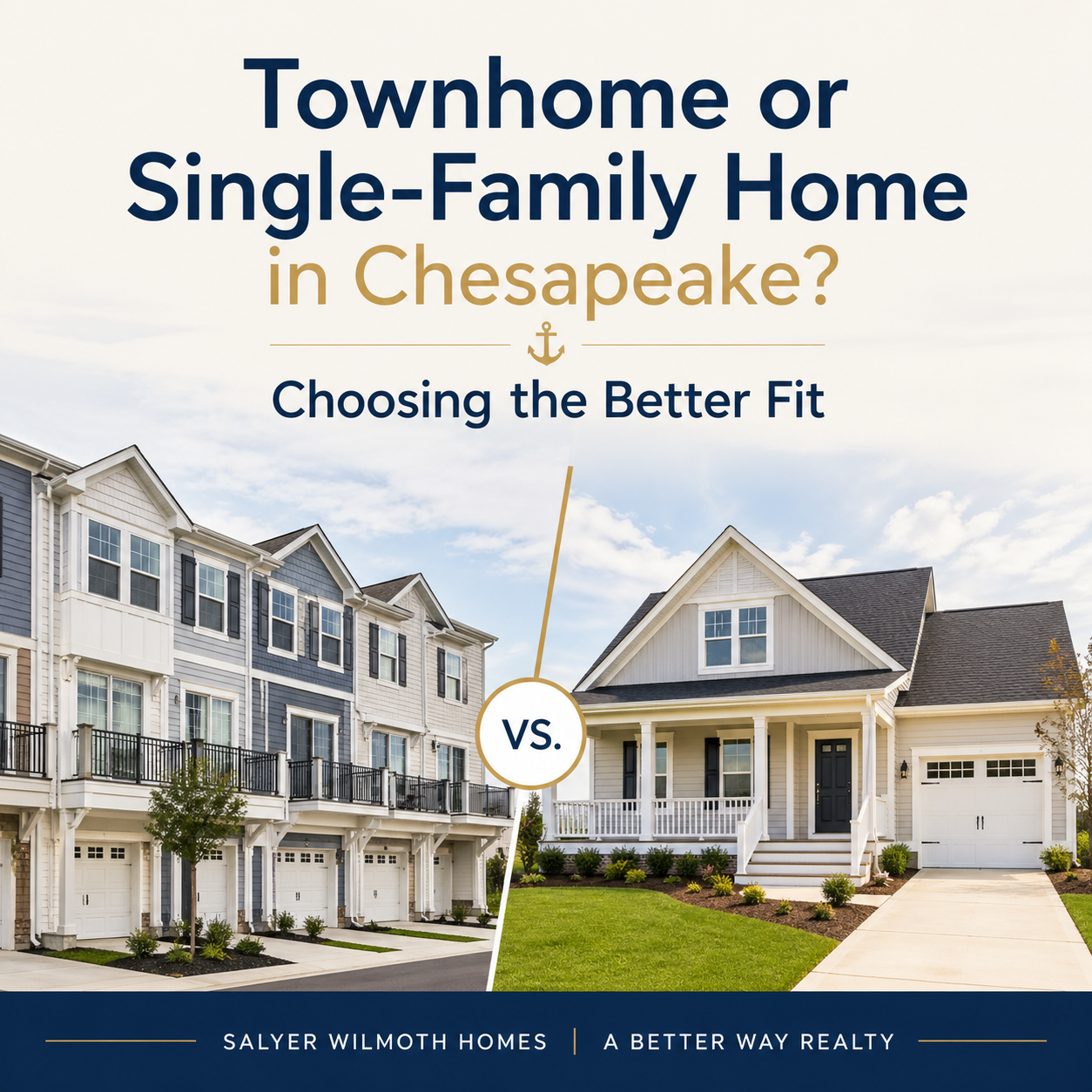
Single-family homes are a common choice for military buyers who want more space, a yard, garage parking, or flexibility for family needs. These homes can be found in both established neighborhoods and newer communities throughout Chesapeake.

Single-family homes may appeal to buyers who want:

  • More privacy
  • Outdoor space
  • Room for a home office
  • Space for children, pets, or guests
  • Long-term resale appeal
  • More flexibility than attached housing

Townhomes

Townhomes can be a strong option for buyers who want more space than a condo but less exterior maintenance than a traditional single-family home. Some townhome communities may offer amenities, exterior maintenance, or convenient access to shopping and commuter routes.

Townhomes may work well for military buyers who want:

  • Lower maintenance responsibilities
  • Attached garage options
  • Practical layouts
  • Community amenities
  • A balance between space and convenience

Before purchasing a townhome, buyers should review any HOA fees, maintenance responsibilities, parking rules, and community guidelines.

New Construction Communities

New construction homes can be appealing to relocating buyers who want modern layouts, newer systems, and fewer immediate repair concerns. Some buyers also appreciate the option to select finishes or benefit from builder incentives, depending on the community and construction timeline.

However, military buyers should pay close attention to timing. PCS schedules can be tight, and construction delays may affect move-in plans.

Important questions to ask include:

  • When is the estimated completion date?
  • What features are included versus upgrades?
  • Are there builder incentives?
  • What are the HOA fees?
  • Are inspections allowed during construction?
  • What happens if the completion date changes?

Established Residential Neighborhoods

Many buyers also consider established Chesapeake neighborhoods because they may offer mature landscaping, larger lots in some areas, and a more settled community feel.

Established neighborhoods may appeal to buyers who want:

  • Mature trees and established streets
  • Existing community character
  • Homes with more traditional layouts
  • Potentially larger yards
  • Easier comparison of resale history

The right choice depends on whether you prefer newer finishes, established charm, lower maintenance, outdoor space, or commute convenience.

To better compare property types, buyers can also explore our guide to housing options in Chesapeake and Virginia Beach.

What Military Buyers Should Consider Before Using a VA Loan

VA financing can be helpful, but buyers should still evaluate the home and purchase carefully. The right home should fit both the loan requirements and the reality of your daily life.

Important considerations include:

  • Whether the home will be your primary residence
  • Whether the property can meet VA appraisal standards
  • Your estimated monthly payment
  • Closing costs and possible VA funding fee
  • Property taxes and insurance
  • HOA or condo fees, if applicable
  • Flood insurance requirements, if applicable
  • Commute time to your duty station
  • Potential resale if you receive new orders later

The best home is not just the one that fits the loan. It should also fit your timeline, lifestyle, and long-term plans.

Why Pre-Approval Matters During a PCS Move

For first-time military buyers, getting pre-approved early can make the home search much smoother. Pre-approval helps you understand your purchasing power, estimated payment, and loan requirements before you start making offers.

This is especially important during a PCS move because time may be limited. If you wait too long to speak with a lender, you may feel rushed when the right home appears.

A VA loan pre-approval can help you:

  • Understand your realistic budget
  • Identify potential loan conditions early
  • Shop with more confidence
  • Strengthen your offer
  • Avoid delays after finding a home
  • Coordinate your timeline with relocation needs

The sooner you understand your financing, the easier it is to compare homes clearly.

Once your financing is in place, it also helps to understand how first-time military buyers can strengthen their offer when using a VA loan, especially in competitive situations.

Avoid Letting a PCS Timeline Rush the Wrong Purchase

A PCS move can create pressure to make decisions quickly. That pressure is understandable, especially when you are trying to coordinate orders, travel, housing, family needs, and closing timelines all at once.

However, buying too fast can lead to regrets if you do not fully evaluate commute routes, neighborhood fit, maintenance needs, property condition, or resale potential.

Military buyers should try to balance urgency with strategy. That means knowing your must-haves, understanding your financing, comparing neighborhoods carefully, and avoiding the temptation to choose a home simply because it is available.

Because PCS timelines can move quickly, it is also helpful to understand what can go wrong when buyers rush a home purchase too fast.

Working With Local Guidance Matters

Military relocation is not just about finding a house. It is about coordinating a move, understanding the area, evaluating commute routes, and making a smart decision under a timeline.

A local real estate professional can help you:

  • Compare Chesapeake neighborhoods
  • Understand local housing options
  • Evaluate commute considerations
  • Coordinate virtual or in-person tours
  • Review VA loan property considerations
  • Navigate offers, inspections, and timelines
  • Understand how the local market affects your strategy

For relocating buyers, local context can help fill the gap between what a listing says online and what daily life may actually feel like once you move in.

FAQs About VA Loans and Military Relocation to Chesapeake

1. Does the military pay for you to relocate during a PCS move?

In many cases, service members receive relocation assistance during a Permanent Change of Station, or PCS, move. The military may cover certain expenses such as transportation of household goods, travel costs, and temporary lodging depending on the orders and circumstances.

Relocation benefits can vary, so service members should review PCS documentation and coordinate with the installation transportation office to confirm which expenses may be covered.

2. How many active military bases are located in Virginia?

Virginia has one of the largest military presences in the United States, especially in the Hampton Roads region. Well-known installations in the area include Naval Station Norfolk, Naval Air Station Oceana, Joint Base Langley-Eustis, and Naval Support Activity Hampton Roads.

Because of this strong military presence, many service members relocating to the region explore housing options in Chesapeake, Virginia Beach, Norfolk, and nearby communities.

3. Is Chesapeake, VA a good place to live for military buyers?

Chesapeake is often considered by military buyers because of its residential communities, variety of housing options, and access to regional roadways. Buyers may compare Chesapeake with nearby cities based on commute time, housing style, budget, neighborhood feel, and proximity to military installations.

The best fit depends on your duty station, lifestyle needs, and long-term plans.

4. How long does the VA loan home buying process take?

The VA loan home buying process can vary depending on the lender, property, appraisal timeline, inspections, and market conditions. In many cases, the timeline from accepted offer to closing may be around 30 to 45 days, but it can differ based on the transaction.

Because PCS timelines can be tight, military buyers often benefit from starting pre-approval early and working with professionals familiar with relocation deadlines.

5. What types of homes can be purchased using a VA loan?

VA loans can typically be used to purchase primary residences, including single-family homes, townhomes, certain condominiums, and some new construction properties. The property must meet VA appraisal and safety standards before financing can be approved.

Military buyers relocating to Chesapeake should review available housing options, loan requirements, and market conditions to determine which property type best fits their needs.

Final Thoughts

For first-time military buyers relocating to Chesapeake, VA, a VA loan can be a powerful tool for purchasing a home with flexible financing. However, the loan is only one part of the decision.

Buyers should also consider commute routes, housing style, neighborhood fit, monthly costs, flood considerations, resale potential, and how the home supports their day-to-day life during and after relocation.

With the right preparation and local guidance, military buyers can move through the process with more clarity and confidence.

Thinking About Buying a Home in Chesapeake?

If you are preparing for a PCS move or considering buying a home in Chesapeake, exploring available listings and understanding the local market can help make the transition easier.

Let’s connect so you can compare neighborhoods, understand your options, and move forward with a plan that fits your relocation timeline and goals.

Michele Salyer, REALTOR®
📞 757-502-3671
🌐 www.salyerwilmothhomes.com

“If you are looking to sell, Call Michele! If you are looking to acquire, I’m your hire!”

Salyer Wilmoth Homes | Atlantic Sotheby’s International Realty
Equal Housing Opportunity
```html

March 10, 2026

Why Many Military Families Consider Chesapeake, VA During a Permanent Change of Station (PCS)

TL;DR

Chesapeake, VA is a popular area for military families relocating through PCS because it offers a mix of housing options, convenient access to major commuting routes, and a balance of suburban living with nearby outdoor recreation. Buyers often explore Chesapeake for its variety of home styles, newer residential communities, and flexibility for different budgets, timelines, and long-term plans. Whether a family is considering renting first, buying before arrival, or comparing neighborhoods based on commute and lifestyle, Chesapeake gives relocating households several practical options to consider during a PCS move.

Why Military Families Explore Chesapeake, VA for PCS Relocation

A Permanent Change of Station (PCS) often requires service members and their families to quickly research housing options, commute routes, and local communities before arriving at their new duty station.

For many relocating households, Chesapeake, Virginia becomes one of the cities they explore while evaluating where to live in the region. The city offers a combination of residential neighborhoods, access to regional road networks, and a variety of home styles.

Military buyers frequently compare multiple nearby areas before making a decision. During that process, Chesapeake often appears on the shortlist because it offers housing options that can accommodate different relocation timelines and lifestyle preferences.

Variety of Housing Options

One reason relocating families often explore Chesapeake real estate is the range of housing types available throughout the city.

Buyers and renters may find:

  • Single-family homes with larger lots

  • Townhomes with lower maintenance requirements

  • Newly built communities with modern floor plans

  • Established neighborhoods with mature landscaping

Because PCS assignments can vary in length, having a variety of housing options allows families to explore properties that match their timeline, budget, and long-term plans.

Access to Major Commuting Routes

Chesapeake is connected to several major highways and regional transportation routes, which can make it easier to travel throughout the area.

Military families relocating through PCS often evaluate commute routes carefully when searching for housing. Depending on the location of their duty station, proximity to highways and major roadways can be an important factor in deciding where to live.

Buyers relocating from out of state often review commute maps, traffic patterns, and neighborhood access points before narrowing down their home search.

A Balance Between Suburban Living and Outdoor Recreation

Another reason many relocating households consider Chesapeake is the combination of suburban neighborhoods and outdoor recreation opportunities.

Residents often have access to:

  • Local parks and nature areas

  • Walking and biking trails

  • Waterways and boating access

  • Nearby coastal destinations

For military families adjusting to a new duty station, access to outdoor spaces and everyday amenities can play an important role in choosing where to live.

Growing Residential Communities

Chesapeake continues to expand with new residential developments and housing communities. Some relocating buyers explore these neighborhoods because newer homes may include modern layouts, energy-efficient features, and updated construction standards.

Newer communities may offer:

  • Contemporary home designs

  • Updated building materials and systems

  • Planned residential developments

  • Recently built neighborhoods with modern infrastructure

For buyers relocating during a PCS move, exploring both established and newer communities can help identify the best housing fit.

Frequently Asked Questions About PCS Relocation to Chesapeake, VA

What are some neighborhoods in Chesapeake, VA that military families often explore when relocating?

Military families relocating through a Permanent Change of Station (PCS) often explore a variety of neighborhoods throughout Chesapeake depending on housing availability, commute preferences, and property types.

Buyers commonly review multiple areas across the city to compare home styles, neighborhood amenities, and travel routes. Because each household has different priorities, many relocating families choose to explore several communities before deciding where to live.

What public school options are available in Chesapeake, VA for relocating military families?

Chesapeake is served by Chesapeake Public Schools, which includes a range of elementary, middle, and high schools throughout the city.

Families relocating through PCS often research school zoning areas, academic programs, and district information when evaluating where to live. School boundaries and enrollment policies may change, so reviewing official school district resources can help families obtain the most current information.


If you are relocating and exploring homes in Chesapeake, reviewing housing options in areas that align with your priorities can help narrow down your search.

What short-term housing options are available in Chesapeake for incoming military personnel?

Some military members relocating to Chesapeake explore short-term housing options while they search for a long-term home.

Temporary housing solutions may include:

  • Furnished apartments

  • Short-term rental homes

  • Extended-stay accommodations

  • Month-to-month lease agreements

These options can provide flexibility during a PCS move while families explore neighborhoods and available housing. If you’re preparing for relocation, reviewing current housing availability early can help you plan your transition more smoothly.

Should military families rent or buy during a PCS assignment?

The decision to rent or buy during a PCS relocation depends on several factors, including assignment length, financial goals, and housing market conditions.

Some military families choose to rent initially while they become familiar with the Chesapeake area. Others consider purchasing a home if they anticipate remaining in the region for several years.

Understanding your relocation timeline and housing goals can help determine which option works best. If you’re considering buying during a PCS move, reviewing available homes early can help you prepare before arriving in the area.

Can you buy a home in Chesapeake before arriving for a PCS relocation?

Yes, many military buyers purchase homes remotely before arriving at their new duty station.

Virtual tours, video walkthroughs, digital paperwork, and remote communication with a local real estate professional make it possible to complete much of the home-buying process while relocating from another state.

If you're preparing for a PCS move to Chesapeake, working with a local real estate professional familiar with military relocation can help coordinate showings, inspections, and closing timelines.

Michele Salyer, REALTOR®
📞 757-502-3671
🌐 www.salyerwilmothhomes.com
“If you are looking to sell, Call Michele! If you are looking to acquire, I’m your hire!”
Salyer Wilmoth Homes | A Better Way Realty
Equal Housing Opportunity.

March 9, 2026

How Financing Conditions Shape the Chesapeake and Virginia Beach Housing Market

TL;DR

The Bottom Line: Financing factors like mortgage rates and VA loan availability directly dictate buyer power and inventory levels in the Hampton Roads real estate market.

The housing market is shaped by many moving parts, but one of the most influential factors is financing conditions.

Mortgage rates, lending standards, and available loan programs all play a significant role in determining how buyers enter the market and how sellers position their homes. When financing conditions shift, the ripple effects can be felt across the entire housing landscape.

For buyers and sellers in Chesapeake, Virginia Beach, and the greater Hampton Roads region, understanding these financial dynamics can provide valuable clarity. Navigating these changes is often easier with the guidance of a local real estate professional who monitors market conditions daily and helps translate complex trends into practical decisions.

Understanding Financing Conditions in Real Estate

Financing conditions refer to the cost and accessibility of mortgage loans used to purchase homes.

They typically include factors such as:

  • Mortgage interest rates

  • Loan qualification requirements

  • Down payment expectations

  • Credit score guidelines

  • Availability of specialized loan programs

When financing is more accessible, more buyers are able to participate in the housing market. When lending standards tighten or borrowing costs increase, some buyers may take more time to evaluate their options.

Real estate professionals closely monitor these trends because they influence both buyer activity and overall market movement.

How Mortgage Rates Influence Buyer Demand

Mortgage rates are one of the most visible components of financing conditions.

Even modest changes in interest rates can affect monthly payments, which in turn influences how much home a buyer may comfortably afford.

When mortgage rates are lower:

  • More buyers may enter the market

  • Purchasing power increases

  • Competition for homes may rise

When rates increase:

  • Buyers may adjust budgets

  • Some may wait for different market conditions

  • Demand may shift across different price ranges

In markets like Chesapeake and Virginia Beach, where relocation and military movement are common, housing activity often remains steady despite national fluctuations. Experienced local agents help buyers interpret these changes and adjust their strategies accordingly.

The Relationship Between Financing Conditions and Home Prices

Financing conditions can also influence home price trends.

When financing becomes more favorable, buyer demand often increases, which can create stronger competition for available homes.

When borrowing costs rise, buyers may become more selective, and the pace of price growth may stabilize.

However, real estate markets are influenced by many factors beyond financing, including:

  • Local job growth

  • Population movement

  • Housing inventory

  • Community development

A knowledgeable real estate professional can help interpret these broader factors to give buyers and sellers a more complete understanding of the market.

Loan Programs and Their Role in Market Accessibility

Another important component of financing conditions is the availability of loan programs designed to support different types of buyers.

Common financing options include:

  • Conventional loans

  • FHA loans

  • VA loans

  • First-time homebuyer assistance programs

In the Hampton Roads region, VA loans play a particularly important role due to the area's strong military presence.

These programs can provide flexible options that help buyers explore homeownership with different financial pathways.

Real estate agents often collaborate closely with lending professionals to ensure buyers understand the financing options that may be available to them.

Financing Conditions and Housing Inventory

Financing trends don’t only affect buyers—they also influence homeowners who may be considering selling.

When mortgage rates rise, some homeowners may hesitate to move if they currently hold a lower interest rate on their existing home loan. This can reduce the number of homes listed for sale, which affects overall inventory levels.

In areas like Chesapeake and Virginia Beach, housing inventory is shaped by several factors, including:

  • Interest rate changes

  • Local economic conditions

  • Military relocations

  • New construction development

Local real estate professionals monitor these patterns closely to help sellers determine the best timing and pricing strategies for their homes.

What Buyers Should Consider in Today’s Financing Environment

For buyers entering the housing market, financing conditions highlight the importance of preparation.

Many buyers benefit from:

  • Understanding their financing options early

  • Obtaining mortgage pre-approval

  • Monitoring interest rate trends

  • Evaluating long-term housing goals

A real estate agent can help guide buyers through each step of the process, from understanding local market conditions to identifying homes that align with their goals and financial comfort.

What Sellers Should Know About Financing Trends

For homeowners considering selling, financing conditions often influence buyer activity and market momentum.

When borrowing becomes more accessible, more buyers may actively search for homes. Even when financing costs increase, well-priced homes in desirable locations often continue to attract interest.

An experienced local agent can help sellers evaluate market conditions, develop effective pricing strategies, and position their home to stand out in the current environment.

Frequently Asked Questions About Financing and the Housing Market

How do interest rates affect home affordability?

Interest rates influence the monthly cost of borrowing money for a home loan. Higher interest rates increase monthly payments for the same loan amount, while lower rates may allow buyers to qualify for a larger purchase price with a similar monthly payment.

Why do mortgage rates influence housing demand?

Mortgage rates impact how affordable homes are for buyers. When rates decrease, borrowing becomes less expensive, which may encourage more buyers to enter the market.

Can people still buy homes when mortgage rates are higher?

Yes. Buyers continue purchasing homes in many different interest rate environments. Personal financial readiness, housing needs, and long-term plans are often more important factors in the decision to buy.

Do financing conditions affect home prices?

Financing conditions can influence home prices by affecting buyer demand. When financing is widely accessible, competition for homes may increase. When borrowing costs rise, price growth may become more gradual.

How do loan programs help buyers enter the housing market?


Loan programs such as FHA, VA, and first-time buyer programs can offer flexible qualification guidelines and different down payment options, helping expand access to homeownership for many buyers.


Navigating the Housing Market with the Right Guidance

The housing market is constantly evolving, and financing conditions are one of the key forces shaping buyer behavior, home affordability, and overall market activity.

Understanding how mortgage rates, loan programs, and lending standards influence the market can help both buyers and sellers make more informed decisions about their next move.

For those exploring homes in Chesapeake, Virginia Beach, and the greater Hampton Roads area, having a knowledgeable local real estate professional can make navigating these changes much clearer. From interpreting market trends to helping you evaluate opportunities in today’s housing landscape, expert guidance can help turn complex market conditions into confident decisions.

If you're thinking about buying, selling, or simply want to better understand the local market, working with a trusted local REALTOR® can provide valuable insight and support throughout the process.

Don’t let market complexity stall your dreams. Whether you are utilizing a VA loan or navigating a move-up sale, expert guidance makes all the difference. Reach out to Michele Salyer today for a personalized Market Analysis or Buyer Strategy


Michele Salyer, REALTOR®

Salyer Wilmoth Homes Powered by A Better Way Realty
📞 757-502-3671
🌐 www.salyerwilmothhomes.com

“If you are looking to sell, Call Michele! If you are looking to acquire, I’m your hire!”

Salyer Wilmoth Homes | A Better Way Realty
Equal Housing Opportunity.

Posted in Market Updates
March 6, 2026

Exploring Housing Options for Buyers Relocating to Chesapeake or Virginia Beach

TL;DR

Relocating to Chesapeake or Virginia Beach comes with exciting opportunities, but it also requires thoughtful planning. Both cities offer a wide range of housing options, from single-family homes and townhomes to new construction communities, waterfront properties, and low-maintenance condos.

The best choice depends on your lifestyle, commute, budget, maintenance preferences, and long-term goals. Virginia Beach may appeal to buyers who want coastal access, beach lifestyle, and city conveniences, while Chesapeake often attracts buyers looking for quieter suburban neighborhoods, larger lots, and more residential space.

Whether you are moving for work, military relocation, family needs, or a lifestyle change, understanding the local housing options can help you make a more confident decision before you buy.

Why Housing Options Matter When Relocating

When you are moving to a new area, choosing the right home is about more than square footage, price, or bedroom count. You are also choosing a daily routine.

Your home affects your commute, your access to shopping and recreation, your maintenance responsibilities, your neighborhood feel, and how easily your lifestyle fits into the area.

For buyers relocating to Chesapeake or Virginia Beach, this is especially important because both cities offer very different housing styles and neighborhood experiences. A home that looks perfect online may not be the best fit if the commute, location, flood considerations, or daily lifestyle do not match your needs.

That is why it helps to understand the broader housing options before narrowing your search.

Understanding Chesapeake and Virginia Beach

Chesapeake and Virginia Beach are both part of the Hampton Roads region, but they offer different living experiences.

Virginia Beach is known for its coastal lifestyle, beach access, established neighborhoods, town center areas, and a mix of suburban, waterfront, and resort-adjacent communities. Buyers may be drawn to Virginia Beach for outdoor recreation, restaurants, shopping, military proximity, and access to the Oceanfront, Chesapeake Bay, or Sandbridge.

Chesapeake often appeals to buyers who want a quieter suburban feel, more residential neighborhoods, larger lots in certain areas, and access to parks, schools, shopping, and commuter routes. Some parts of Chesapeake feel more suburban and established, while others offer newer construction or more space.

Because both cities are geographically large, relocating buyers should think carefully about commute routes, neighborhood feel, budget, and daily convenience.

Popular Housing Options for Relocating Buyers

1. Single-Family Homes

Single-family homes are one of the most common housing options in both Chesapeake and Virginia Beach. These homes typically offer more privacy, more interior space, a yard, parking, and flexibility for long-term living.

Relocating buyers often like single-family homes because they may provide:

  • More outdoor space
  • Room for a home office
  • Garage or driveway parking
  • Space for children, pets, or guests
  • More privacy than attached housing
  • Long-term resale appeal

Single-family homes can be found in established neighborhoods, newer subdivisions, waterfront areas, and suburban communities throughout both cities.

This option may be a strong fit if you want more independence, space, and flexibility.

2. Townhomes

Townhomes can be a practical option for buyers who want more space than a condo but less exterior maintenance than a single-family home.

Depending on the community, townhomes may offer:

  • Attached garages
  • Small yards or patios
  • Community amenities
  • Lower maintenance responsibilities
  • Convenient locations near shopping, restaurants, or commuter routes

Townhomes can be especially appealing for relocating buyers who want a balance between space and convenience. They may also work well for buyers who travel often, have busy work schedules, or prefer not to manage a large yard.

Before buying, it is important to review association fees, maintenance responsibilities, parking rules, and community guidelines.

3. Condominiums

Condos are often attractive to buyers who want low-maintenance living. In Virginia Beach, some condo options may be near the Oceanfront, Chesapeake Bay, Town Center, or other lifestyle-focused areas. In Chesapeake, condo options may appeal to buyers looking for convenience and simpler upkeep.

Condos may be a good fit for buyers who want:

  • Lower exterior maintenance
  • Lock-and-leave convenience
  • Access to shared amenities
  • Proximity to dining, shopping, or recreation
  • A smaller property footprint

However, condo buyers should carefully review monthly fees, association rules, insurance responsibilities, financing requirements, and rental restrictions if applicable.

For relocating buyers, condos can be convenient, but the details matter.

4. New Construction Homes

New construction communities continue to attract buyers in both Chesapeake and Virginia Beach. These homes often offer modern layouts, updated finishes, energy-efficient features, and fewer immediate repair concerns.

New construction may appeal to buyers who want:

  • A move-in-ready home
  • Modern floor plans
  • Updated kitchens and bathrooms
  • Energy-efficient systems
  • Builder warranties
  • Customization options, depending on the stage of construction

However, relocating buyers should also understand the full picture. Builder timelines can change, some communities are still developing, and upgrade costs may add up quickly.

Before choosing new construction, buyers should ask about:

  • Estimated completion dates
  • Included features versus upgrades
  • Builder incentives
  • HOA fees and community rules
  • Future development plans
  • Lot premiums
  • Inspection options

New construction can be a great fit, but it is important to compare the total cost and timeline against resale homes.

5. Waterfront and Coastal Properties

Waterfront and coastal properties are a major draw in Coastal Virginia, especially in Virginia Beach. Buyers may find homes near the ocean, bay, canals, rivers, lakes, or marsh areas.

These homes can offer beautiful views and a strong lifestyle appeal, but they also require careful evaluation.

Important factors include:

  • Flood zones
  • Elevation
  • Flood insurance requirements
  • Storm exposure
  • Drainage
  • Exterior maintenance
  • Bulkheads, docks, or waterfront structures
  • Long-term repair costs

For some buyers, waterfront living is worth the added considerations. For others, being near the water without owning directly on the water may be a better fit.

A local real estate professional can help you understand the difference between lifestyle appeal and long-term ownership responsibility.

Factors Relocating Buyers Should Consider

Commute and Transportation

Commute time can vary significantly depending on where you live and where you work. Buyers moving to the area may need to consider proximity to I-64, military installations, medical centers, downtown Norfolk, shipyards, schools, or other employment hubs.

A short distance on the map does not always mean a short commute. Traffic patterns, bridge-tunnel routes, school zones, and peak travel times can make a major difference.

Lifestyle and Daily Convenience

Think about how you want your day-to-day life to feel. Do you want to be close to the beach, parks, shopping, restaurants, schools, or military bases? Do you prefer a quiet neighborhood or a more active area?

The right home should support your daily rhythm, not just your wish list.

Budget and Affordability

Home prices can vary widely across Chesapeake and Virginia Beach depending on location, property type, condition, age, amenities, and proximity to the water.

Relocating buyers should also consider:

  • Property taxes
  • HOA or condo fees
  • Insurance costs
  • Flood insurance, if applicable
  • Maintenance costs
  • Utility costs
  • Commuting expenses

The monthly payment is only one part of the financial picture.

Flood Zones and Coastal Considerations

Because this is Coastal Virginia, flood zones and stormwater considerations should be part of the conversation. Not every property has the same risk, and flood factors can vary by neighborhood or even by street.

Buyers should review flood zone information, insurance requirements, elevation, drainage, and any history of water-related issues when evaluating a home.

Future Resale Potential

Even if you plan to stay long term, it is wise to consider resale. Military relocation, job changes, family needs, and lifestyle shifts can happen.

Factors that may affect resale include location, condition, layout, school access, commute routes, flood risk, neighborhood demand, and property type.

Can You Buy a Home Remotely?

Yes, many relocating buyers purchase homes in Chesapeake or Virginia Beach before they physically move to the area. With virtual tours, video walkthroughs, digital documents, and local guidance, remote buying can be done successfully.

However, remote buyers need strong communication and clear expectations. Photos alone do not always show traffic noise, neighborhood feel, layout flow, natural light, drainage, or property condition.

A local agent can help provide context beyond the listing, including video walkthroughs, neighborhood insight, commute considerations, and red flags that may not be obvious online.

How a Local Real Estate Professional Can Help

Relocating to a new area can feel overwhelming because you are making a housing decision and a lifestyle decision at the same time.

A local real estate professional can help you:

  • Compare Chesapeake and Virginia Beach neighborhoods
  • Understand local housing styles
  • Narrow options based on commute and lifestyle
  • Schedule virtual or in-person tours
  • Evaluate flood zones and property considerations
  • Review new construction versus resale options
  • Understand market trends and pricing
  • Navigate offers, inspections, and closing timelines

Local guidance can help you avoid choosing a home based only on photos and instead focus on how the property will actually fit your life.

FAQs About Relocating to Chesapeake or Virginia Beach

1. What types of homes are available in Chesapeake and Virginia Beach?

Relocating buyers can choose from single-family homes, townhomes, condos, new construction communities, and waterfront or coastal properties. The best option depends on budget, lifestyle, commute needs, maintenance preferences, and long-term goals.

2. Is Chesapeake or Virginia Beach better for relocating buyers?

Both cities offer strong advantages. Virginia Beach may be a better fit for buyers who want coastal access, beach lifestyle, and larger-city amenities. Chesapeake may appeal to buyers who want quieter suburban neighborhoods, more residential space, and larger lots in certain areas. The best choice depends on your priorities.

3. Can I buy a home in Chesapeake or Virginia Beach without visiting in person?

Yes, many relocating buyers purchase homes remotely using virtual tours, video walkthroughs, digital paperwork, and local representation. However, it is important to have someone who can provide honest local context beyond what appears in listing photos.

4. How do relocating buyers choose the right neighborhood?

Relocating buyers should consider commute times, budget, housing style, flood zones, schools, parks, shopping, and lifestyle preferences. Visiting the area is helpful when possible, but virtual guidance and local insight can also help narrow the search.

5. Are new construction homes a good option for relocating buyers?

New construction can be a good option for buyers who want modern layouts, updated finishes, and fewer immediate repair concerns. Buyers should still review builder timelines, included features, upgrade costs, HOA fees, inspection options, and future community plans.

Final Thoughts

Relocating to Chesapeake or Virginia Beach gives buyers many options, from quiet suburban neighborhoods and new construction communities to coastal properties and low-maintenance townhomes or condos.

The key is understanding not just what kind of home you want, but how that home fits your daily life. Commute, neighborhood feel, maintenance, flood considerations, amenities, and long-term goals all matter.

With the right local guidance, you can compare your options clearly and choose a home that supports the life you are building in Coastal Virginia.

Thinking About Relocating to Chesapeake or Virginia Beach?

If you are planning a move to the area, let’s connect so you can explore neighborhoods, compare housing options, and move forward with confidence.

Michele Salyer, REALTOR®

📞 757-502-3671

🌐 www.salyerwilmothhomes.com

“If you are looking to sell, Call Michele! If you are looking to acquire, I’m your hire!”

Salyer Wilmoth Homes | Atlantic Sotheby’s International Realty

Equal Housing Opportunity
 

Posted in Buyer Guides
March 5, 2026

Is Virginia Beach a Good Place to Live in 2026? Pros and Cons for Home Buyers

TL;DR

Virginia Beach continues to attract buyers in 2026 because it offers a strong mix of coastal lifestyle, outdoor recreation, economic stability, and a wide range of housing options. From beaches, parks, boating access, and local events to job opportunities connected to military, healthcare, tourism, logistics, and government contracting, the area appeals to many buyers looking for both lifestyle and long-term value.

At the same time, Virginia Beach is not a one-size-fits-all market. Buyers should also consider factors like flood zones, seasonal tourism, rising home prices, commute times, and the city’s car-dependent layout before deciding where to buy. Overall, Virginia Beach can be a great fit for buyers who want to live near the coast while still enjoying the conveniences of a larger city.

Why Buyers Are Drawn to Virginia Beach

Virginia Beach offers something many buyers want but cannot always find easily: coastal living with everyday practicality.

It is not just a vacation destination. It is a large, year-round city with neighborhoods, schools, parks, shopping areas, military connections, employment centers, and a wide range of housing options. Buyers can choose between beachside living, established suburban neighborhoods, waterfront homes, condos, golf course communities, and larger properties in quieter parts of the city.

That variety is one of the reasons Virginia Beach remains such a popular choice for people relocating to Coastal Virginia.

Pros of Living in Virginia Beach

1. Beautiful Beaches and a Coastal Lifestyle

One of the biggest advantages of living in Virginia Beach is access to the coast. The city offers miles of shoreline and several distinct beach environments, each with its own personality.

Popular coastal areas include:

  • The Virginia Beach Oceanfront
  • Sandbridge Beach
  • Chesapeake Bay beaches

Residents can enjoy outdoor activities throughout the year, including beach walks, biking, paddleboarding, boating, fishing, kayaking, and waterfront dining.

Beyond the beach, Virginia Beach also offers access to parks and natural areas such as:

  • First Landing State Park
  • Back Bay National Wildlife Refuge
  • Mount Trashmore Park

For many buyers, this outdoor lifestyle is one of the strongest reasons to consider Virginia Beach. It offers the feel of coastal living without giving up everyday city conveniences.

2. Strong Regional Economy

Virginia Beach is part of the larger Hampton Roads region, which benefits from a diverse and stable economic base.

Key industries in and around the area include:

  • Military and defense
  • Healthcare
  • Tourism and hospitality
  • Maritime and logistics
  • Government contracting
  • Education and public services

The military presence throughout Hampton Roads also contributes to steady housing demand, relocation activity, and long-term market stability.

For home buyers, this can be an important advantage. A strong regional economy can support resale demand and make the area appealing to people moving for work, military assignments, or lifestyle reasons.

3. Variety of Neighborhoods and Housing Options

Virginia Beach is geographically large, which gives buyers many different lifestyle choices.

Depending on your goals, you may find:

  • Beachfront condos
  • Waterfront homes
  • Traditional suburban neighborhoods
  • Golf course communities
  • Townhomes and low-maintenance properties
  • Larger homes in southern Virginia Beach
  • Established neighborhoods with mature trees and larger lots
  • Homes closer to military bases, schools, shopping, or commuter routes

This variety gives buyers flexibility. Some buyers prioritize beach access. Others care more about commute time, lot size, school zones, neighborhood feel, or affordability.

Because Virginia Beach is so diverse, choosing the right area matters just as much as choosing the right home.

4. Outdoor Recreation and Community Amenities

Virginia Beach offers a lifestyle that makes it easy to spend time outside. Residents have access to parks, trails, beaches, boat ramps, golf courses, community events, and seasonal festivals.

Lifestyle amenities may include:

  • Walking and biking trails
  • Water sports and boating
  • Golf courses
  • Dog-friendly parks and outdoor spaces
  • Local restaurants and coffee shops
  • Farmers markets and community events
  • Beachfront entertainment and festivals

For buyers who value recreation, fresh air, and access to the water, Virginia Beach can offer a strong quality-of-life advantage.

5. Coastal Living With City Convenience

One of the reasons Virginia Beach stands out is that it offers both coastal appeal and city amenities.

Buyers can enjoy beach access, waterfront views, and outdoor recreation while still being close to shopping, restaurants, medical facilities, schools, entertainment, and major employment areas.

For many people, that balance is the appeal. Virginia Beach can feel relaxed and coastal while still supporting everyday needs.

Cons of Living in Virginia Beach

Virginia Beach has many advantages, but buyers should also understand the tradeoffs before making a decision.

1. Coastal Weather and Flood Zones

Because Virginia Beach is located along the Atlantic Ocean and includes many low-lying areas, some properties may be affected by coastal weather, heavy rain, storm surge, or flooding risk.

Depending on the location and elevation of a property, flood insurance may be required or strongly recommended. This can affect monthly costs and should be reviewed early in the buying process.

Buyers should pay close attention to:

  • Flood zone designation
  • Elevation
  • Drainage around the property
  • Flood insurance requirements
  • Past water intrusion or storm impacts
  • Proximity to water, marsh, or low-lying areas

Not every property in Virginia Beach carries the same level of risk. Flood considerations can vary street by street, which is why local guidance is especially important.

2. Seasonal Tourism and Traffic

Virginia Beach is a well-known vacation destination, especially during the summer months.

In resort and beach-adjacent areas, buyers may notice:

  • Increased traffic
  • Larger crowds
  • Busier restaurants and attractions
  • Higher seasonal demand near the Oceanfront
  • More activity during holidays and event weekends

Some residents enjoy the energy and activity tourism brings. Others prefer quieter neighborhoods farther from the resort areas.

This is why buyers should think carefully about daily life, not just how an area feels during a weekend visit.

3. Rising Home Prices and Competitive Areas

Like many desirable coastal cities, Virginia Beach has seen strong housing demand over time. Well-located homes, updated properties, and homes near the water can attract significant buyer interest.

Buyers may experience:

  • Limited inventory in certain neighborhoods
  • Strong demand for move-in-ready homes
  • Higher prices near the water or in popular communities
  • Competition for well-priced listings
  • The need to act quickly when the right home becomes available

This does not mean buyers cannot find good opportunities. It means having a clear strategy matters. Understanding your budget, preferred neighborhoods, and must-have features can help you move with more confidence.

4. Car-Dependent Layout

Virginia Beach is spread out, and many areas require a car for errands, commuting, school drop-offs, and daily routines.

While some neighborhoods offer convenient access to shops, restaurants, trails, or beach areas, most residents rely on personal vehicles.

For buyers relocating from dense urban areas, this may be an adjustment. Commute time, traffic patterns, bridge-tunnel access, military base proximity, and distance to everyday services should all be part of the home search.

5. Neighborhoods Can Feel Very Different From One Another

Virginia Beach is not one single lifestyle. The Oceanfront, Sandbridge, Great Neck, Kempsville, Shore Drive, Town Center, Pungo, and other areas can feel very different from each other.

That variety is a benefit, but it can also make the search more confusing.

A home may look great online, but the surrounding area, commute, flood considerations, traffic patterns, and daily lifestyle may not be the best fit. Buyers should look beyond the listing photos and consider how the location will actually feel day to day.

What Buyers Should Consider Before Moving to Virginia Beach

Before buying in Virginia Beach, it helps to think about what kind of lifestyle you want.

Ask yourself:

  • Do I want to be close to the beach, or is convenience more important?
  • How much commute time am I comfortable with?
  • Do I prefer a quiet neighborhood or a more active area?
  • Am I comfortable with potential flood insurance costs?
  • Do I want a condo, townhome, single-family home, or waterfront property?
  • How important are schools, parks, shopping, or military base proximity?
  • Do I want newer construction or an established neighborhood?
  • Am I planning to live in the home long term?

These questions can help narrow the search and prevent buyers from focusing only on price or photos.

Is Virginia Beach Right for You?

Virginia Beach may be a strong fit if you want:

  • Coastal access
  • Outdoor recreation
  • A variety of housing options
  • A stable regional economy
  • Larger-city amenities
  • Neighborhood diversity
  • Long-term lifestyle appeal

It may be less ideal if you want a highly walkable city, do not want to think about flood risk, dislike seasonal traffic, or prefer a more urban lifestyle with strong public transportation.

The best choice depends on your priorities. For some buyers, living near the water is worth the tradeoffs. For others, a different part of Coastal Virginia may offer a better match.

FAQs About Living in Virginia Beach

1. Is Virginia Beach a good place to live in 2026?

Virginia Beach can be a great place to live for buyers who want coastal access, outdoor recreation, a stable regional economy, and a wide range of neighborhood options. The best fit depends on your budget, commute needs, lifestyle preferences, and comfort with coastal considerations like flood zones and seasonal tourism.

2. What should home buyers know before moving to Virginia Beach?

Buyers should consider flood zones, commute times, neighborhood differences, proximity to the beach, and the city’s car-dependent layout. Virginia Beach is large and varied, so the right area depends on how you want to live day to day.

3. Is Virginia Beach expensive for home buyers?

Virginia Beach can be more expensive than some inland areas because of its coastal appeal and strong housing demand. Prices vary widely by neighborhood, property type, condition, and proximity to the water. Buyers should compare different areas to understand where their budget fits best.

4. Are homes in Virginia Beach a good long-term investment?

Virginia Beach has long-term appeal because of its coastal location, regional economy, military presence, and lifestyle amenities. However, every property should be evaluated individually, including location, condition, flood risk, resale demand, and pricing.

5. What are the biggest drawbacks of living in Virginia Beach?

Some of the biggest drawbacks include flood risk in certain areas, seasonal tourism, traffic near popular beach areas, rising home prices, and the need for a car in most neighborhoods. Buyers should weigh these factors against the lifestyle benefits before making a decision.

Final Thoughts

Virginia Beach offers a unique mix of coastal living, economic stability, outdoor recreation, and neighborhood variety. For many buyers, the opportunity to live near the water while still enjoying city amenities makes it an attractive place to call home.

The key is understanding which part of Virginia Beach best fits your lifestyle, budget, and long-term goals. A home can look perfect online, but the right location, commute, flood considerations, and daily routine matter just as much.

If you are exploring homes in Virginia Beach or thinking about relocating to the area, local insight can make the process much easier.

Thinking About Making a Move to Virginia Beach?

Let’s connect so you can get local guidance, compare neighborhoods, and decide whether Virginia Beach is the right fit for your lifestyle and goals.

Michele Salyer, REALTOR®

📞 757-502-3671

🌐 www.salyerwilmothhomes.com

“If you are looking to sell, Call Michele! If you are looking to acquire, I’m your hire!”

Salyer Wilmoth Homes | Atlantic Sotheby’s International Realty

Equal Housing Opportunity