
TL;DR
For a Hampton Roads seller, a mortgage rate buydown can sometimes make the same concession dollars more meaningful to a financed buyer than simply lowering the asking price because the seller contributes funds that the buyer’s lender uses either for a temporary payment subsidy or allowable discount points that reduce the mortgage rate, but the strategy only works when the home is already positioned realistically, the buyer’s financing permits the contribution, the lender confirms exactly how the funds will be treated, the appraisal supports the contract price, and the incentive actually addresses the reason buyers are hesitating; in a regional market that had 6,120 active residential listings and a 27-day median market time in August 2026, sellers have more reason to think strategically about affordability incentives, particularly in a military-heavy market where VA financing is common, yet a buydown should never be advertised as guaranteed savings or used to disguise an overpriced listing, which is why our approach at Salyer Wilmoth Homes is to compare the home’s current market position, expected seller net, buyer feedback, loan type, lender-approved concession options, monthly-payment effect and closing timeline before deciding whether the stronger move is a rate buydown, traditional closing-cost credit, price adjustment or some carefully structured combination of them.
What is a seller-paid mortgage rate buydown?
A seller-paid mortgage rate buydown is a negotiated transaction incentive in which the seller contributes money that is used through the buyer’s lender to reduce the cost of the buyer’s mortgage.
There are two concepts sellers commonly hear described as a “buydown,” and they should not be confused.
A temporary buydown lowers the buyer’s required payment for an introductory period while the mortgage itself retains its full note rate. A familiar example is a 2-1 buydown, where the payment is calculated as though the rate were two percentage points lower during the first year and one percentage point lower during the second year before reaching the full payment associated with the note rate. CFPB notes that temporary buydowns typically last one to three years and that the payment increases as the subsidy expires.
A permanent buydown usually involves paying discount points at closing in exchange for a lower interest rate. CFPB explains that one point equals 1% of the loan amount, but there is no universal rule saying one point lowers a rate by a particular amount; the rate reduction depends on the lender, loan product and market pricing at the time.
That distinction matters to a seller because you are not simply offering “$10,000 toward the rate.”
You are negotiating a dollar contribution, while the buyer’s lender determines what that contribution can actually purchase.
One thing I would not want a Hampton Roads seller doing is advertising an exact interest rate or monthly payment before the buyer’s lender has priced it. The value of discount points changes, and two buyers looking at the same home may not receive the same mortgage pricing.
Why a buydown can feel more valuable than the same-sized price reduction
The attraction is monthly affordability.
A price reduction lowers the purchase price and, for a financed buyer, usually lowers the loan amount somewhat. But a relatively modest reduction in price may create only a modest difference in the monthly principal-and-interest payment.
Money applied to eligible discount points attacks a different number: the interest rate itself.
CFPB describes points as an upfront cost exchanged for a lower interest rate and recommends comparing loan scenarios because the economic benefit depends partly on how long the borrower expects to keep the mortgage.
That does not mean a buydown is automatically superior.
If buyers are rejecting a property because they believe the asking price is too high compared with similar homes, lowering the payment does not solve the underlying market-positioning problem.
If buyers like the property but are struggling with cash needed at settlement, an ordinary closing-cost credit may be more useful.
And if the obstacle is specifically the monthly mortgage payment, lender-approved rate relief may deserve a closer look.
That is why our existing comparison of Price Reduction or Closing-Cost Credit: Which Gets More Buyer Attention? is useful alongside this article. The strongest seller incentive is the one aimed at the actual reason serious buyers are not acting.
Before I recommend cutting the price, I want to know what problem we are trying to solve. If the listing is priced correctly and the buyer loves the home but the monthly payment is the sticking point, I would rather have the lender show us what the same seller dollars could accomplish before automatically taking those dollars off the price.
What the Hampton Roads market tells sellers in September 2026
There is enough buyer activity in Hampton Roads to support sellers, but buyers have more choice than they did a year ago.
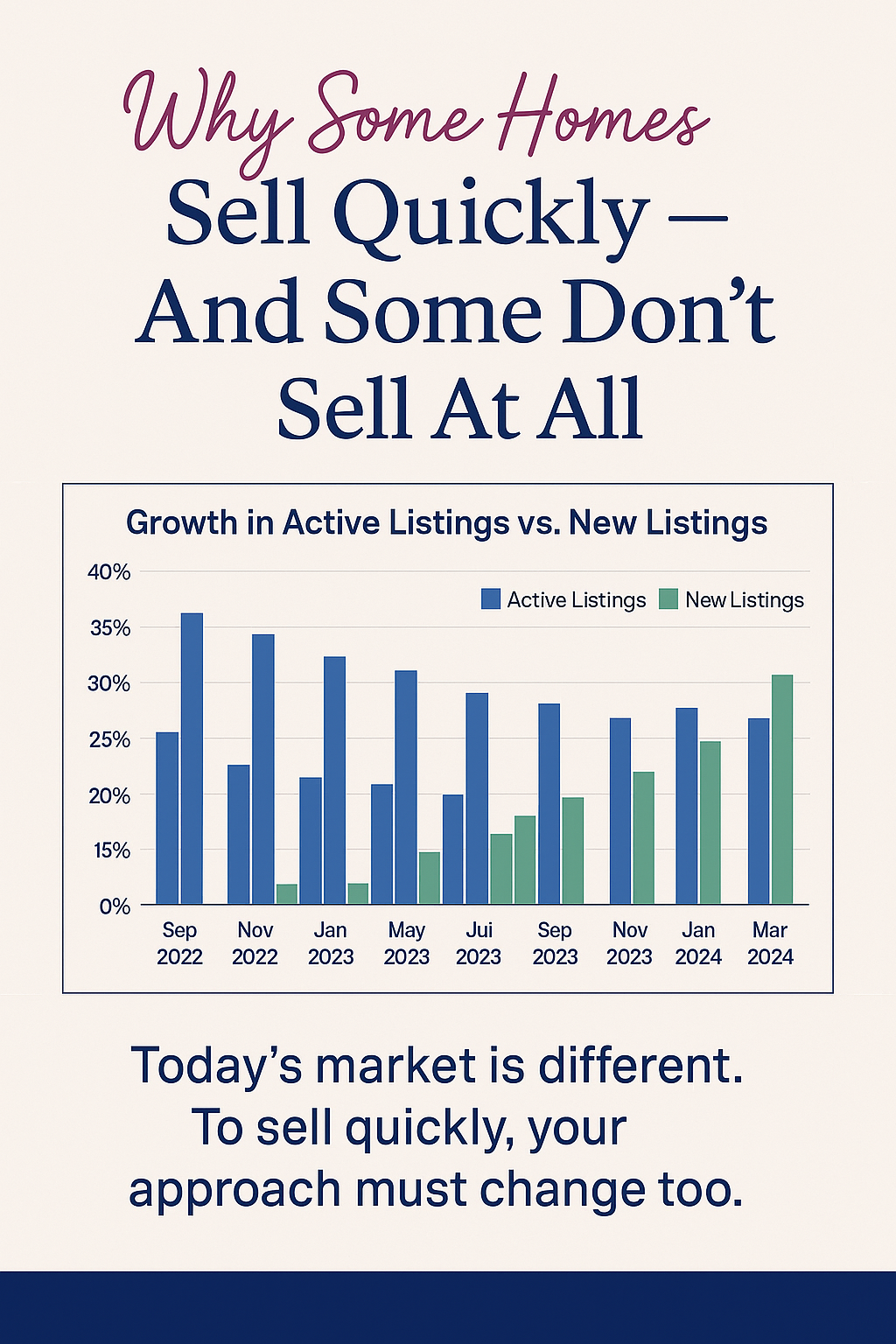
REIN reported 6,120 active residential listings in August 2026, up 7.2% year over year. The region had 2.86 months of inventory, a $388,950 median sale price, and 27 median days on market. Pending sales were actually 10.46% higher than August 2025 even as inventory increased.
That combination matters.
It does not describe a dead market where every seller needs to offer incentives.
It also does not describe an environment where buyers have so few options that a seller can ignore affordability and competing listings.
A property-specific strategy still matters much more than one regional statistic. The right incentive for a Chesapeake house may be completely different from the right response for a Virginia Beach property, Newport News listing or higher-priced home with a narrower buyer pool.
Before deciding how much seller money should be offered at all, I would begin with the home's competitive position. Our 2026 Hampton Roads home-value guide explains why recent comparable sales and current competing listings should establish the pricing range before concessions are layered on top.
A $10,000 incentive attached to a properly positioned home can create options.
A $10,000 incentive attached to a home that is $40,000 above where buyers see its value does not cure the pricing problem.
How a 2-1 temporary buydown actually works
A 2-1 buydown does not mean the lender permanently changes a 30-year mortgage rate by two percentage points.
Instead, funds are deposited into a buydown account and used to subsidize part of the buyer’s scheduled payments during the temporary period.
If the note rate were 6.5%, for example, the payment during the first year could be calculated using a 4.5% payment rate and the second year using 5.5%, before the borrower begins making the full payment based on the 6.5% note rate.
The exact numbers must come from the lender.
For VA temporary buydowns, VA specifically requires the funds to be kept in a separate escrow account and says the lender must qualify the Veteran using the full payment due after the buydown ends, not the temporarily subsidized payment.
That qualification rule is important.
A seller-funded temporary buydown can improve the buyer’s early payment experience, but it is not supposed to turn an otherwise unaffordable VA loan into an approvable one by pretending the reduced first-year payment is permanent.
That is why I would treat a 2-1 buydown primarily as an affordability and marketing tool—not a workaround for underwriting.
What Hampton Roads sellers need to know about VA buydowns
VA deserves its own discussion because military buyers are such an important part of the Hampton Roads market.
VA explicitly states that a temporary buydown may be funded by the seller, builder, lender or Veteran. When the seller or builder funds it, VA treats the temporary buydown as a seller concession, and seller concessions are capped at 4% of the property's reasonable value.
That point is clearer than the original AIM draft suggested.
VA separately says sellers may pay certain buyer closing costs, including loan discount points and temporary-bydown funds, and that VA does not impose the same 4% cap on ordinary loan closing-cost credits; the 4% restriction applies to items classified as seller concessions.
The practical issue is therefore not simply, “A VA seller can give 4%.”
The lender needs to identify how each proposed seller-paid item will be classified and confirm that the final structure complies with VA rules and the actual loan.
In this market, I would never assume the VA concession math from a generic online calculator. I want the buyer's loan officer to put the permitted contribution and proposed buydown in writing before my seller agrees to it.
That protects both sides from discovering late in the transaction that a credit cannot be used the way everyone expected.
How FHA seller-paid buydowns work
FHA's rules are different.
HUD's current forward-mortgage policy allows interested parties—including sellers—to contribute up to 6% of the sales price toward allowable borrower costs. The 6% limit expressly includes seller payments for temporary and permanent interest-rate buydowns.
That does not mean every FHA seller should automatically offer 6%.
The contribution still has to correspond with permitted costs, and funds exceeding allowable costs can create an inducement-to-purchase issue under FHA rules.
It also means the seller should not decide independently how much rate relief the money buys.
The lender still prices the mortgage and documents the contribution.
For a Hampton Roads seller comparing an FHA buyer with another offer, the better question is not whether FHA “allows more seller help.” It is whether the proposed help produces an acceptable seller net and a financeable contract.
How conventional concession limits differ
Conventional mortgages require another layer of lender confirmation because seller contribution limits can depend on occupancy, loan-to-value ratio and the particular conventional program.
For example, Freddie Mac's current guide permits maximum financing concessions on a primary residence or second home of 3% when LTV is above 90%, 6% when LTV is above 75% through 90%, and 9% when LTV is 75% or below. Investment-property financing concessions are capped at 2% under that guidance.
Fannie Mae likewise uses LTV-dependent interested-party contribution limits and makes clear that financing concessions cannot exceed the buyer's actual eligible closing costs.
The seller does not need to memorize the agency guides.
The seller does need the buyer's lender to answer the question before an offer or counteroffer becomes binding.
Temporary buydown or permanent discount points?
These solve slightly different problems.
A temporary buydown creates stronger payment relief at the beginning of the loan, then phases out. That can appeal to a buyer who expects income to grow, wants breathing room during the first years of ownership or simply values lower initial payments.
Permanent discount points cost money at closing in return for a lower interest rate that can continue for as long as the borrower retains that mortgage.
The longer-term option is not automatically the better option.
CFPB specifically cautions that the value of points depends on how long the borrower keeps the loan. A buyer who sells or refinances relatively soon may not remain in the mortgage long enough for cumulative payment savings to recover the upfront cost of the points.
From the seller's perspective, the key point is simpler:
Do not pick the mortgage product for the buyer.
Offer the concession structure you are willing to provide and have the buyer and lender determine how it can legally and effectively be used.
How I would compare a buydown with a price cut before changing the listing
I would not start by asking, “How big a buydown should we advertise?”
I would first look at how the property is behaving.
If the listing is receiving very little traffic and few showings, we need to examine the public asking price, photography, presentation and competing inventory. A financing incentive hidden inside the remarks cannot compensate for buyers never clicking on the home.
If showings are happening but buyers repeatedly say the payment feels too high, then an affordability incentive becomes more interesting.
If an interested buyer has already emerged, the buyer's own lender can make the analysis far more precise.
That lender can show what happens when the seller contributes the same amount toward ordinary closing costs, temporary payment relief or allowable discount points. The seller can then compare each option against a straight price adjustment and the expected net proceeds.
That is also why the existing Cost to Sell a House in Hampton Roads in 2026 matters here. A concession is part of the seller's transaction cost, so I want to see it on a seller net sheet rather than discuss it as though the money disappears somewhere outside the sale.
A buydown is not a substitute for correct pricing
This deserves its own section because seller incentives can become a distraction.
If buyers are telling us the home is overpriced, the answer may still be a price correction.
A buyer comparing three similar properties does not necessarily care that one overpriced listing offers a financing incentive if another home is already positioned more realistically.
A buydown works best when it enhances a credible offering.
It works poorly when it is being used to defend a number the market has already rejected.
I would rather tell a seller that the price needs attention than spend their money creating a clever concession around the wrong price.
That is also why the CMA comes first.
How we structure a seller-paid buydown once there is a real buyer
Once there is an interested buyer, I want the conversation to move from marketing theory to actual lender numbers.
The buyer's lender should confirm the loan program, current pricing, proposed structure, maximum permitted seller contribution and what portion of the seller credit can actually be used.
Then I want the lender to show the buyer what the options do.
The CFPB recommends comparing alternatives because points and rate pricing vary by lender and because the best financial choice depends partly on how long the borrower expects to keep the mortgage.
From there, we can negotiate the real estate terms around verified lending information.
The purchase agreement should clearly describe the seller contribution without promising a mortgage result the seller cannot control. The lender and settlement professional then handle the loan-specific disclosure and allocation required for the approved structure.
Once the contract is ratified, that concession also becomes part of the larger transaction timeline. Our Hampton Roads seller timeline after accepting an offer explains why appraisal, financing, title and contract deadlines continue to matter after the headline negotiation is finished.
Why lender confirmation needs to happen before the seller commits
A buydown that cannot be used is not a useful concession.
Mortgage programs have contribution limits. Buyers have different closing costs. Appraisals can affect financing. A loan program can change. Underwriting can raise an issue after preapproval.
If the proposed incentive depends on a particular lender treatment, that treatment should be verified before the seller signs away thousands of dollars.
This matters even more when a seller is agreeing to the concession because the buyer says it is necessary to make the financing work.
Our article on what happens when buyer financing falls through before closing explains why a preapproval is not final financing approval and why the mortgage and purchase contract remain separate pieces of the transaction.
The seller's strategy should therefore contain some margin for reality.
Can sellers advertise a rate buydown in the listing?
Yes, but the language should be careful.
I would advertise the availability of a seller contribution toward an approved interest-rate buydown, subject to the buyer's lender and loan-program requirements, rather than advertise a guaranteed rate or payment.
That distinction matters because mortgage pricing changes.
A seller might be willing to contribute $8,000, but that does not mean every buyer will receive the same rate reduction with $8,000.
CFPB explicitly notes that the amount of interest-rate reduction obtained from discount points varies by lender, mortgage type and market conditions.
I prefer marketing the seller's offer—not pretending we control the lender's rate sheet.
That keeps the message attractive without turning the listing remarks into a mortgage promise.
What evidence does Salyer Wilmoth Homes have on the seller side?
A financing-incentive strategy is ultimately part of listing representation, so the underlying seller-service experience should be visible.
Public transaction records show Michele Salyer represented the seller of 236 Bradmere Loop in Newport News, which closed for $360,000 in May 2026, approximately 3% above its $350,000 list price according to the public record.
Public records also show Michele as the listing agent for 235 Dublin Court in Newport News, which closed for $417,000 in May 2026, matching its listed price in the available transaction history.
Salyer Wilmoth Homes is also publicly recorded as the seller representative for 4912 Cavan Court in Virginia Beach, which closed for $435,000 in July 2026.
Those transactions provide evidence of recent seller representation, pricing, marketing, negotiation and contract-to-closing work across Hampton Roads.
They do not establish that a mortgage-rate buydown was used in any of those individual sales, and I would not claim that without documentation.
That distinction is important to how we build an evidence-based website: past transactions should prove the service we actually performed, while financing recommendations in this article are supported separately by current VA, FHA, conventional and consumer mortgage guidance.
How a buydown fits into our seller methodology
The buydown decision comes relatively late in the strategy—not first.
We begin with the property.
I want to understand the home's condition, current competition, recent relevant sales, likely buyer pool and realistic pricing range. Then we determine how the home should be prepared and positioned.
After launch, buyer behavior gives us additional information.
Showing volume tells us whether buyers are entering the funnel. Feedback tells us what they see once they arrive. Offers—or the absence of them—tell us whether the combination of price, condition and financing feels workable.
Only then does an incentive become meaningful.
If buyers are objecting to price, we deal with price.
If buyers are interested but cash-to-close is the obstacle, we can examine credits.
If the payment itself is the concern, we can ask a lender to model a buydown.
If the property is performing normally, we may decide no incentive is necessary at all.
That is what strategic seller representation looks like to me: the concession follows the diagnosis, not the other way around.
Frequently asked questions
What is a seller-paid mortgage rate buydown?
A seller-paid mortgage rate buydown is a negotiated seller contribution used through the buyer's lender to reduce the buyer's mortgage cost. A temporary buydown subsidizes payments for a limited introductory period before the borrower reaches the full note-rate payment, while a permanent buydown generally uses discount points to obtain a lower interest rate for the life of that particular mortgage. The lender—not the seller or real estate agent—determines the actual mortgage pricing, required funds and loan-program eligibility. CFPB notes that discount points do not have a fixed rate-reduction value, so the same dollar contribution can produce different results depending on the lender, loan and market.
Is a seller-paid rate buydown better than reducing my Hampton Roads home's price?
Sometimes, but only when the monthly payment is actually the issue. A buydown can provide more noticeable payment relief than applying the same dollars to a modest purchase-price reduction, while a price reduction can be much more effective when buyers believe the property itself is overpriced or when the home needs to enter a different online search range. If you are deciding between the two, I can prepare the property-side numbers and coordinate with the interested buyer's lender so we can compare the seller net with the actual payment scenarios instead of guessing.
How does a 2-1 buydown work with a VA loan?
A VA temporary buydown can be funded by the seller, but VA specifically treats a seller-funded temporary buydown as a seller concession subject to the 4% seller-concession limit based on the property's reasonable value. The buydown funds are held in a separate escrow account, and the lender must qualify the borrower using the full payment that applies after the temporary subsidy ends. This is different from the treatment of many ordinary allowable VA closing costs, which VA says are not subject to that same 4% seller-concession cap.
Can I pay some of the buyer's closing costs and also help buy down the rate?
Potentially, yes, but the allowable structure depends on the mortgage. FHA forward mortgages generally permit interested-party contributions up to 6% of the sales price, and that limit expressly includes temporary and permanent interest-rate buydowns. Conventional limits can depend on the buyer's loan-to-value ratio and occupancy. VA distinguishes ordinary allowable closing-cost credits from seller concessions and specifically classifies a seller-funded temporary buydown as a concession. If an offer includes both closing-cost assistance and a buydown, I want the buyer's lender to confirm the breakdown before my seller signs so we know the entire contribution is usable.
When should a Hampton Roads seller consider offering a mortgage-rate buydown?
It deserves consideration when the home is already positioned reasonably against competing properties but qualified buyers are hesitating because of the monthly payment, particularly when the seller has enough room in the expected net proceeds to offer an incentive without undermining the overall sale. It is less useful when the home is plainly overpriced, buyer traffic is weak for reasons unrelated to financing, or the buyer needs cash-to-close assistance more than payment relief. If you are weighing a rate buydown against a price adjustment or closing-cost credit, call or text me at 757-502-3671 and we can review your listing's current market position, expected net and the lender-supported options before you commit to a concession.
This article provides general real estate and mortgage-related information only and is not lending, financial, legal, tax or underwriting advice. Interest rates, discount-point pricing, temporary-buydown structures and seller-contribution limits vary by loan program and transaction and can change. Buyers and sellers should confirm the specific mortgage structure with the buyer's licensed lender and consult the appropriate legal, tax and settlement professionals when needed.
If your Hampton Roads home is attracting interest but affordability is slowing buyers down, I would be happy to review the listing, compare the cost of a price adjustment with other seller-contribution strategies, prepare an estimated seller net and coordinate the real-estate side with the buyer's lender before you decide which dollars are most likely to help the transaction.
Michele Salyer, REALTOR® | Team Leader, Salyer Wilmoth Homes
Atlantic Sotheby’s International Realty
4416 Expressway Drive, Virginia Beach, VA 23452
757-502-3671
michele@salyerwilmothhomes.com
www.salyerwilmothhomes.com
Virginia License #0225238875 | North Carolina License #322300
Equal Housing Opportunity