
Why Some Homes Sell Fast — and Others Sit on the Market

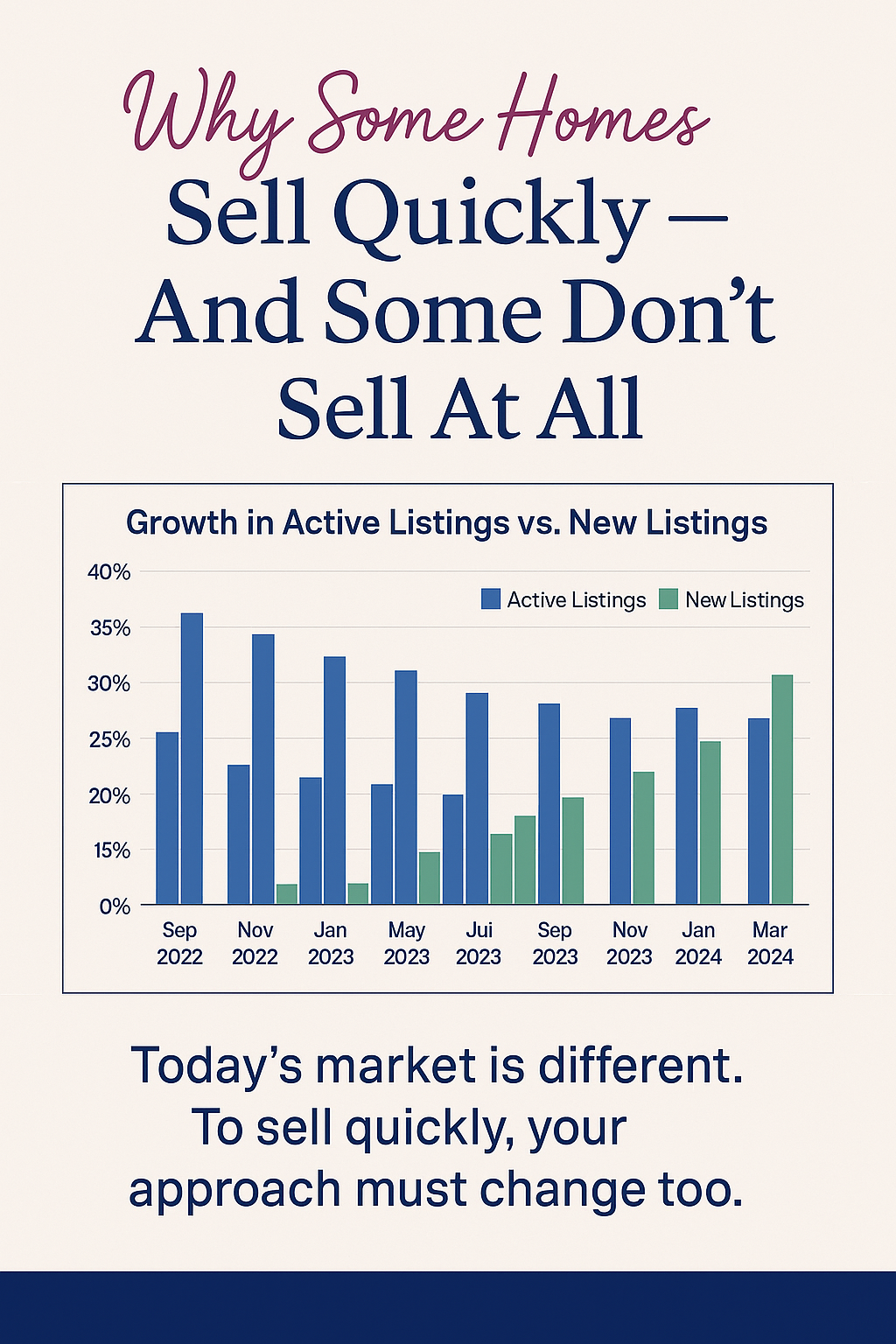
A few years ago, homes were flying off the market. With record-low inventory, nearly anything sold — and fast. But today’s real estate landscape looks different. Inventory is up nearly 20% compared to last year, and in many areas, supply has returned to pre-2020 levels.

So, what does that mean for sellers?
👉 Your home needs to stand out from the moment it hits the market.

🔍 Why Homes Sit on the Market

Most of today’s inventory growth comes from homes that are still active — the ones that haven’t sold yet — rather than new listings. According to Realtor.com, many of these homes are taking longer to sell, which tells us something important:
It’s not just about listing your home — it’s about how you list it.

Common reasons homes linger on the market include:

  • Pricing too high based on old market conditions
  • Skipping essential repairs or updates
  • Poor listing photos or staging
  • Limited showing availability
  • Weak marketing strategies

A few years ago, sellers could list “as-is” and still attract multiple offers. Not anymore. Today’s buyers are choosier, more informed, and have more options.

💡 What Makes a Home Sell Quickly

Selling quickly in this market isn’t about luck — it’s about strategy.
Here’s what successful sellers have in common:

  1. Pricing Realistically – A competitive price based on today’s market, not yesterday’s headlines.
  2. Curb Appeal and Condition – Small upgrades and clean presentation go a long way.
  3. Professional Marketing – High-quality photos, social media visibility, and listing optimization matter.
  4. Accessibility – The easier it is to show, the faster it sells.

Remember: your first few weeks on the market are crucial. That’s when your listing gets the most exposure online. Nail your presentation early, and buyers will act fast.

🤝 Why the Right Agent Makes All the Difference

Working with an experienced REALTOR® means having someone who understands local trends, buyer behavior, and pricing strategy. According to the National Association of REALTORS® (NAR), sellers who work with agents are twice as likely to get an offer within a month compared to those who list on their own.

An expert agent will:

  • Recommend the right listing price using local comparable sales
  • Help you prep and stage for maximum impact
  • Use professional marketing that reaches buyers where they’re searching

Bottom Line

Even with more homes for sale, your property can still sell quickly — if it’s priced right, presented beautifully, and marketed strategically.

If you’re thinking about selling in Hampton Roads, Chesapeake, or Newport News, let’s connect! I’ll help you position your home to attract attention — and offers — from day one.

If you’re looking to sell, call Michele! If you’re looking to acquire — I’m your hire!

Michele Salyer, REALTOR®
Salyer Wilmoth Homes | A Better Way Realty
📞 7575023671 | 🌐 www.salyerwilmothhomes.com

April 17, 2026

Why Two Homes in Chesapeake at the Same Price Can Feel Completely Different

TL;DR

Two homes in Chesapeake can have the exact same price and still offer very different value once you look past the listing number. One may feel more move-in ready, more functional, easier to maintain, or better suited to your daily routine, while the other may come with trade-offs in layout, condition, outdoor space, or monthly ownership costs. That is why buyers should compare more than square footage and sale price alone. Looking closely at how each home lives, what updates or repairs may be needed, and how the property fits your budget and lifestyle can help you make a smarter decision with more confidence.

Price Is Only One Part of the Story

It is easy to assume that two homes listed at the same price should offer the same overall value, but that is rarely how buyers experience them in real life. In Chesapeake, two homes can be priced similarly and still feel completely different the moment you step inside, walk the lot, review the updates, or think about how the property fits your day-to-day life. One may feel move-in ready and easy to manage, while the other may feel like it needs work, compromises, or a bigger monthly budget after closing.


That is one reason buyers benefit from looking beyond the list price alone. Price may get two homes into the same online search results, but the full ownership experience can be very different once you compare condition, layout, maintenance needs, convenience, and long-term flexibility. That same idea comes up in Can Buying in Chesapeake Give Naval Station Norfolk Buyers More Space for the Money?, where the real question is not just how much house you can buy, but what kind of day-to-day value you are actually getting for that price point.

Layout Can Change How a Home Feels

Square footage does not always tell the full story. Two homes with similar size can feel dramatically different based on how the space is arranged. One home may have a layout that feels open, functional, and easy to live in, while another may have the same number of square feet but use the space less efficiently.

For example, a home with a better kitchen flow, more useful bedroom placement, or a more practical laundry area may feel more valuable to a buyer than a home with extra square footage that does not serve their routine well. Ceiling height, natural light, storage, room shape, and traffic flow also matter. A home that simply feels easier to live in often creates a stronger emotional response, even when the list price matches another property nearby.

This is especially important for buyers trying to think beyond the showing itself. In What to Prioritize in a Home If You May PCS Again in a Few Years, the focus is on choosing features that will continue to make sense later, not just what looks appealing in the moment. A home with a more practical layout may feel better now and also make more sense if your plans change down the road.

Condition and Updates Affect Perceived Value

Two homes at the same price can create very different first impressions based on condition alone. One may have updated flooring, a newer roof, refreshed paint, modern fixtures, and well-maintained systems. Another may have an identical price but need repairs, cosmetic improvements, or replacements in the near future.

That difference matters because buyers often think beyond the sale price and ask themselves what they may need to spend after closing. A home that seems less expensive upfront can feel more costly if it needs immediate work. On the other hand, a home with recent updates may feel like the better value because it reduces uncertainty and may require less effort in the first year of ownership.

For buyers who want a home that works well in everyday life, condition is only one piece of the puzzle. The surrounding experience matters too. That is why this conversation connects naturally with Why the Area Around a Home Matters More Than You Think, since even a nicely updated home can feel less appealing if the driveway access, drainage, traffic flow, or nearby convenience do not support your routine.

Lot Use and Outdoor Function Matter More Than Buyers Expect

Two similarly priced homes can also feel very different because of how the lot functions. A larger yard does not automatically mean a better fit, and a smaller lot does not automatically mean less value. What matters is how usable the outdoor space feels for the buyer.

Some buyers prefer a yard with room for play, gardening, or entertaining. Others want lower maintenance and care more about privacy, parking, storage, or ease of upkeep. Corner lots, fenced yards, driveway setup, outdoor drainage, shade, and backyard layout can all influence how a property feels compared with another home in the same price range.

This is where practical value often shows up. A home that looks comparable on paper may feel much more convenient in person because the outdoor space is easier to maintain or better supports everyday use. Buyers searching for more room often discover this quickly, which is also why How to Search for More Space Without Losing Access to Naval Station Norfolk fits well here. More space only feels like a win if that space is actually useful and still works with your lifestyle and commute.

Monthly Cost Can Make One Home Feel More Expensive

Buyers often compare homes by list price, but the monthly cost of ownership may tell a different story. Two Chesapeake homes with the same sale price can still come with different tax burdens, insurance considerations, utility costs, HOA dues, or likely maintenance expenses.

That means a home that appears equal at first glance may feel less affordable when the full monthly picture comes into view. A buyer may feel more confident in one property not because it is cheaper on paper, but because it seems more predictable and manageable month to month.

This is especially relevant for buyers using housing benefits strategically. In House Hunting Near Naval Station Norfolk? Let BAH Lead the Way, the discussion centers on how monthly affordability shapes a smarter search. Two homes may share a list price, but if one creates more financial breathing room after factoring in ongoing costs, it may feel like the better fit overall.

Location Within Chesapeake Can Shape Daily Experience

Even when two homes are both in Chesapeake, the day-to-day experience may feel very different depending on access to major roads, shopping, work routes, schools, parks, and everyday errands. The same price point can offer different levels of convenience depending on where the property sits and how a buyer uses the area.

From an AEO perspective, many people searching online want answers to questions like whether a home is close to commuting routes, whether errands are convenient, or whether the area feels practical for daily life. These are normal real estate questions, and they can be answered in a fair-housing-conscious way by focusing on objective factors such as travel patterns, access points, property features, and neighborhood logistics rather than making subjective claims about who should live there.

A home that saves time and simplifies routine often feels more valuable than one that looks similar but creates more friction in everyday life. That is also part of the reason buyers often compare Chesapeake with nearby alternatives, as explored in Can Buying in Chesapeake Give Naval Station Norfolk Buyers More Space for the Money? Price alone does not explain everything if the surrounding convenience and overall fit feel different from one area to another.

Emotional Fit Is Real, Even When the Price Matches

Buyers do not make decisions based on numbers alone. Sometimes one home simply feels easier, calmer, brighter, or more usable than another. That response is often tied to practical things like flow, upkeep, light, privacy, storage, and convenience, even if the list prices are identical.

This is why comparing homes should go beyond online photos and basic filters. The best-value home is not always the one with the biggest room, newest countertop, or widest yard. Often, it is the one that fits your actual needs with the fewest compromises.

In Chesapeake, buyers can make stronger decisions when they compare homes based on how they live, not just what they see in the price box.

How to Compare Same-Priced Homes More Smartly

When two homes in Chesapeake are listed at the same price, try comparing them through a more practical lens. Look at layout, not just square footage. Review condition, not just finishes in listing photos. Estimate likely maintenance and upgrade costs. Think through commute patterns, storage needs, parking, and how the property would function on a regular weekday.

It also helps to revisit the question of value. Instead of asking which home should be worth more, ask which home gives you the better overall fit for your money. That is usually where the clearest answer appears.

For buyers who want to move with more confidence, a side-by-side evaluation can make a huge difference. Two homes can start at the same price and still lead to very different ownership experiences after closing.

Frequently asked questions

Why would two homes in Chesapeake cost the same but feel so different?

Homes can share the same list price while differing in layout, condition, updates, lot function, monthly carrying costs, and daily convenience. Buyers are not just comparing a number. They are comparing how each property fits their routine, budget, and comfort level after move-in.

What should I compare besides price when looking at Chesapeake homes?

Look closely at floor plan flow, age and condition of major systems, storage, yard use, parking, repair needs, utility efficiency, and how the location supports your regular routine. If you want help comparing homes side by side, I can help you look at the practical differences that are easy to miss in listing photos.

Does a move-in ready home usually feel like a better value?

For many buyers, yes. A move-in ready home can feel more valuable because it may reduce immediate repair costs, save time, and make budgeting easier after closing. That does not mean a home needing updates is a bad option, but it does mean buyers should weigh the true cost of improvements before deciding. If you are narrowing down options in Chesapeake, I can help you think through which homes may offer stronger real-world value.

Is the bigger home always the better deal at the same price?

Not necessarily. A larger home may come with a less efficient layout, more upkeep, or spaces that do not actually improve daily living. Sometimes a slightly smaller home feels better because it uses the space more effectively and supports your lifestyle with fewer compromises.

How can I tell which same-priced home is the better fit for me?

The best approach is to compare homes based on how you actually live. Think about your schedule, storage needs, comfort with repairs, parking preferences, outdoor upkeep, and monthly budget. Then compare each home against those priorities instead of focusing on price alone. If you are planning a move in Chesapeake, reach out and I can help you sort through the options in a more practical way.


If you are comparing homes in Chesapeake and want a clearer picture of which one offers the better fit for your budget and lifestyle, I’d be happy to help you weigh the details.

Michele Salyer, REALTOR®

📞 757-502-3671

🌐 www.salyerwilmothhomes.com

“If you are looking to sell, Call Michele! If you are looking to acquire, I’m your hire!”

Salyer Wilmoth Homes | A Better Way Realty

Equal Housing Opportunity

April 16, 2026

How to Search for More Space Without Losing Access to Naval Station Norfolk

TL;DR

If you are searching for more space without giving up practical access to Naval Station Norfolk, the goal is to look beyond simple mileage and focus on how a home fits your daily routine, budget, and long-term plans. A slightly wider search area may open the door to larger homes, better layouts, more storage, and more outdoor space, but the smartest move is to balance those benefits with commute patterns, road access, and overall convenience. By defining what “more space” really means for your household and comparing homes based on functionality instead of square footage alone, you can make a more confident decision that supports both your current lifestyle and future flexibility.

Why more space matters for buyers near Naval Station Norfolk

For many buyers connected to Naval Station Norfolk, the goal is not just to live closer. It is to find a home that works better for everyday life. More space can mean an extra bedroom, a dedicated home office, better storage, a larger yard, or simply a layout that feels less cramped over time. For military households, growing families, remote work needs, frequent guests, and future PCS planning can all make space a major priority.


At the same time, access still matters. A home that offers more square footage may not feel like a good fit if the drive creates daily stress or makes routines harder to manage. That is why the smartest home search is not only about finding the biggest house possible. It is about finding the right balance between space and location. Buyers who are also weighing housing costs may find it helpful to read On Base vs Off Base Housing: Which Option Saves You More Money? as part of that decision-making process.

Start with access, not just distance

One of the biggest mistakes buyers make is assuming that a home farther from base automatically means too much inconvenience. In reality, access depends on more than mileage alone. Traffic patterns, bridge routes, peak commute times, and the ease of getting to major roads all play a role in how practical a location feels.


Instead of asking only how many miles a home is from Naval Station Norfolk, ask how the trip works during a normal weekday. A slightly farther location may still make sense if the route is straightforward and the home gives you more functional space for the price. Looking at access this way can open up more options without sacrificing too much convenience.

Define what “more space” really means for your household

Before expanding your search area, get clear on what kind of space you actually need. More square footage is not always the same as better usability. A larger home with an awkward layout may be less helpful than a slightly smaller one with flexible rooms and better storage.

Think about how you live day to day. Do you need an extra bedroom, a loft, a first-floor guest room, a bigger kitchen, more closet space, a two-car garage, or a yard with room to enjoy? When you define your priorities clearly, it becomes easier to compare homes based on function instead of just size. This is especially important if you are trying to buy with both present needs and future flexibility in mind, which is why What to Prioritize in a Home If You May PCS Again in a Few Years pairs naturally with this topic.

This can also help you avoid overbuying. Searching with purpose keeps the process more efficient and helps you focus on homes that support your routine now and your plans later.

Expand your search strategically

If you are trying to get more space without losing access to Naval Station Norfolk, widening your search area strategically can help. Some buyers focus too narrowly on one immediate area and overlook nearby communities where homes may offer more room, better lot sizes, or layouts that stretch their budget further.

The key is to compare tradeoffs carefully. A home with more indoor and outdoor space may be worth considering if it still supports your commute, budget, and daily priorities. For some buyers, that may mean looking at different parts of Chesapeake, Norfolk, or nearby areas that offer a different balance of value and convenience. If Chesapeake is already on your radar, Can Buying in Chesapeake Give Naval Station Norfolk Buyers More Space for the Money? is a strong companion read for understanding why some buyers expand their search there.

This is also where local market knowledge matters. Neighborhoods and price points can vary widely, even within the same city. A broader, more informed search can uncover options you may not have considered at first, and How to Narrow Down Your Chesapeake Home Search by Area Instead of Just Price can help buyers think through that process more strategically.

Look beyond square footage when comparing homes

A bigger number on a listing does not automatically mean a better fit. When comparing homes, look closely at how the property actually lives. Two homes with similar square footage can feel completely different depending on the floor plan, storage, natural light, yard use, and room placement.

Pay attention to features that make space more usable, such as open living areas, separation between bedrooms, bonus rooms, garage storage, and outdoor areas that extend how you use the home. A home that feels practical and comfortable every day may serve you better than one that is simply larger on paper. Buyers searching with military routines in mind may also want to read What Makes a Home Practical for Military Life Near Naval Station Norfolk for a deeper look at the features that often matter most in day-to-day living.

This approach also helps keep your search grounded in fair housing principles by focusing on property features, location logistics, and buyer preferences rather than assumptions about who should live in a certain area.

Think about long-term flexibility

If you may PCS again in the future, flexibility matters almost as much as current comfort. A home with more space can help now, but it should also make sense for your next chapter. Consider how the home may work if your needs change, if you need to sell later, or if you want a layout that appeals to a wide range of future buyers.

Features like extra bedrooms, functional living areas, practical storage, and adaptable spaces often hold value because they meet common housing needs. Choosing a home with long-term usability can help you enjoy more space now while keeping future decisions more manageable.

Use your budget as a strategy, not just a limit

Searching for more space without losing access to Naval Station Norfolk often comes down to how you allocate your budget. Some buyers may decide that a slightly longer commute is worth it for more room. Others may prefer a smaller home with easier access. Neither choice is automatically better. The best decision depends on what supports your lifestyle and priorities.

A smart search looks at monthly affordability, daily convenience, and overall function together. When you treat your budget as a strategy, you can make more confident tradeoffs and avoid focusing too heavily on only one factor.

Work with a local plan instead of a broad guess

The best home searches are usually built around a clear plan. That means narrowing your must-haves, identifying realistic commute boundaries, and comparing homes based on how well they support your routine. Buyers who take this approach often find that they do not need to choose between access and space as sharply as they first assumed.

A thoughtful local strategy can help you search more efficiently, spot better-fit listings faster, and avoid wasting time on homes that look appealing online but do not work in real life. When your search is built around both space and access, you are more likely to find a home that truly fits.

Frequently asked questions

Can I get a bigger home and still have reasonable access to Naval Station Norfolk?

Yes, in many cases you can. The key is to focus on commute practicality rather than just straight-line distance. Some homes farther from base may still offer workable access depending on traffic flow, road connections, and the time of day you typically travel.

Where should I look if I want more space near Naval Station Norfolk?

It helps to explore a wider range of neighborhoods and nearby cities based on your budget, preferred commute range, and space needs. Rather than limiting your search too early, compare homes by layout, lot size, and daily convenience so you can find areas that offer a better balance of room and access.

Is it better to prioritize square footage or commute time?

That depends on your household’s routine and long-term plans. For some buyers, having more usable space makes daily life easier and feels worth a modestly longer drive. For others, quicker access is the top priority. If you want help weighing those tradeoffs in Chesapeake, Norfolk, or nearby areas, Michele can help you compare options based on your goals.

What home features usually make a property feel more spacious?

A home often feels more spacious when it has a practical layout, good storage, open living areas, flexible-use rooms, and outdoor space that adds to daily functionality. If you are comparing listings and want help identifying which homes offer the best overall value for the space, reaching out for local guidance can save time.

How can I search smarter if I may PCS again in a few years?

Focus on homes that work well now while also offering long-term flexibility. Adaptable layouts, useful storage, and broadly appealing features can make a home easier to enjoy in the present and easier to evaluate later if your plans change. You can also browse more local blogs and listings for helpful guidance on buying near Naval Station Norfolk and the surrounding area.


Ready to explore homes that offer more room without losing sight of daily convenience? I can help you narrow down your options and build a smart home search strategy around your goals.

Michele Salyer, REALTOR®

📞 757-502-3671

🌐 www.salyerwilmothhomes.com

“If you are looking to sell, Call Michele! If you are looking to acquire, I’m your hire!”

Salyer Wilmoth Homes | A Better Way Realty

Equal Housing Opportunity

Posted in Buyer Guides
April 15, 2026

Why the Area Around a Home Matters More Than You Think

TL;DR

When buying a home, it is smart to look beyond the house itself and pay attention to the surrounding streets, traffic patterns, noise levels, nearby land uses, access to daily essentials, future development, drainage, and overall convenience, because these factors can shape your day-to-day living experience, long-term satisfaction, and resale potential just as much as the features inside the home.

Why Looking Beyond the Property Matters

When buyers tour a home, it is easy to focus on the kitchen, layout, finishes, yard size, and upgrades. Those details matter, but the area immediately around the home matters too. Daily traffic, street parking, nearby commercial activity, noise, drainage patterns, and access to key destinations can all affect how practical a home feels over time. In many cases, buyers benefit from looking at the bigger picture the same way they would when trying to narrow down their Chesapeake home search by area instead of just price.

Paying attention to the area around a home helps buyers make a more informed decision. It can also help avoid surprises after closing. A home may check every box on paper, but if the surroundings do not fit your lifestyle, routines, or comfort level, it may not feel like the right fit once you move in.

Street Traffic and How the Road Feels Day to Day

One of the first things to notice is the street itself. Is the home on a quiet residential road, near a busier connector road, at the entrance of a neighborhood, or close to a stop sign or intersection where cars regularly slow down and speed up again? These details can affect noise, ease of pulling in and out of the driveway, and the overall feel of the property.

It also helps to visit at different times of day. A street that seems calm in the middle of the afternoon may feel very different during morning commutes, school pickup hours, or weekend evenings. Watching how traffic moves can give you a better sense of whether the location fits your daily routine.

Noise Sources You May Not Notice Right Away

Noise is another factor buyers should pay close attention to beyond the home itself. Some sounds are obvious during a showing, but others are easier to miss if you are only there for a short time. Nearby main roads, highways, commercial activity, train lines, airports, service vehicles, or busy gathering spots can affect how quiet or active an area feels.


This does not automatically make a home a bad choice. Some buyers are comfortable with more activity, while others strongly prefer a quieter setting. The key is to notice the environment clearly so you can decide whether it matches what you want in everyday life. That is often one of the same practical details relocating buyers often miss about Chesapeake, VA when they are focused mainly on the house itself.

Nearby Land Use and What Surrounds the Home

A buyer should also look at what sits around the property. Nearby vacant land, retail buildings, office space, utility areas, major roadways, community amenities, or undeveloped parcels can all shape the feel of the location now and in the future. Even if the house itself looks great, neighboring land uses can influence privacy, traffic, noise, and convenience.

This is one reason it helps to do more than just walk through the front door and leave. Drive around the immediate area. Look at what is behind the home, across the street, and around the corner. A broader view often gives more useful insight than the listing photos alone, especially when you are thinking through the same kinds of key questions to ask before buying a home in Virginia.

Parking, Street Congestion, and Everyday Access

Parking conditions around a home can affect convenience more than many buyers expect. Some streets have ample room for guests and household vehicles, while others may feel tight or crowded depending on the time of day. Homes on narrower streets or in areas with heavier curbside parking may require a little more attention if easy access matters to you.

It is also worth noticing how easy it is to enter and exit the driveway, whether delivery trucks or service vehicles regularly use the street, and whether the area tends to feel open or congested. These may seem like small details during a home tour, but they can become important parts of daily life once you live there.

Drainage, Standing Water, and Site Conditions Nearby

Beyond the house, buyers should pay attention to the land around it. After rain, does water appear to drain away well, or are there low spots nearby where water tends to collect? Does the street appear level, sloped, or prone to puddling? These observations do not replace professional inspections or due diligence, but they can help buyers know what questions to ask.

The surrounding site conditions may affect convenience, maintenance, and peace of mind. Looking at curbs, storm drains, grading, and the general condition of the area can help you better understand how the property functions beyond what is visible inside the home.

Convenience to Daily Essentials

A home’s location is not just about the lot. It is also about how easily it connects to everyday life. Think about the places and services that matter most to your routine, such as grocery options, medical offices, commuter routes, fitness centers, shopping, dining, and other practical destinations. A home that saves time and reduces stress in daily errands can feel more valuable over time.

This kind of evaluation should stay focused on your own lifestyle needs and logistical preferences. Buyers can use convenience and accessibility as useful decision-making factors without making assumptions about who lives in an area.

Future Development and Changes Nearby

What is around a home today may not stay the same forever. Nearby open land, construction activity, road work, redevelopment, or growing commercial corridors can all shape the area over time. That does not always mean a negative change. In some cases, future development may bring added convenience or improved infrastructure. In other cases, it may mean more traffic or a busier setting.

Asking about nearby development and doing local due diligence can help buyers better understand what may change after they move in. This can be especially important for buyers who want a certain level of privacy, predictability, or ease of access.

How the Area Feels During Different Times of the Week

A smart home search does not stop after one quick showing. Try visiting the area on both a weekday and a weekend if possible. Some places feel calm during work hours but much busier in the evenings. Others may seem quiet on a weekday and more active on weekends due to events, nearby businesses, or traffic flow.

Seeing the area at different times helps buyers move past first impressions and get a more complete picture of what daily life may actually feel like there. For military and relocation buyers especially, this can connect closely with understanding what makes a home practical for military life near Naval Station Norfolk, since the surrounding area can shape commute ease, flexibility, and long-term convenience.

Why This Matters for Resale Too

Even if a home feels like the right fit today, it is worth considering how the surrounding area may affect resale appeal later. Buyers in the future will also look at traffic, convenience, noise, neighboring uses, and the overall setting around the property. While no one can predict the market perfectly, paying attention to these factors can help you make a more balanced purchase decision.

In some cases, broader location tradeoffs also connect to value and space decisions, especially for buyers comparing options across nearby cities. That is part of the reason some buyers explore whether buying in Chesapeake can give Naval Station Norfolk buyers more space for the money before choosing where to focus their search.

How to Evaluate a Home More Completely

When you tour a property, try to treat the home and its surroundings as one full package. Walk slowly. Step outside and listen. Drive around nearby streets. Check the route in and out. Visit again at another time of day if you can. Notice what supports your routine and what may create friction in daily life.

That extra attention can help you buy with more confidence and avoid focusing too narrowly on the home’s interior alone.

Frequently asked questions

What should I look at around a house before buying?

Before buying a house, pay attention to the surrounding street, traffic flow, noise levels, parking conditions, nearby land uses, drainage, access to major roads, and convenience to the places you use most often. These factors can affect your daily experience just as much as the home’s interior features.

Does the area around a home affect resale value?

Yes, the area around a home can influence buyer interest and resale potential. Factors like traffic, noise, convenience, and nearby development can all shape how attractive a property feels to future buyers. If you want help looking at a home from both a lifestyle and resale perspective, Michele Salyer can help you evaluate the full picture before you make a move.

How can I tell if a street is too busy for me?

The best way is to visit the home at different times of day and on different days of the week. Watch how traffic moves, listen for road noise, and see how easy it feels to get in and out of the driveway. What feels manageable for one buyer may not feel right for another, so it helps to compare the location against your own daily routine and comfort level.

Should I worry about future development near a home?

Future development is worth paying attention to because nearby changes can affect traffic, convenience, privacy, and the overall feel of the area. It is a good idea to ask questions, review local information when available, and think about whether the surroundings fit both your current needs and your long-term plans. If you are narrowing down homes and want local insight that goes beyond the listing, reaching out to Michele Salyer is a smart next step.

Why is it important to visit a home more than once?

A second visit can reveal details you may miss the first time, especially outside the property itself. The street may feel different in the morning than in the evening, and the surrounding area may be more active on weekends than weekdays. Touring with a more complete strategy can help you make a more confident decision, and Michele Salyer can guide you through what to watch for as you compare homes.


If you are trying to evaluate not just the home, but the full setting around it, I can help you look at the details that matter before you make your move.

Michele Salyer, REALTOR®

📞 757-502-3671

🌐 www.salyerwilmothhomes.com

“If you are looking to sell, Call Michele! If you are looking to acquire, I’m your hire!”

Salyer Wilmoth Homes | A Better Way Realty

Equal Housing Opportunity

Posted in Buyer Guides
April 14, 2026

What to Prioritize in a Home If You May PCS Again in a Few Years

TL;DR


If there is a good chance you may PCS again in the next few years, it helps to think about a home differently from someone planning to stay long term. Instead of focusing only on finishes or square footage, it is often smarter to prioritize layout, condition, commute convenience, storage, and overall long-term flexibility. Buyers who expect another move usually benefit from choosing a home that works well for daily life now while also being easier to maintain, easier to rent if needed, and easier to sell when the next transition comes. A practical home choice can help reduce stress, support your timeline, and give you more options later without overextending your budget or forcing you into a property that only makes sense for a short season.

Why future flexibility matters when buying during military relocation

When you are buying a home and know another PCS could happen in a few years, flexibility should be part of your strategy from the start. It is easy to get pulled toward cosmetic upgrades, trendy finishes, or extra features that look appealing in the moment. But if your timeline may be shorter than expected, the better question is whether the home will still work well for you if your orders change, your household needs shift, or you decide to sell sooner than planned.


That does not mean buying a home has to feel temporary. It means making thoughtful choices that support both your current lifestyle and your future options. A home that is functional, well-located, and easy to maintain can serve you well while you live there and put you in a better position when it is time to move again. This is also why many buyers benefit from reading What Relocating Buyers Often Miss About Chesapeake, VA, since relocation decisions are not just about finding a nice house, but about understanding how a home fits your overall move.

Prioritize location and daily convenience first

One of the smartest things to prioritize is location. If you may PCS again in a few years, buying in an area that makes everyday life easier can matter more than stretching for a larger home farther out. Think about your routine, your work schedule, your access needs, and the kind of convenience that will make life less stressful while you are stationed in the area.

In places like Chesapeake, Virginia Beach, and Norfolk, buyers often weigh commute times, access to major roads, proximity to base, nearby shopping, and general day-to-day convenience. A home that saves you time each week can have real value, especially when military schedules are demanding and unpredictable. If you are still comparing where to focus your search, How First-Time Military Buyers Can Compare Chesapeake, Norfolk, and Virginia Beach is a strong related resource.


From a resale standpoint, location also tends to stay important no matter what the market is doing. Buyers looking later may also be thinking about commute, convenience, and accessibility, which can make a well-located property easier to market when your next move comes around.

Choose a layout that fits real life, not just today’s wishlist

If you may not stay in the home for many years, function often matters more than novelty. A practical floor plan can make daily living easier and appeal to more future buyers than a home that has one dramatic feature but lacks usability.

Look for a layout that supports the way you actually live. That may mean enough bedrooms for your needs, a useful flex room, sensible storage, a comfortable kitchen flow, or a first-floor setup that makes day-to-day routines easier. Open-concept layouts can feel spacious, but the best layout is the one that gives you flexibility without wasted space.


Homes with awkward additions, unusual room arrangements, or highly customized features may not fit as many future buyers. If another PCS may happen sooner rather than later, a home with broad practical appeal can be a safer choice than one that only works for a very specific lifestyle.

Pay close attention to maintenance and condition

A home that needs constant work can become more stressful if your timeline changes. When buying with the possibility of another PCS in just a few years, it is often wise to prioritize condition and manageable upkeep over projects you hope to tackle later.

That does not mean every home must be fully updated. It does mean you should pay attention to the roof, HVAC, windows, major systems, drainage, and overall maintenance level. Cosmetic issues can often be handled over time, but expensive repairs can be harder to absorb if you need to move sooner than expected.


Low-maintenance living can also be especially helpful for military households juggling deployments, travel, training, or a busy relocation schedule. A home that is easier to care for can free up time, reduce surprise expenses, and make your eventual transition smoother. Buyers who are feeling pressure to move quickly should also read Don’t Let a PCS Rush Your Home Purchase: What Can Go Wrong When You Buy Too Fast, since rushing can lead to costly oversights.

Focus on features that hold value over time

When buyers know they may move again, it helps to focus on features that tend to stay useful instead of chasing what feels trendy right now. Durable decisions usually age better than highly personalized ones.

Features that often stay practical include functional square footage, usable outdoor space, good storage, updated core systems, off-street parking or garage space, and a layout that feels easy to live in. Energy efficiency and newer systems can also help support affordability over time.


The goal is not to predict every future market shift. It is to choose a home that remains useful, attractive, and manageable even if your timeline shortens. Homes with strong everyday functionality often give buyers more flexibility whether they sell, stay longer, or explore rental options later. If you are also weighing property type, New Construction or Resale in Chesapeake, VA? What Smart Relocating Buyers Should Know First can help you think through the tradeoffs.

Think about exit strategy before you buy

An exit strategy is not pessimistic. It is practical. If there is a realistic chance you may PCS again within a few years, it is smart to consider what your next move could look like before you buy this one.

Ask yourself whether the home would be easy to maintain if you were preparing it for sale. Consider whether the monthly payment still feels comfortable if unexpected costs come up. Think about whether the property would have broad enough appeal if you needed to market it later. Some buyers also think about whether the home could be a possible rental in the future, depending on their goals, finances, and local conditions.


You do not need to have every answer before closing, but you should avoid buying a home that only works under perfect circumstances. A strong purchase is one that gives you more than one path forward. For buyers targeting homes near base, Living and Buying a Home Near Naval Station Norfolk in Norfolk, VA is another useful related read.

Avoid overbuying just because you are approved for more

Military buyers sometimes qualify for more than they actually want to carry comfortably month to month. If another PCS may happen in a few years, leaving room in your budget can be just as important as finding the right property.

A higher approval amount does not automatically mean a higher price point is the right fit. A manageable payment can give you more breathing room for maintenance, moving costs, unexpected repairs, or future transitions. It can also make a home easier to hold if you need more time to decide whether to sell or rent later.

Buying with margin can help reduce pressure. That flexibility can matter even more when military timelines and life changes do not always happen on a predictable schedule.

A smart PCS-friendly home is one that supports both now and next

The best home for a buyer who may PCS again soon is usually not the flashiest one. It is the one that makes sense across more than one chapter of life. It works for your routine now, does not create unnecessary stress while you live there, and gives you more options if plans shift.

That kind of home often comes down to practical priorities: good location, functional layout, manageable upkeep, sensible monthly costs, and features that stay useful over time. When you buy with both the present and the next move in mind, you can make a more confident decision without losing sight of what matters most. If you are narrowing down homes from a distance, How Virtual Tours Help Military Buyers Relocating From Out of State is also a helpful companion post.

Frequently asked questions

Is it smart to buy a home if I might PCS again in 2 to 4 years?

It can be, but the decision depends on your finances, timeline, comfort level, and goals. If you may PCS again in 2 to 4 years, it is especially important to focus on a home that is practical, well-located, and easier to manage if your plans change. The right purchase is usually one that gives you flexibility rather than forcing you into a property that only works if everything goes exactly as planned.

What kind of home is best for military families who may move again soon?

In many cases, the best home is one with a functional layout, manageable maintenance, and a location that supports daily convenience. Buyers in Chesapeake, Virginia Beach, and Norfolk often benefit from looking for homes that reduce commute stress, offer practical space, and make future transitions easier. If you are trying to narrow down your options based on your military timeline, Michele Salyer can help you focus on homes that fit both your current needs and your future flexibility.

Should I prioritize resale value if I know another PCS could happen?

Resale potential should absolutely be part of the conversation, especially if your stay may be shorter. That does not mean trying to predict the market perfectly. It means choosing a home with features that tend to remain useful and attractive over time, such as good location, practical condition, and a layout that appeals to a wide range of buyers. If you want help identifying homes that may offer stronger long-term flexibility, Michele Salyer can guide you through the local market with your timeline in mind.

Is a low-maintenance home better if I may be relocated again?

For many buyers, yes. A low-maintenance home can reduce stress, limit surprise expenses, and make it easier to prepare for a future move. If your schedule is already busy or uncertain, choosing a home with fewer immediate repair concerns can give you more peace of mind. This is one reason many relocating buyers prioritize condition and upkeep just as much as size or style.

How can I choose the right home in Chesapeake or near Naval Station Norfolk if I may not stay long term?

Start by focusing on your routine, your monthly comfort level, and the features that will still matter if your plans change. Prioritize location, layout, condition, and flexibility over purely cosmetic extras. The goal is to find a home that works well while you are here and still gives you options later. If you are buying near Naval Station Norfolk or anywhere in Coastal Virginia, Michele Salyer can help you sort through the homes that make the most sense for your situation.


If you are planning a move to Chesapeake, Virginia Beach, or Norfolk and want help finding a home that fits both your current assignment and your future plans, I am here to help you make a smart, informed move.

Michele Salyer, REALTOR®

📞 757-502-3671

🌐 www.salyerwilmothhomes.com

“If you are looking to sell, Call Michele! If you are looking to acquire, I’m your hire!”

Salyer Wilmoth Homes | A Better Way Realty

Equal Housing Opportunity

Posted in Buyer Guides
April 13, 2026

House Hunting Near Naval Station Norfolk? Let BAH Lead the Way

TL;DR

For buyers stationed at Naval Station Norfolk, Basic Allowance for Housing (BAH) can be a helpful starting point for setting a comfortable budget, narrowing target areas, and balancing monthly housing costs with commute, space, and long-term goals, but the smartest home search also looks beyond BAH alone to include taxes, insurance, fees, maintenance, and overall lifestyle fit.

Why BAH Matters When Starting a Home Search

For many buyers stationed at Naval Station Norfolk, BAH is one of the first numbers that shapes the home search. It often helps define what feels comfortable on a monthly basis and can give buyers a clearer framework for deciding where to look, how much space to prioritize, and what trade-offs may make sense. While BAH is not the same thing as a lender’s approval amount, it can still be a useful starting point for setting expectations before diving into listings.

That matters because a home search can quickly become overwhelming without a clear filter. Buyers may start with broad goals like wanting more room, a practical commute, or a home that works well for military life, but those goals usually need to be balanced against a monthly payment that feels sustainable. BAH can help create that starting point and make the search feel more focused instead of scattered.

BAH Is a Starting Point, Not the Whole Budget

One of the most important things military buyers can remember is that BAH should guide the conversation, not control it completely. Buying a home involves more than a mortgage payment alone. Property taxes, homeowners insurance, utilities, maintenance, and possible HOA fees all affect the true monthly cost. That is one reason why buyers comparing housing options often benefit from reading On Base vs Off Base Housing: Which Option Saves You More Money? as part of a broader budget strategy.

Some buyers may want to stay below their full BAH amount to preserve room for savings, repairs, travel, or changing financial priorities. Others may feel comfortable stretching beyond it for a home that better supports long-term goals. Either way, the smartest approach is to look at the full monthly picture instead of treating BAH as the only number that matters.

How BAH Can Help Buyers Narrow Their Search

When buyers use BAH to create a realistic monthly comfort zone, it becomes much easier to narrow the search in a practical way. That monthly range can help shape decisions about where to look, what type of home to focus on, and which features matter most. It can also reduce decision fatigue by helping buyers rule out listings that do not align with their actual budget goals.

This is especially useful for buyers deciding between Chesapeake, Norfolk, and Virginia Beach. Each area can offer a different mix of commute, home size, property type, and value. Buyers trying to sort through those trade-offs may also find it helpful to read How First-Time Military Buyers Can Compare Chesapeake, Norfolk, and Virginia Beach and Can Buying in Chesapeake Give Naval Station Norfolk Buyers More Space for the Money? as they evaluate which location best supports their budget and priorities.

Monthly Payment Matters More Than Sticker Price

Many buyers begin by focusing on list price, but monthly payment is usually the more important number. Two homes with similar prices can have very different carrying costs depending on taxes, insurance, HOA fees, and financing structure. That is why BAH can be so helpful in the early stages. It encourages buyers to think in terms of monthly affordability rather than just headline price.

Approaching the search this way can also lead to calmer, more confident decisions. Instead of chasing the biggest house possible or reacting emotionally to price alone, buyers can compare homes based on what the full payment actually looks like in everyday life.

Location Choices Often Come Down to Trade-Offs

For buyers stationed at Naval Station Norfolk, location is rarely just about distance from base. It is also about how a home fits into daily routine, work schedule, commute preferences, and long-term goals. Some buyers may want to stay closer to base to make weekdays easier. Others may be open to a longer drive in exchange for more square footage, a different home style, or more value for the money. Buyers weighing those decisions may also want to explore What Makes a Home Practical for Military Life Near Naval Station Norfolk and Can Buying in Chesapeake Give Naval Station Norfolk Buyers More Space for the Money? for more insight into how daily function and housing value intersect.

Fair housing matters throughout this process. Buyers should have the opportunity to explore homes based on their own stated needs, budget, and preferences. A home search should stay focused on objective factors such as price, payment, commute, availability, property features, and condition rather than assumptions about what type of buyer should live in a certain place.

Why Pre-Approval and BAH Work Best Together

BAH can help buyers define a monthly comfort zone, but pre-approval shows what a lender may actually allow based on income, debts, credit, and loan structure. Those numbers are not always the same. In some cases, a lender may approve a buyer for more than what feels reasonable based on the buyer’s lifestyle and financial goals. In other cases, the full cost of ownership may lead a buyer to adjust expectations even if the approval amount looks strong on paper.

That is why BAH and pre-approval work best together. Buyers who want to better understand that financing step may also find One Homebuying Step You Don’t Want To Skip: Pre-Approval especially helpful. When buyers combine BAH, pre-approval, and a realistic view of monthly ownership costs, they are often in a stronger position to move quickly and confidently when the right home becomes available.

BAH Can Support Smarter Long-Term Decisions

Military moves can create a sense of urgency, but BAH can help buyers slow down and think strategically. Rather than pushing buyers toward the biggest possible home or the fastest possible purchase, it can serve as a helpful reference point for making a decision that feels sustainable over time. Buyers who are weighing timing just as much as affordability may also want to read PCSing to Naval Station Norfolk: Should You Buy Right Away? before moving forward too quickly.

A smart home search is not just about what fits today. It is also about whether the payment will still feel manageable if maintenance comes up, whether the home supports likely needs over the next few years, and whether the location works for the buyer’s real daily life. When used that way, BAH becomes more than a number. It becomes one part of a more thoughtful buying strategy.

Frequently asked questions

How does BAH affect how much house you can afford near Naval Station Norfolk?

BAH can help military buyers estimate a comfortable monthly housing range, which may shape the types of homes and areas they consider near Naval Station Norfolk. However, affordability should not be based on BAH alone. Buyers should also factor in taxes, insurance, HOA fees, utilities, maintenance, and lender qualifications before deciding what monthly payment feels workable.

Should military buyers spend their full BAH on a mortgage?

Not always. Some buyers prefer to stay below their full BAH amount so they have more flexibility for savings, repairs, travel, or other household expenses. Others may choose a higher payment if it supports a specific long-term goal. A strong home search usually starts with comparing full monthly costs instead of assuming the full BAH amount should automatically become the mortgage target. Buyers who want to explore how different price points may translate into real options can browse local listings and area-specific blog content before narrowing their search.

Is it better to buy closer to Naval Station Norfolk or farther away for more space?

That depends on the buyer’s priorities. Some buyers value a shorter commute and easier day-to-day routine, while others are willing to drive farther for more square footage or different home features. BAH can help frame that decision by making it easier to compare what may be realistic in different areas once total monthly cost is taken into account. If you are weighing those trade-offs, browsing local listings and market insights can help you compare what different areas may offer.

Can BAH help narrow a home search in Chesapeake, Norfolk, or Virginia Beach?

Yes. BAH can be a practical way to narrow a search to areas and home types that better fit a buyer’s monthly comfort zone. Instead of searching everywhere at once, buyers can focus on homes that align more closely with their financial goals, commute preferences, and desired features. That can make the process feel much more manageable. Buyers who want a clearer starting point can also review local blog content and current listings to compare housing options across Chesapeake, Norfolk, and Virginia Beach.

What should military buyers look at besides BAH when buying a home?

Military buyers should also consider lender pre-approval, total monthly payment, taxes, insurance, HOA fees, maintenance expectations, commute patterns, and long-term plans. It is also important to think about whether the home fits daily routine and whether the payment feels sustainable beyond the first move. If you are starting that process and want to better understand how location, budget, and available inventory fit together, browsing helpful local resources can be a smart next step.

If you are planning a move and want a better feel for how budget, location, and available homes can come together around Naval Station Norfolk, I can help you take the next step with local insight and a practical approach to your search.

Michele Salyer, REALTOR®

📞 757-502-3671

🌐 www.salyerwilmothhomes.com

“If you are looking to sell, Call Michele! If you are looking to acquire, I’m your hire!”

Salyer Wilmoth Homes | A Better Way Realty

Equal Housing Opportunity

April 10, 2026

How to Price Your Chesapeake Home to Attract Serious Buyers Early

TL;DR

Pricing your Chesapeake home correctly from the start can help you attract stronger early interest, generate more serious showings, reduce the risk of sitting on the market too long, and position your home more competitively based on current local conditions, comparable sales, condition, location, and buyer expectations rather than emotion or guesswork.

Why Pricing Right From Day One Matters

The first days your home is on the market can shape how buyers and agents respond to it. When a home is priced appropriately from the beginning, it is more likely to catch the attention of serious buyers who are actively watching new listings in Chesapeake. These buyers are often the most motivated because they have already been searching, comparing options, and waiting for the right home to appear.

If the price is too high, many qualified buyers may scroll past it or assume the seller is not realistic. Even if they like the home, they may wait to see whether the price drops later. That can cause a listing to lose momentum early. On the other hand, a thoughtful price can increase showing activity, encourage stronger offers, and help the home stand out in a competitive market without making unsupported promises about speed or outcome.

What Serious Buyers Are Looking At First

Serious buyers usually compare several things at once before they decide whether to schedule a showing. Price is one of the first filters they use, but it is not the only one. They are also paying attention to the home’s condition, updates, location within Chesapeake, lot size, layout, and how it compares to similar homes currently for sale or recently sold.

That is why pricing should not be based only on what a seller hopes to make or what a nearby home sold for at a glance. A pricing strategy should account for homes that are genuinely comparable in size, style, condition, and market position. Buyers notice when a home seems out of line with similar listings, and that can reduce early interest even if the property itself is appealing.

How to Price Your Chesapeake Home Strategically

A strong pricing strategy starts with a careful review of comparable sales, active competition, and current buyer behavior in your segment of the Chesapeake market. Looking only at active listings can be misleading because list prices show what sellers want, not necessarily what buyers are willing to pay. Recent closed sales provide better evidence of market response, while pending listings may also offer clues about what is attracting buyers right now.

It also helps to account for your home’s specific features and presentation. A well-maintained home with updates, clean presentation, and strong photos may compete more effectively than a similar home that needs work. At the same time, overpricing in hopes that buyers will negotiate down can sometimes backfire. Many buyers today search by price bracket, so even a small difference can affect whether your home appears in their results at all.

Common Pricing Mistakes That Can Slow Buyer Interest

One common mistake is pricing based on emotion. Sellers often have understandable pride in their home, especially if they have made improvements or created meaningful memories there. But buyers are comparing the home against the broader market, not against the seller’s personal attachment to it.

Another mistake is “testing the market” with a price that is clearly above comparable homes. While this may seem like a safe way to leave room for negotiation, it can reduce serious interest early and lead to fewer quality showings. A home that sits too long may eventually invite lower offers because buyers start wondering whether something is wrong with it. Repeated price reductions can also weaken negotiating position rather than strengthen it.

A third mistake is ignoring the role of presentation. Even the right price can struggle if the home is not clean, properly prepared, or marketed well. Pricing and presentation work together. The goal is not simply to list a home, but to position it so buyers see clear value when they first encounter it online and in person.

Why Early Buyer Interest Can Be So Valuable

Early interest matters because it often reflects the strongest pool of active buyers. These buyers are already in the market, financially prepared, and ready to move when the right property appears. When your home is priced well, it has a better chance of drawing prompt attention from those buyers before the listing begins to feel stale.

That does not mean every properly priced home will receive immediate offers, and fair housing and ethical marketing standards require avoiding guarantees. But it does mean that pricing correctly can improve your chances of attracting meaningful attention from buyers who are most likely to act. The earlier that happens, the more leverage a seller may have when reviewing offers and negotiating terms.

How Chesapeake Sellers Can Balance Value and Competition

The goal is not to underprice your home. The goal is to price it in a way that reflects its actual market position while still appealing to buyers who are comparing options carefully. In Chesapeake, different neighborhoods, price points, and property types can perform differently, so pricing should be tailored to the home rather than copied from a broad rule.

A smart approach balances your home’s value with market realities. That means considering recent comparable sales, how many similar homes buyers can choose from, and whether your property offers features that justify stronger positioning. When this is done well, pricing becomes a tool for attracting real interest instead of a barrier that keeps serious buyers away.

Why Fair Housing Matters in Home Pricing and Marketing

Fair housing compliance is essential in every part of the selling process, including pricing and marketing. A home should be priced and promoted based on objective property and market factors such as condition, size, location, features, and comparable sales rather than language that suggests a preference for or against any protected class.

That means focusing on the property itself and the market data behind the price. A fair housing-conscious strategy helps ensure that marketing remains inclusive, professional, and compliant while still being effective. The best pricing conversations stay grounded in facts, not assumptions about who the “right” buyer may be.

Frequently asked questions

What is the best price strategy to sell a home fast in Chesapeake, VA?

The best pricing strategy is usually one that reflects current comparable sales, active competition, and the condition of your home so it appeals to serious buyers as soon as it hits the market. Pricing too high can reduce visibility and showing activity, while pricing strategically can help your listing compete more effectively early without making unrealistic promises.

How do I know if my Chesapeake home is overpriced?

A home may be overpriced if it is getting limited showings, weak online engagement, or repeated buyer hesitation compared with similar homes in the area. Another sign is when comparable homes are moving while yours sits without meaningful activity. If you are preparing to sell and want a more precise pricing strategy, working with a local real estate professional can help you evaluate how your home compares in the current Chesapeake market.

Should I price my house above market value to leave room for negotiation?

In many cases, pricing above market value can reduce serious early interest instead of creating leverage. Buyers often search within strict price ranges, and an inflated price can keep your home from appearing in the most relevant searches. A more effective strategy is to price from a realistic market position so qualified buyers see the home as a strong option from the start.

Do price reductions hurt a home listing?

Price reductions do not automatically hurt a listing, but multiple reductions or a delayed adjustment can affect buyer perception. Some buyers may assume the home was overpriced from the beginning or wonder whether there is an issue with the property. Starting with a thoughtful price based on market evidence can help reduce the likelihood of needing those corrections later. For guidance on positioning your home before it goes live, it helps to talk with a local expert who understands Chesapeake buyer behavior.

What factors affect home pricing in Chesapeake, VA?

Several factors can affect pricing, including the home’s size, age, condition, updates, lot, location, layout, recent comparable sales, and the level of competition from similar listings. Market timing and buyer demand can also influence how aggressively a home should be priced. If you are planning your next move, a local pricing review can help you understand how your specific property may fit into the current market.

If you are thinking about selling your Chesapeake home and want help building a pricing strategy that makes sense for today’s market,I can help you evaluate your home’s position and next steps.

Michele Salyer, REALTOR®

📞 757-502-3671

🌐 www.salyerwilmothhomes.com

“If you are looking to sell, Call Michele! If you are looking to acquire, I’m your hire!”

Salyer Wilmoth Homes | A Better Way Re alty

Equal Housing Opportunity

April 9, 2026

Can Buying in Chesapeake Give Naval Station Norfolk Buyers More Space for the Money?

TL;DR

For many buyers connected to Naval Station Norfolk, Chesapeake can be worth a serious look because it may offer more interior space, larger lots, newer home options, and a different pace of living than some areas closer to base, but the real value depends on your budget, commute tolerance, lifestyle priorities, and long-term plans. More space does not automatically mean a better fit, so the smartest approach is to compare monthly payment, commute patterns, home size, neighborhood feel, resale potential, and how you plan to use the property rather than focusing on price alone.

Why Naval Station Norfolk buyers often start looking beyond Norfolk

For many buyers relocating near Naval Station Norfolk, the first instinct is to search as close to base as possible. That makes sense from a commute standpoint, but it can also narrow your options quickly. In some cases, expanding your search into Chesapeake may open the door to homes with more square footage, more bedrooms, more storage, larger yards, or newer construction opportunities at a price point that feels more competitive for your goals.

That does not mean Chesapeake is automatically “better” than Norfolk or any other area. It means buyers who want more flexibility in what they can get for their money may benefit from comparing more than one city before making a decision. That is especially true for military buyers balancing housing costs, commute considerations, family needs, pets, remote work, or future resale goals.


If you are still weighing location options, check out How First-Time Military Buyers Can Compare Chesapeake, Norfolk, and Virginia Beach because the best choice usually comes down to tradeoffs rather than one city being the right answer for everyone.

What “more space for the money” can really mean in Chesapeake

When buyers hear “more space for the money,” they often think only about square footage. But in practice, that value can show up in several ways.

It may mean a home with an extra bedroom that can function as a guest room, office, or hobby space. It may mean a larger kitchen, more living area, a garage with usable storage, or a yard that gives you more room to spread out. In some parts of Chesapeake, it may also mean newer floor plans or communities where homes were built with more modern layouts in mind.

That is why buyers should look beyond the list price and ask better questions. How much home are you actually getting? How will the layout serve your daily routine? Will the property still work if your household needs change in the next few years? Does the added space solve a problem you currently have, or does it simply sound good on paper?


This is also where How to Narrow Down Your Chesapeake Home Search by Area Instead of Just Price fits well in the conversation. Price matters, but area, layout, home age, lot size, and overall functionality matter too.

Why Chesapeake appeals to some military and relocation buyers

Chesapeake often attracts buyers who want a little more breathing room in their home search. Some are looking for properties that feel less compressed. Others want newer neighborhoods, more parking, or a layout that supports work-from-home needs. Some simply want more house for their budget than they are finding in other nearby markets.

For buyers relocating from out of state or from a very different housing market, Chesapeake can also feel more approachable once they understand its different areas. Not every part of Chesapeake offers the same experience, and that is important. Buyers should compare sections of the city based on commute routes, home style, lot sizes, development patterns, and what kind of day-to-day lifestyle they want.


Check out What Relocating Buyers Often Miss About Chesapeake, VA and Best Neighborhoods in Chesapeake, VA for Relocating Homebuyers. Both topics help buyers understand that Chesapeake is not one-size-fits-all, and that the right area within the city can make a big difference.

he tradeoff: more space may come with a longer or different commute

The biggest reason some Naval Station Norfolk buyers hesitate to look at Chesapeake is simple: commute time. More house does not always feel like a win if the daily drive becomes frustrating or unpredictable.

That is why buyers should avoid comparing homes in isolation. A larger home in Chesapeake may be worth it to one buyer and not worth it to another. Some households are comfortable trading a shorter commute for more space, while others want to stay as close to base as possible even if it means giving up square footage or lot size.

Traffic patterns, bridge and tunnel considerations, work schedules, and how often you need to be on base all play a role. A home search should account for the entire routine, not just the property itself. Buyers who are not sure whether to prioritize speed, flexibility, or home size may also find value in PCSing to Naval Station Norfolk: Should You Buy Right Away? because timing and clarity often shape better decisions.

How buyers should compare Chesapeake to options closer to base

A smart comparison is not just Chesapeake versus Norfolk. It is really a question of what matters most to you.

Compare homes based on monthly payment, estimated commute, lot size, usable square footage, storage, condition, age, neighborhood feel, and future marketability. One house may be smaller but closer to daily obligations. Another may offer more living space and better functionality. The right answer depends on which tradeoffs serve your life best right now.

This is also why buyers should resist the urge to frame the decision too narrowly. It is not just “Which city is cheaper?” It is “Which home gives me the best combination of space, convenience, comfort, and long-term value for how I actually live?”

That broader decision-making lens connects well to What Makes a Home Practical for Military Life Near Naval Station Norfolk because practical value is often more important than headline price.

Is Chesapeake a good fit for first-time military buyers?

For many first-time military buyers, Chesapeake can be appealing because it may offer more options across different price points and home styles. Buyers who want room to grow, host family, work remotely, or simply avoid feeling cramped may see real benefits in expanding their search there.

Still, first-time buyers should be careful not to confuse “more space” with “best deal.” A house that stretches your budget, increases your commute stress, or needs more upkeep than expected may not feel like a smart buy even if it looks larger on paper.

That is why pre-approval, monthly payment clarity, and honest lifestyle planning matter so much. 

New construction vs resale: another space-and-value factor

Buyers comparing Chesapeake for more space should also think about whether they are more interested in resale homes or new construction. In some cases, resale homes may offer larger lots, more established surroundings, or a different price-per-square-foot equation. In other cases, new construction may offer modern layouts, energy efficiency, and features that feel more move-in ready.

Neither option is universally better. The right choice depends on budget, timeline, maintenance preferences, and how much value you place on layout, finishes, and neighborhood maturity.

That makes New Construction or Resale in Chesapeake, VA? What Smart Relocating Buyers Should Know First another good read, especially for buyers trying to maximize both space and practicality.

The smartest way to answer this question

So, can buying in Chesapeake give Naval Station Norfolk buyers more space for the money? In many cases, yes, it can. But the better question is whether that additional space supports your actual lifestyle, financial comfort, and long-term plans.

The goal is not to chase the biggest home possible. The goal is to buy the right home in the right area at the right monthly payment for your needs. Chesapeake may absolutely be part of that answer, especially for buyers who want to broaden their options. But it works best when compared carefully against commute demands, neighborhood preferences, home features, and how long you plan to stay.

A thoughtful home search almost always beats a rushed one. More space is valuable when it improves how you live, not just how a listing looks online.

Frequently asked questions

Is Chesapeake cheaper than Norfolk for home buyers near Naval Station Norfolk?

Not always across the board, but Chesapeake may offer some buyers more house, more lot space, or different home styles at price points that feel more favorable for their goals. The best way to compare is not just by purchase price, but by monthly payment, commute, condition, layout, and how usable the space really is.

Is Chesapeake a good place to live if you work at Naval Station Norfolk?

For some buyers, yes. Chesapeake can be a strong option if you want more room, different neighborhood styles, or a broader range of home choices and you are comfortable with the commute tradeoff. The key is to compare specific areas carefully based on your routine and priorities rather than assuming every part of Chesapeake will feel the same.

What should military buyers compare besides home price?

Military buyers should compare commute time, monthly payment, home size, lot size, storage, layout, condition, maintenance expectations, and resale potential. A home that looks like a better value on paper may not feel like the better fit once daily logistics are factored in. If you want help comparing homes in Chesapeake against other nearby options, it helps to work with someone who understands how relocation timing and military routines affect the decision.

Does Chesapeake offer larger homes for first-time military buyers?

In some cases, yes. First-time military buyers may find homes in Chesapeake with extra bedrooms, more living space, or more flexible layouts than what they are seeing elsewhere in their search range. That said, the best purchase is not automatically the largest one. A smart first step is comparing what you can comfortably afford and how each home supports your day-to-day life and future plans. If you are still early in the process, getting guidance on how to compare space, value, and commute can make the search much easier.

Should you buy in Chesapeake right away after a PCS?

That depends on your timeline, confidence level, and how well you understand the area. Some buyers are ready to move quickly, while others benefit from taking more time to compare neighborhoods, commute patterns, and housing options. If you are uncertain, slowing down enough to evaluate both lifestyle fit and financial fit can help you avoid buying a home that looks good at first but does not work as well in practice. A local guide can help you sort through those tradeoffs before you commit.

If you are trying to decide whether Chesapeake gives you the right mix of space, value, and convenience near Naval Station Norfolk, I can help you compare your options clearly and strategically.

Michele Salyer, REALTOR®

📞 757-502-3671

🌐 www.salyerwilmothhomes.com

“If you are looking to sell, Call Michele! If you are looking to acquire, I’m your hire!”

Salyer Wilmoth Homes | A Better Way Realty

Equal Housing Opportunity

April 8, 2026

How to Narrow Down Your Chesapeake Home Search by Area Instead of Just Price

TL;DR

If you are searching for a home in Chesapeake, VA, focusing on area first instead of price alone can help you make a smarter decision because the right location shapes your daily routine, commute, convenience, lifestyle, and long-term satisfaction just as much as the home itself, and by comparing different parts of Chesapeake based on what matters most to you, you can narrow your search with more clarity and confidence while still staying within your budget.

Why Price Alone Does Not Always Lead You to the Right Home

Many buyers start their Chesapeake home search by setting a price range and sorting listings from lowest to highest. That sounds practical at first, but it can quickly make the process feel scattered. A home may look like a great value online, but once you consider where it is located, how it fits your routine, and what daily life may actually feel like there, the picture becomes much clearer. This is one reason buyers relocating to the area often benefit from learning What Relocating Buyers Often Miss About Chesapeake, VA before getting too attached to listings based on price alone.

Price matters, but it should not be the only thing guiding your decision. Two homes in a similar price range can offer very different experiences depending on the part of Chesapeake they are in. One may place you closer to major roads, shopping, and newer developments, while another may offer more space, a different home style, or a quieter setting. If you only focus on what a home costs, you may overlook what actually makes it feel practical for your move and your lifestyle.

Why Searching by Area Can Make Homebuying Easier

When you narrow your search by area first, you begin looking at homes through a more useful lens. Instead of simply asking what is cheapest or what has the most square footage, you start asking which part of Chesapeake makes the most sense for your day-to-day life. That approach can save time, reduce overwhelm, and help you make more confident comparisons.

Searching by area can also help you avoid a common mistake: comparing homes that are technically within the same budget but offer completely different living experiences. Once you identify a few sections of Chesapeake that align with your needs, it becomes easier to compare listings with more purpose and less second-guessing.

What to Consider When Narrowing Down Chesapeake by Area

Before you decide where to focus your home search, it helps to think about what will shape your daily routine the most. The goal is not to find a universally “best” area. The goal is to find the area that best fits your own priorities.

Commute and Everyday Convenience

One of the most important things to consider is how a location affects your everyday routine. A home might check a lot of boxes online, but if the area makes commuting harder or puts your most-used destinations farther away than you would like, that can change how well the home fits your life over time. Think about your regular routes, access to major roads, and how close you want to be to stores, services, dining, and other places you expect to use often.

Home Style and Property Preferences

Another reason area matters is that different parts of Chesapeake can offer different types of homes and property setups. Some buyers are drawn to newer construction communities, while others prefer resale homes with more established surroundings or more variety in design. If that is something you are already weighing, it may help to also read New Construction or Resale in Chesapeake, VA? What Smart Relocating Buyers Should Know First, since your preferred home style may naturally point you toward certain parts of the city more than others.

Space, Setting, and Lifestyle Fit

Some buyers want a more suburban setting with neighborhoods that feel newer and more planned out. Others prefer a different pace, more land, or a home that feels more tucked away. Narrowing your search by area helps you filter homes based on the type of environment you want to come home to, not just the number attached to the listing.

Long-Term Practicality

Even if you are focused on your immediate move, it is still worth thinking about long-term practicality. Choosing an area that suits your routine, preferences, and comfort level can make a big difference in how satisfied you feel after closing. The home itself matters, but so does how well the area supports the way you live.

A Smarter Way to Search Chesapeake Homes

A more effective strategy is to start with your budget, then choose two or three parts of Chesapeake that match your priorities. From there, compare what your price range buys in each area instead of searching the whole city at once. This gives you a more realistic understanding of your options and helps you avoid wasting time on homes that may fit the budget but not the bigger picture.

This is also a useful approach for buyers who are still deciding whether Chesapeake is the right fit compared with nearby cities. If that is part of your process, How First-Time Military Buyers Can Compare Chesapeake, Norfolk, and Virginia Beach can help you think through how location choices affect your home search before you narrow down specific areas within Chesapeake.

Why This Matters for Relocating and Military Buyers

For relocating buyers, narrowing your home search by area can make the process feel much more manageable. Instead of trying to understand all of Chesapeake at once, you can focus on a few sections that seem to fit your lifestyle and priorities best. That makes your search more intentional and helps you avoid decision fatigue.

This can be especially helpful for military buyers or out-of-state buyers who are trying to make informed decisions from a distance. Resources like How Virtual Tours Help Military Buyers Relocating From Out of State can make it easier to preview homes more efficiently once you have already narrowed down which areas of Chesapeake make the most sense for your move. Buyers who are still early in the process may also find First-Time Military Buyers Guide to Buying a Home in Chesapeake, VA helpful as they build a more focused search strategy.

Common Mistakes Buyers Make When They Search Only by Price

One of the biggest mistakes buyers make is assuming that homes at similar price points will offer similar value across every part of Chesapeake. In reality, price reflects a mix of factors such as location, lot size, age of the home, layout, updates, and surrounding development patterns. Two homes may cost nearly the same and still feel very different in terms of convenience and overall fit.

Another mistake is casting too wide a net. When buyers look at every available listing under a certain price, they often end up comparing homes that are not truly comparable. The result is usually more confusion, not more clarity. Narrowing by area first helps create better apples-to-apples comparisons.

How a Local Agent Can Help You Search More Strategically

A local real estate agent can help you go beyond listing photos and identify which parts of Chesapeake may align best with your goals. That includes helping you compare practical factors like home style, general setting, convenience, and what your budget may realistically buy in different sections of the city. This kind of guidance can save time and help your search feel more focused from the start.

It can also be especially valuable if you are moving from out of town, buying for the first time, or trying to make sense of multiple options at once. A more strategic search starts with understanding where you want to be, not just what you want to spend.

Frequently asked questions

What are the best areas to search for homes in Chesapeake, VA?

The best area depends on your own priorities, budget, preferred home style, commute needs, and lifestyle preferences. Rather than looking for a one-size-fits-all answer, it is usually more helpful to compare different parts of Chesapeake based on what matters most to you in daily life.

Should I narrow my Chesapeake home search by area before price?

In many cases, yes. Price should still be part of your home search, but starting with area can help you focus on locations that make sense for your routine and preferences. Once you know which parts of Chesapeake fit your goals best, it becomes much easier to compare homes within your budget.

How do I narrow down my Chesapeake home search if I am relocating?

Start by identifying your budget and then choosing two or three areas that seem to match your priorities for convenience, home style, and day-to-day practicality. From there, you can compare homes in those areas instead of sorting through the entire Chesapeake market at once. If you want a more focused home search strategy, I would be happy to help you narrow down your options.

Is it better to buy a cheaper home in Chesapeake or spend more for a better location?

That depends on how the location affects your daily life and long-term comfort. A lower-priced home can seem appealing upfront, but if the area does not support your routine or preferences, it may not feel like the best fit once you move in. Looking at both price and location together usually leads to a better decision.

Can a real estate agent help me compare Chesapeake areas objectively?

Yes. A local real estate agent can help you compare areas based on practical, property-centered factors such as convenience, home styles, lot characteristics, and what your budget may buy in each part of Chesapeake. If you are looking for a more strategic and less overwhelming way to search, I would be glad to help.


If you are trying to narrow down your Chesapeake home search and want a more focused way to compare your options, I can help you explore homes based on area, lifestyle fit, and your overall goals.

Michele Salyer, REALTOR®

📞 757-502-3671

🌐 www.salyerwilmothhomes.com

“If you are looking to sell, Call Michele! If you are looking to acquire, I’m your hire!”

Salyer Wilmoth Homes | A Better Way Realty

Equal Housing Opportunity


April 7, 2026

How First-Time Military Buyers Can Strengthen Their Offer When Using a VA Loan

TL;DR

First-time military buyers using a VA loan can still write a strong, competitive offer by focusing on the parts they can control: getting fully prepared before touring homes, working with a knowledgeable local lender and real estate agent, moving quickly when the right home appears, keeping contract terms clean and realistic, and showing sellers that their financing is solid and dependable. In competitive markets, a strong VA loan offer is not about waiving smart protections or stretching beyond your comfort zone. It is about presenting yourself as serious, informed, and easy to work with while making decisions that support both your goals and a smooth transaction.

Why a VA Loan Offer Can Still Be Strong

Many first-time military buyers worry that using a VA loan may put them at a disadvantage, especially in a competitive market. That concern is understandable, but a VA loan does not automatically make an offer weaker. In many cases, what sellers care about most is whether the buyer seems serious, qualified, and likely to close on time.

A strong offer is not just about price. It is also about how prepared the buyer is, how clean the terms are, and how confident the overall transaction feels from the start. A first-time military buyer who is organized, financially prepared, and supported by the right professionals can absolutely compete.

Get Fully Pre-Approved Before You Start Making Offers

One of the best ways to strengthen your offer is to go beyond a basic pre-qualification. A full pre-approval shows that your lender has reviewed your financial picture in more depth. This can help reduce uncertainty for the seller and make your offer look more serious from the beginning.

Before touring homes aggressively or preparing to submit offers, it helps to make sure your lender has reviewed your income, credit, available funds, and VA loan eligibility. A buyer who is fully prepared may be able to move faster and with more confidence when the right home becomes available.

It is also important to know your comfort zone, not just your approval limit. Being approved for a certain amount does not always mean that amount fits your monthly goals or overall financial priorities. A strong offer should still support your long-term stability.

Work With a Lender Who Understands VA Loans

Not every lender has the same level of experience with VA financing. For first-time military buyers, that experience can matter. A lender who regularly works with VA loans may have a better understanding of the process, expected timelines, and common questions that can come up during the transaction.

This matters because sellers and listing agents often want reassurance that financing will move smoothly. When your lender communicates clearly, moves efficiently, and understands VA loan details, your offer may feel more dependable to the other side.

A knowledgeable lender can also help you understand your options more clearly before you submit an offer. That may make it easier to make smart decisions about budget, timing, and negotiation.

Choose an Agent Who Knows How to Position a VA Offer

A strong offer is not only about numbers on paper. It is also about how the offer is presented and how well the buyer’s strengths are communicated. That is one reason first-time military buyers benefit from working with an agent who understands how to position a VA-backed offer effectively.

An experienced local agent can help structure the offer in a way that feels clear, professional, and realistic. They can also help you stay focused on what matters most instead of reacting emotionally in a fast-moving market. In competitive situations, buyers sometimes feel pressure to agree to terms that are not in their best interest. Good guidance helps you stay strategic.

Move Quickly, but Do Not Rush Without a Plan

In competitive markets, being slow can hurt your chances. But moving quickly does not mean making careless decisions. It means being prepared enough that when a good opportunity appears, you already know your budget, your priorities, and your financing position.

That preparation can make a major difference. Buyers who already know what features matter most, what compromises they can accept, and what payment range feels comfortable are often in a better position to submit a strong offer without unnecessary delay.

This can be especially important for military buyers who may also be balancing relocation schedules, work demands, or PCS-related timing. The more prepared you are before the right property appears, the more confident and competitive your offer may feel.

Keep the Offer Terms Clean and Realistic

Price is important, but sellers are often evaluating the full offer, not just the number. A clean and realistic offer can feel more attractive because it reduces confusion and makes the path to closing feel smoother.

For first-time military buyers, this may mean keeping timelines reasonable, avoiding unnecessary complications, and making sure the contract reflects terms you understand and can comfortably follow through on. It is not about removing every protection. It is about presenting an offer that feels organized and manageable.

A clean offer may also reflect good communication and preparation. When the paperwork is solid and the buyer appears ready to move forward, that can influence how the seller views the offer overall.

Use Earnest Money Thoughtfully

Earnest money can be one way to show that you are serious about the purchase. It is not the same as a down payment, but it may help signal commitment to the seller. For first-time military buyers using a VA loan, this can be one part of making the offer feel stronger.

The amount should still make sense for your situation. It should reflect the market, the price point, and your own comfort level. The goal is not to stretch yourself just to impress a seller. The goal is to show good faith while staying financially responsible.

Be Strategic About Seller Concessions and Closing Costs

One of the biggest advantages of a VA loan is that it may help reduce some upfront financial pressure for eligible buyers. But when you are trying to make your offer stronger, it helps to think carefully about how you approach closing costs and concessions.

Some buyers may decide to ask for fewer concessions if market conditions make that a smarter competitive move. Others may need those concessions to make the purchase work comfortably. There is no one-size-fits-all answer. What matters is understanding how your choices affect both affordability and offer strength.

Being strategic here can help you submit an offer that is realistic for you while still appealing to the seller. This is another area where thoughtful planning before offer time can make a real difference.

Understand the Appraisal Conversation Without Assuming the Worst

Some buyers hear that VA loans can be harder to get accepted because of appraisal concerns. While appraisal questions can come up in any financed purchase, it is not helpful to assume that a VA loan automatically creates a problem.

A better approach is to focus on making a smart offer based on the home, the market, and the condition of the property. When you are informed and prepared, appraisal conversations tend to feel less intimidating. A strong team can also help you understand what to expect and how to respond if questions come up during the process.

Instead of assuming the worst, first-time buyers are usually better served by staying informed, realistic, and focused on homes that align with both their goals and the local market.

Communication and Readiness Matter More Than Buyers Think

In many transactions, the details behind the scenes shape how strong an offer feels. Buyers who respond quickly, submit documents promptly, and stay aligned with their lender and agent often create a smoother overall impression.

That kind of readiness can matter in a competitive environment. Sellers and listing agents often notice when a transaction seems organized from the very beginning. A buyer who appears dependable and easy to work with may stand out more than they realize.

For first-time military buyers, having the right support system can make this part of the process much easier. Preparation, communication, and local guidance often work together to strengthen the full offer package.

Strength Comes From Strategy, Not Just Price

For first-time military buyers using a VA loan, strengthening an offer is usually less about trying to compete the same way every other buyer does and more about being prepared, realistic, and well-advised. A strong offer is often built before the home is even chosen. It starts with the right lender, the right expectations, the right budget, and the right local guidance.

Frequently asked questions

Is it harder to get an offer accepted with a VA loan?

Not necessarily. A VA loan does not automatically make an offer less competitive. Sellers are often looking at the full picture, including the buyer’s preparation, financing strength, contract terms, and overall likelihood of closing smoothly. A well-prepared buyer using a VA loan can absolutely submit a strong offer.

How can first-time military buyers make a VA loan offer stronger?

First-time military buyers can strengthen a VA loan offer by getting fully pre-approved, working with a lender experienced in VA financing, choosing an agent who understands how to position the offer well, acting quickly when the right home appears, and keeping the terms clean and realistic.

Should military buyers offer more earnest money when using a VA loan?

That depends on the market and the buyer’s comfort level. In some cases, earnest money may help show commitment, but it should still make sense for your financial situation. The best approach is to structure the offer in a way that feels competitive while still protecting your comfort level and budget.

Can military buyers still ask for seller concessions with a VA loan?

Yes, military buyers can still ask for seller concessions with a VA loan. Whether that is the best move depends on the market, the property, and your financial goals. In some cases, asking for fewer concessions may help strengthen the offer, while in others, maintaining affordability may matter more.

What should first-time military buyers do before making an offer?

Before making an offer, first-time military buyers should understand their budget, obtain a solid pre-approval, identify their priorities, and work with professionals who understand VA loans and the local market. The more prepared you are before offer time, the more confidently you may be able to move when the right home becomes available.


If you are a first-time military buyer planning to use a VA loan in Coastal Virginia, I can help you strengthen your offer, understand your options, and move forward with a strategy that fits your goals.

Michele Salyer, REALTOR®

📞 757-502-3671

🌐 www.salyerwilmothhomes.com

“If you are looking to sell, Call Michele! If you are looking to acquire, I’m your hire!”

Salyer Wilmoth Homes | A Better Way Realty

Equal Housing Opportunity

Posted in Buyer Guides
April 6, 2026

Don’t Let a PCS Rush Your Home Purchase: What Can Go Wrong When You Buy Too Fast

TL;DR


Buying a home too quickly after a PCS can lead to avoidable mistakes like choosing the wrong area, stretching your budget, relying too heavily on online photos, or rushing through inspections and financing decisions before you fully understand the market. While military moves often come with real urgency, that does not mean your home purchase has to feel reactive. A smarter approach is to move efficiently while still taking time to compare locations, evaluate your true monthly costs, and make sure the home fits your day-to-day life after the move is over. For military buyers relocating to Coastal Virginia, a clear strategy can help you avoid costly missteps and make a more confident decision.

Why Buying Too Fast After a PCS Can Create Problems

A PCS move can put buyers under a lot of pressure. Timelines often feel tight, housing decisions may need to happen from out of state, and many military families want to get settled as quickly as possible. In that environment, it can feel tempting to make a fast offer just to check housing off the list.

The problem is that speed can sometimes lead to avoidable mistakes. Buying a home too quickly may mean choosing an area before fully understanding the commute, the surrounding amenities, the type of property that fits your daily routine, or how the monthly payment will feel after closing. A rushed purchase can also make it harder to compare options clearly.

For military buyers relocating to Coastal Virginia, a fast decision is not always a bad one, but an uninformed fast decision can be. The goal is not to delay unnecessarily. The goal is to move efficiently while still protecting your budget, flexibility, and long-term comfort. If you are just starting your relocation search, First-Time Military Buyers Guide to Buying a Home in Chesapeake, VA is a helpful place to begin for a broader look at the homebuying process.

Mistake #1: Choosing the Wrong Area Too Quickly

One of the most common issues after a PCS is committing to a home before getting a real sense of the location. Buyers may focus heavily on the house itself while spending less time evaluating whether the area supports their routine.

A home may look great online, but daily life is shaped by more than square footage. Drive times, traffic flow, access to base, proximity to shopping and services, and general convenience can all affect how well a location works for your household. What looks reasonable on a map may feel very different once you are living there.


This is why it helps to compare multiple areas before making an offer. A buyer relocating near Naval Station Norfolk, for example, may want to compare options in Chesapeake, Norfolk, and Virginia Beach based on commute patterns, housing style preferences, and budget range instead of choosing the first home that seems acceptable. For buyers who want help weighing those options, How First-Time Military Buyers Can Compare Chesapeake, Norfolk, and Virginia Beach offers a useful side-by-side starting point. If your move is centered around base access, Living and Buying a Home Near Naval Station Norfolk in Norfolk, VA can also help you think through location more strategically.

Mistake #2: Letting the Timeline Push the Budget

Another risk of buying too fast is making a financial decision based on urgency instead of fit. When buyers feel pressured to move quickly, they may stretch beyond the payment they originally planned for, overlook additional ownership costs, or accept a home that needs more work than expected.

That can create stress after closing, especially during an already demanding relocation period. Mortgage payment, utilities, insurance, maintenance, possible HOA fees, and move-related costs all matter. Even if a buyer is eligible for a VA loan, that does not automatically mean every home within approval range will feel comfortable month to month.


Buying with a clear budget strategy can help reduce this risk. It is often wiser to leave room for flexibility than to buy at the edge of what looks possible on paper. A home should support your transition, not make it harder. Buyers who are still deciding between different housing paths may also want to read On Base vs Off Base Housing: Which Option Saves You More Money? because it can help frame the financial tradeoffs more clearly during a move.

Mistake #3: Relying Too Much on Photos Alone

Online listings are useful, especially for military buyers relocating from another state, but they do not always tell the full story. A listing may highlight attractive finishes while leaving out layout issues, deferred maintenance, lot limitations, traffic noise, or features that simply feel different in person than they do online.

This does not mean remote home shopping is a bad idea. It means buyers should build in safeguards. Video walkthroughs, live virtual tours, detailed questions, neighborhood context, and a careful review of disclosures all become even more important when time is short.


A rushed buyer may skip that deeper review because they are afraid of losing the home. But slowing down just enough to gather better information can help prevent regret later. It also helps to understand what daily life may actually feel like in the area you are considering, which is why What’s It Like Living in Chesapeake, Virginia? can be a helpful companion read for relocating buyers.

Mistake #4: Waiving Important Due Diligence Just to Win

In a competitive market, some buyers feel pressured to move quickly and make their offer as aggressive as possible. That can lead to weak due diligence decisions such as rushing inspections, minimizing contingencies without understanding the risk, or failing to fully review the home’s condition before closing.

That kind of pressure can be especially difficult during a PCS because the move itself already feels time sensitive. But fast does not have to mean careless. Buyers still need a process that protects them.

Inspection periods, financing clarity, repair expectations, and contract timing should all be handled thoughtfully. A strong offer can still be strategic without giving up every safeguard. The key is to move with a plan rather than reacting emotionally to the pressure of the timeline.

Mistake #5: Buying for the Move Instead of Buying for Daily Life

PCS buyers sometimes shop with one goal in mind: get under contract fast. While that feeling is understandable, the better approach is to think beyond the move itself.

Once the boxes are unpacked, the home becomes part of everyday life. Does the layout work for your routine? Does the location support your commute and typical errands? Does the home match the amount of upkeep you actually want? Will the property still make sense if your plans shift over the next few years?

A rushed purchase may solve the immediate problem of where to live, but still create frustration later. Buying with your actual lifestyle in mind can help you avoid choosing a home that only works on paper. This is another reason why comparing areas ahead of time matters, and How First-Time Military Buyers Can Compare Chesapeake, Norfolk, and Virginia Beach can help buyers think beyond just the first available listing.

How to Avoid Buying Too Fast After a PCS

The best way to avoid problems is to create a home search process that allows you to move efficiently without feeling forced into a rushed decision.

Start by narrowing your search based on priorities that matter most to your move. That may include budget, commute preferences, home style, level of maintenance, space needs, and whether you want a newer property or an established resale home. This makes it easier to compare options clearly.

Next, spend time learning the differences between possible areas before focusing too heavily on one listing. A better location fit can matter just as much as the house itself. For many military buyers, comparing neighborhoods and city options early can make the final decision much easier. Buyers exploring Chesapeake specifically may also benefit from reading What’s It Like Living in Chesapeake, Virginia? to better understand the local appeal before deciding too quickly.

It also helps to work with a local real estate professional who understands relocation timelines and can help organize your search in a practical way. Virtual tours, targeted listing options, honest feedback about properties, and realistic guidance on timing can all help reduce the pressure to buy too fast.

Most importantly, remember that a smart home purchase is not about moving slowly. It is about making sure your decisions are informed. A faster timeline can still lead to a good outcome when the process is intentional.

A Smarter PCS Home Search Starts With Clarity

Buying after a PCS often comes with real urgency, but urgency should not replace strategy. Many of the biggest post-purchase regrets happen when buyers commit before fully understanding the area, the payment, the property condition, or how the home fits daily life.

A more confident move usually comes from asking better questions, comparing options carefully, and building a process that supports good decision-making from the start. That is especially important for military families relocating to a new market where local knowledge can make a major difference.

If you are preparing for a move to Coastal Virginia, the right approach is not simply to buy fast. It is to buy smart.

Frequently asked questions

Is it a bad idea to buy a house right after a PCS?

Not necessarily. Buying right after a PCS can work well for some military buyers, but problems usually happen when the decision is made too quickly without enough understanding of the area, budget, property condition, or long-term fit. A well-planned fast move is very different from a rushed one.

What should military buyers do before making an offer after relocating?

Military buyers should compare areas carefully, review commute and lifestyle considerations, confirm monthly budget comfort, and gather as much information as possible about the property before writing an offer. If you are relocating to Chesapeake, Norfolk, or Virginia Beach, having local guidance and virtual tour support can make that process much easier. If you want help narrowing down your options, I would be happy to help you build a focused search strategy.

Can you buy a home during a PCS without seeing it in person?

Yes, many military buyers purchase during a PCS using virtual tools, video walkthroughs, and remote coordination. The key is to avoid relying on listing photos alone. A more informed remote purchase usually involves live virtual tours, detailed property questions, disclosure review, and local insight about the area. That way, you can move forward with more confidence instead of guessing from a screen.

How do I avoid overpaying when buying quickly after a PCS?

One of the best ways to avoid overpaying is to stay grounded in your budget and compare more than one option before acting. It also helps to understand how pricing, condition, and location work together in the local market. If you are planning a move to Coastal Virginia and want help evaluating homes more carefully, feel free to reach out so we can talk through your goals.

Should I rent first instead of buying right away after a PCS?

That depends on your timeline, comfort level, and how familiar you are with the area. Some buyers prefer to purchase right away, while others benefit from renting first so they can learn the market and the surrounding communities before committing. The best option is the one that supports your financial comfort, decision-making confidence, and overall relocation goals.


If you are planning a PCS move to Coastal Virginia and want a clearer picture of your options before you buy, I can help you explore homes, compare areas, and move forward with a strategy that fits your goals.

Michele Salyer, REALTOR®

📞 757-502-3671

🌐 www.salyerwilmothhomes.com

“If you are looking to sell, Call Michele! If you are looking to acquire, I’m your hire!”

Salyer Wilmoth Homes | A Better Way Realty

Equal Housing Opportunity