TL;DR
Choosing between an older Norfolk home and a newer Chesapeake home is not just a choice between character and convenience; it is a decision about how the property fits your budget, commute, maintenance comfort level, insurance picture, layout needs, future resale plans, and daily routine. An older Norfolk home may offer charm, established surroundings, architectural details, mature streets, and convenient access to key areas like Naval Station Norfolk, Downtown Norfolk, Ghent, Ocean View, and other city destinations, but buyers should carefully review the home’s systems, updates, drainage, flood zone, and long-term repair needs before getting emotionally attached. A newer Chesapeake home may offer more modern layouts, larger square footage, attached garages, newer systems, and a more move-in-ready feel, but buyers still need to consider HOA rules, commute patterns, property taxes, insurance, builder quality, lot drainage, and whether the location supports their everyday life. The better fit is not always the newest home or the most charming home; it is the home that gives you the strongest balance of location, function, condition, affordability, and long-term flexibility.
The real question is not old versus new
For many Coastal Virginia buyers, the choice between an older home in Norfolk and a newer home in Chesapeake can feel like a simple comparison: charm versus convenience, character versus updates, city access versus more modern space.
But the better question is not whether an older home or a newer home is automatically better.
The better question is this:
Which home fits your budget, lifestyle, maintenance comfort level, commute needs, and long-term plans?
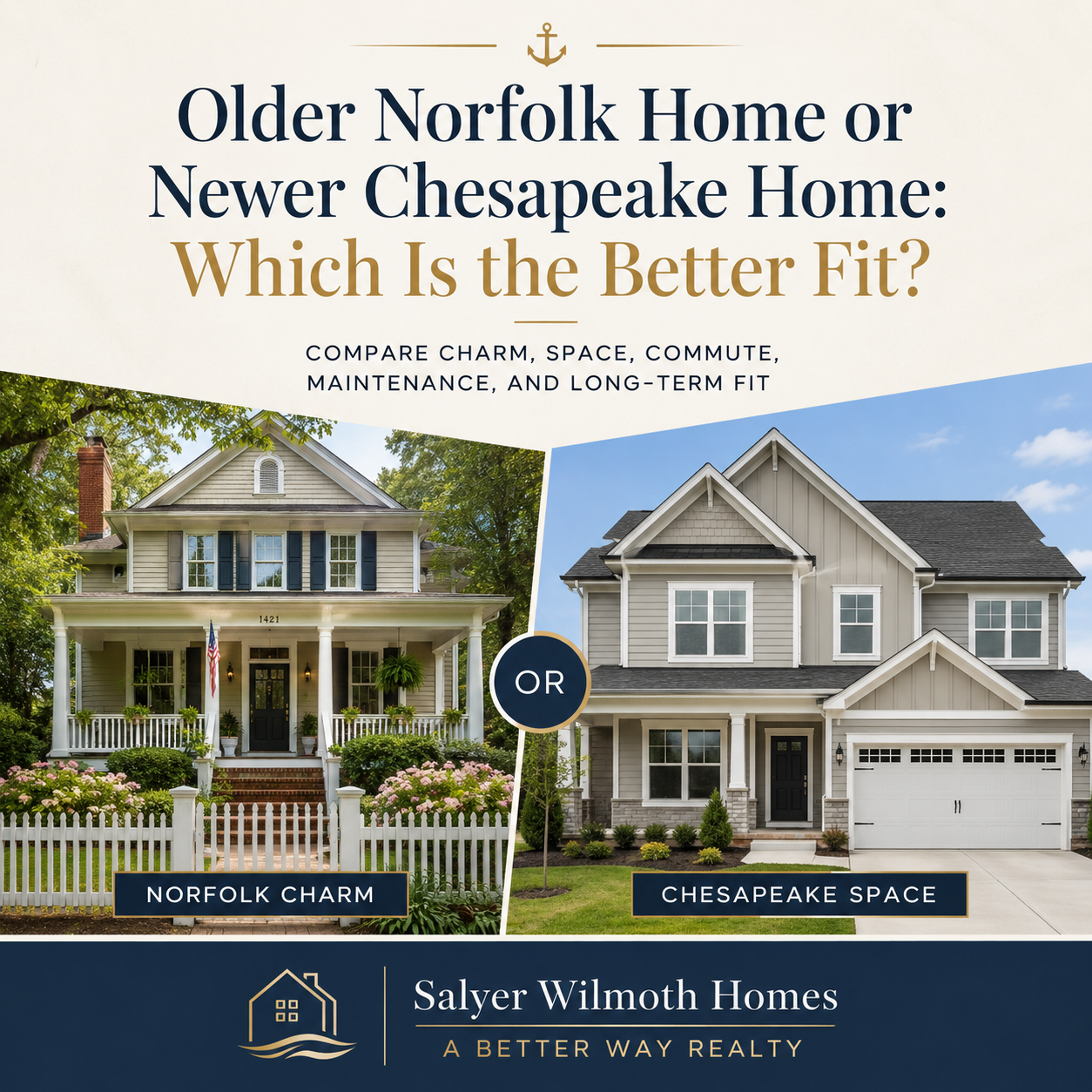
An older Norfolk home may offer established surroundings, architectural character, mature landscaping, proximity to local restaurants, waterfront areas, military installations, and city amenities. A newer Chesapeake home may offer a more modern layout, newer systems, attached garages, larger square footage, newer communities, and less immediate updating in many cases.
Both can be smart choices. Both can also come with tradeoffs.
Why buyers are drawn to older Norfolk homes
Older homes in Norfolk often appeal to buyers who want character, established streets, and a home that feels different from newer construction. Depending on the property, buyers may find features such as hardwood floors, detailed trim, front porches, mature trees, traditional layouts, and proximity to well-known Norfolk areas.
For buyers who value access, Norfolk can also be practical. Some homes may offer shorter routes to Naval Station Norfolk, Downtown Norfolk, Ghent, Ocean View, Old Dominion University, hospitals, shipyards, waterfront areas, and other employment or lifestyle destinations.
But with older homes, buyers should look beyond charm.
An older Norfolk home may need closer review of the roof, windows, plumbing, electrical system, HVAC, foundation, crawl space, drainage, insulation, flood zone status, and past renovations. If you are already leaning toward a Norfolk property because of its character or location, it may help to read What Buyers Should Know About Older Homes in Norfolk Before Making an Offer so you know which details deserve extra attention before you fall in love with the house.
Why buyers are drawn to newer Chesapeake homes
Newer homes in Chesapeake often appeal to buyers who want modern function. Many newer properties may offer open layouts, larger kitchens, more storage, attached garages, updated bathrooms, newer HVAC systems, newer roofing, improved energy efficiency, and layouts that match the way many buyers live today.
Chesapeake can also be attractive for buyers who want more space, parking, yard options, or a quieter residential feel while still remaining within reach of Norfolk, Virginia Beach, Portsmouth, Suffolk, and other parts of Coastal Virginia.
However, newer does not mean automatic perfection.
A newer Chesapeake home may still come with HOA rules, builder-grade finishes, drainage concerns, commute tradeoffs, higher purchase prices, property tax considerations, construction quality questions, or future maintenance needs. If your comparison is really about whether to choose newer construction, resale, or something in between, New Construction or Resale in Chesapeake, VA? What Smart Relocating Buyers Should Know First can help you look past the surface and compare the practical ownership details.
Maintenance may be the biggest difference
One of the biggest differences between an older Norfolk home and a newer Chesapeake home is how maintenance may show up.
With an older Norfolk home, maintenance may involve systems and materials that have aged over time. Even if the home looks beautiful, buyers should pay attention to major components such as the roof, HVAC, plumbing, electrical panel, water heater, windows, siding, crawl space, foundation, drainage, and insulation. These items can affect both comfort and future costs.
With a newer Chesapeake home, the maintenance may feel lighter at first, especially if major systems are newer. But buyers should still budget for routine care, landscaping, appliance repairs, HOA compliance, pest control, exterior maintenance, and future replacement timelines.
A smart buyer should not ask, “Which home has no maintenance?”
Every home has maintenance.
The better question is, “Which home has the kind of maintenance I am prepared to manage?”
Layout and lifestyle matter more than square footage alone
A newer Chesapeake home may offer more square footage, but that does not always mean it functions better for every buyer. An older Norfolk home may have less square footage but better room separation, outdoor access, storage potential, or location convenience.
Buyers should compare how the home actually lives.
Look at the kitchen layout, bedroom placement, bathroom count, closet space, laundry location, parking, outdoor space, natural light, furniture flow, work-from-home options, guest space, and storage. A home that looks larger online may feel less practical in person if the layout does not match your needs.
On the other hand, a smaller or older home may feel more functional if the rooms are well-proportioned, the location reduces daily driving, or the home has flexible spaces that fit your routine.
For buyers trying to decide whether Chesapeake gives them more usable space while still keeping Norfolk access realistic, How to Search for More Space Without Losing Access to Naval Station Norfolk is a helpful next read because it explains why distance, layout, and daily routes should be weighed together.
Commute and access should be tested, not assumed
For buyers comparing Norfolk and Chesapeake, commute can be a deciding factor.
An older Norfolk home may offer closer access to certain employment centers, military installations, hospitals, universities, downtown areas, or waterfront districts. A newer Chesapeake home may offer more residential space but could mean a longer commute depending on the exact location, route, bridge/tunnel patterns, and time of day.
Do not rely only on mileage.
Ten miles in one direction may feel very different from ten miles in another direction. Buyers should test commute routes during the times they actually expect to drive. This is especially important for military buyers, shift workers, medical workers, remote employees with occasional office days, and buyers who regularly move between Chesapeake, Norfolk, and Virginia Beach.
Insurance, flood zones, and ownership costs should be reviewed early
Older Norfolk homes and newer Chesapeake homes may have different ownership costs beyond the mortgage payment.
In Norfolk, buyers may need to pay close attention to flood zones, elevation, drainage, older systems, and insurance requirements depending on the property. In Chesapeake, buyers may also need to evaluate flood zones, drainage, HOA fees, lot conditions, and property taxes depending on the area and home type.
This does not mean one city is automatically more expensive than the other. It means buyers should compare the full cost of ownership before making an offer.
That includes mortgage payment, insurance, property taxes, HOA fees, utilities, maintenance, repairs, commuting costs, and possible future updates. Before you compare two homes only by list price, it may be useful to review What Buyers Should Know About Flood Insurance Before Buying Near Norfolk or Chesapeake and Property Taxes in Chesapeake, Norfolk & Virginia Beach Explained — What Every Buyer Needs to Know so the monthly and long-term numbers are part of the decision from the beginning.
Resale flexibility should be part of the decision
Even if you plan to stay for years, resale should still matter.
An older Norfolk home may have strong appeal if it offers character, location, updates, curb appeal, and practical access. However, resale can be affected if the home has major deferred maintenance, limited parking, outdated systems, awkward layout, or unresolved moisture concerns.
A newer Chesapeake home may appeal to future buyers looking for modern layouts, updated systems, storage, garages, and more space. However, resale can also be affected by pricing, HOA restrictions, commute patterns, builder competition, lot size, and how the home compares with similar properties nearby.
The best choice is the home that makes sense now and still makes sense if your plans change later.
How to compare an older Norfolk home and a newer Chesapeake home
Start with the basics: budget, commute, condition, layout, maintenance, insurance, and resale.
Then compare each home side by side.
Ask yourself:
Does the home fit your daily routine?
Can you comfortably manage the maintenance?
Are the major systems updated or nearing replacement?
Does the commute work during real traffic conditions?
Are there HOA rules or restrictions to review?
Does the property have any flood, drainage, or insurance considerations?
Would the home still make sense if you needed to sell or rent in the future?
The right answer may not be the newest home or the most charming home. The right answer is the home that gives you the strongest overall fit.
Frequently asked questions
Is it better to buy an older home or a newer home?
It depends on your budget, maintenance comfort level, location needs, layout preferences, and long-term plans. Older homes may offer character, established surroundings, and convenient access, while newer homes may offer modern layouts, newer systems, and less immediate updating. The better choice is the one that fits your daily life and financial comfort, not simply the one with the newer or older build date.
Are older homes in Norfolk a good investment?
Older homes in Norfolk can be a good fit for buyers who value character, location, and established surroundings, but the condition of the specific property matters. Buyers should carefully review the roof, HVAC, plumbing, electrical, foundation, drainage, crawl space, flood zone, and prior renovations before deciding. If you are considering an older Norfolk home, Salyer Wilmoth Homes | A Better Way Realty can help you look beyond the charm and compare the practical details before you make an offer.
Are newer homes in Chesapeake worth the higher price?
A newer Chesapeake home may be worth it if the layout, location, systems, space, and lower immediate maintenance needs support your goals. However, buyers should still review HOA rules, taxes, insurance, commute, builder quality, lot drainage, and long-term resale before assuming newer automatically means better. If you are comparing newer homes in Chesapeake, a local strategy can help you decide whether the price makes sense for the full ownership picture.
Should I buy in Norfolk or Chesapeake if I work near Naval Station Norfolk?
The answer depends on your preferred commute, budget, home condition, space needs, and daily schedule. Norfolk may offer closer access from some areas, while Chesapeake may offer more space or newer home options in some price ranges. The best approach is to compare actual routes, not just distance on a map, and decide which home supports your routine best.
How do I choose between charm and convenience when buying a home?
Start by deciding which tradeoffs you are truly comfortable with. If you love charm but do not want major updates, focus on older homes with strong maintenance records and updated systems. If you want convenience but do not want a longer commute or HOA restrictions, review newer homes carefully before deciding. Salyer Wilmoth Homes | A Better Way Realty can help you compare homes in Norfolk, Chesapeake, Virginia Beach, and nearby Coastal Virginia areas with your budget, timeline, commute, and long-term plans in mind.
Thinking about buying in Norfolk, Chesapeake, or another Coastal Virginia community? Before you choose based only on age, charm, square footage, or location, let’s compare the full picture so you can make a confident move.
Michele Salyer, REALTOR®
📞 757-502-3671
“If you are looking to sell, Call Michele! If you are looking to acquire, I’m your hire!”
Salyer Wilmoth Homes | A Better Way Realty
Equal Housing Opportunity