


TL;DR
Las Gaviotas stands out in Chesapeake because it offers something increasingly difficult to recreate in newer developments: established streets, mature landscaping, traditional brick and colonial-style homes, and a neighborhood design shaped around golf-course views, ponds, and open green space. Most homes date to the 1980s and 1990s, so buyers can find more architectural character and a settled neighborhood feel while still remaining within reach of Greenbrier, Great Bridge, I-64, and major Hampton Roads employment corridors. That combination can make Las Gaviotas especially appealing to buyers comparing newer construction with established resale homes, but the age of the housing stock also makes property condition, roof and HVAC age, drainage, crawl-space conditions, HOA documents, golf-course easements, insurance, and future maintenance important parts of the decision. Chesapeake home prices continued to move upward through mid-2026, adding another reason for buyers to evaluate each Las Gaviotas property based on current comparable sales rather than relying on citywide averages or neighborhood reputation alone. The best Las Gaviotas purchase is not simply the prettiest golf-course home—it is the property where location, condition, ownership costs, HOA expectations, lot placement, and daily routine all work together.
Why Las Gaviotas Feels Different From Newer Chesapeake Communities
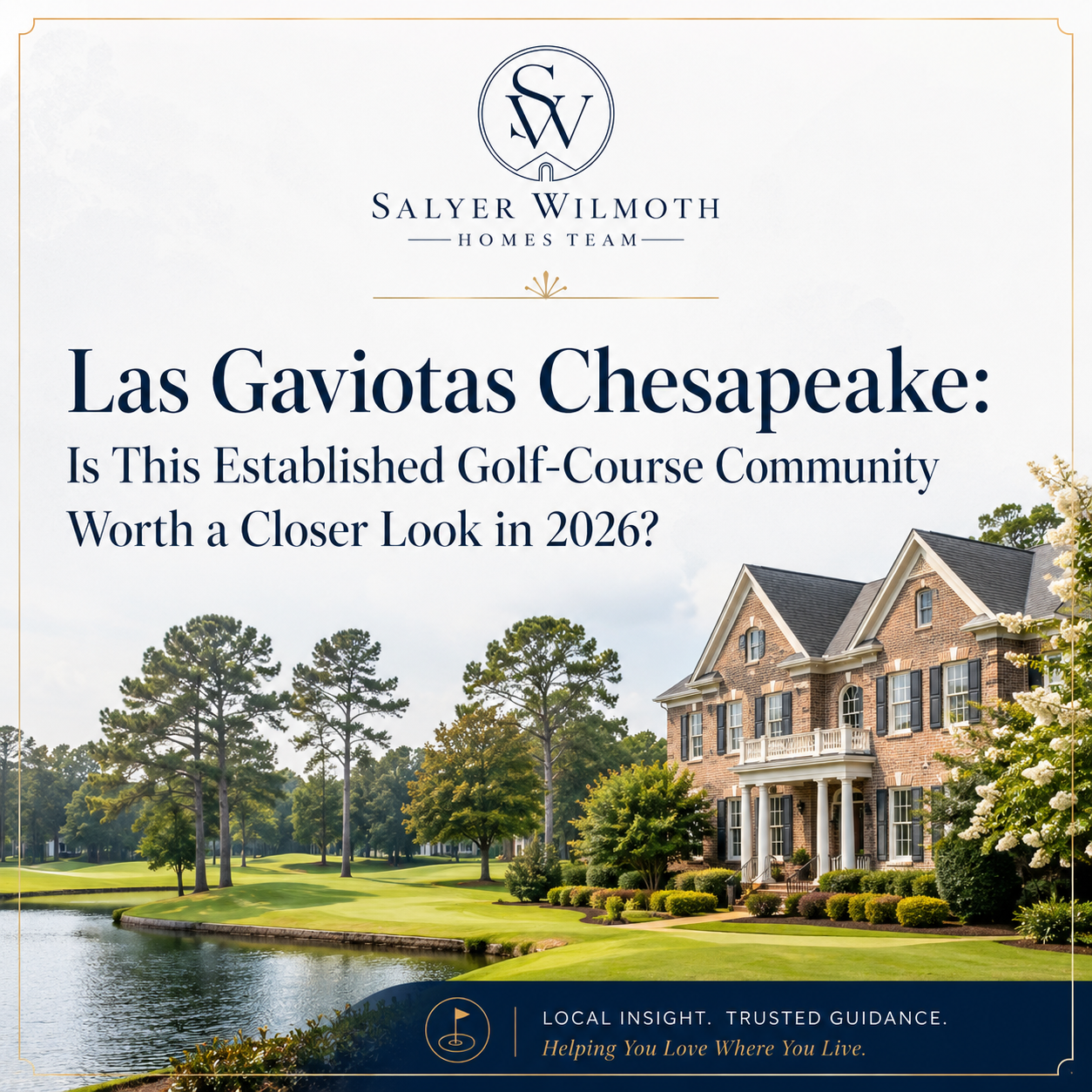
Las Gaviotas is an established planned community in Chesapeake, Virginia, with much of its housing built during the 1980s and 1990s. Buyers will commonly see detached single-family homes with brick or partial-brick exteriors, traditional or colonial-influenced architecture, two-story layouts, attached garages, mature landscaping, and streets that have had decades to develop their character.
That distinction matters. New construction can offer newer systems, contemporary finishes, modern floor plans, and fewer immediate replacement concerns, but established communities can offer qualities that take years to develop: mature trees, larger landscaping, established streetscapes, and homes that do not necessarily feel identical from lot to lot.
If you are trying to decide how much that established character should matter compared with newer systems and layouts, Older Norfolk Home or Newer Chesapeake Home: Which Is the Better Fit? offers a useful framework for thinking through the tradeoff. Las Gaviotas falls somewhere in the middle of that conversation—it is not historic housing, but it is old enough that condition and previous improvements can vary considerably from one property to another.
The golf-course setting adds another layer. Depending on the street and lot, buyers may encounter views toward fairways, ponds, or open areas that create a different feel from denser subdivisions. That does not automatically make one Las Gaviotas property more valuable than another, but lot placement, privacy, updates, condition, and views can influence how buyers perceive individual homes.
Location and Access Near Greenbrier and Great Bridge
Las Gaviotas is positioned within the broader Greenbrier and Great Bridge side of Chesapeake, giving residents access to major roads, commercial corridors, and connections toward other parts of Hampton Roads.
For buyers commuting toward Norfolk, Virginia Beach, Portsmouth, Suffolk, regional medical centers, shipyards, military installations, or other employment destinations, that connectivity can be an important part of the search. Naval Station Norfolk, Naval Air Station Oceana, Norfolk Naval Shipyard, and Joint Base Langley-Eustis are among the major regional installations that influence commuting patterns throughout Hampton Roads.
Mileage alone, however, should never determine whether the location works. Test the route from the actual property during the hours you normally travel. Neighborhood entrances, interstate access, traffic patterns, bridges, construction, and the direction of your commute can make two similarly located Chesapeake homes feel very different during a normal weekday.
Buyers who want a broader understanding of nearby development and housing demand may also want to explore Greenbrier Chesapeake: What’s Driving Its Growth. Greenbrier's established commercial infrastructure and regional access help explain why this portion of Chesapeake continues to attract attention from buyers considering both newer and established housing.
HOA Rules and Golf-Course Living Deserve a Closer Look
A home in a golf-course community should never be evaluated from the view alone.
Buyers considering Las Gaviotas should request and carefully review the current HOA documents, fees, architectural guidelines, exterior restrictions, maintenance responsibilities, parking provisions, and other governing rules that apply to the specific property. If the home backs to or sits near the golf course, buyers should also review any applicable easements, recorded restrictions, or other documents affecting the lot.
Do not assume that basic HOA dues automatically include golf membership or golf-course privileges. Golf access, memberships, fees, and agreements should be confirmed separately before making a purchasing decision.
If you have never bought in a planned community—or it has been a while since you reviewed association documents—What Buyers Should Know About HOA Rules Before Buying in Chesapeake explains why fees are only one piece of the HOA equation. Restrictions involving fencing, exterior improvements, parking, landscaping, sheds, rentals, and future alterations can sometimes matter more to your everyday ownership experience than the dues themselves.
For another example of how planned-community rules and amenities can shape a Chesapeake purchase, 7 Things Buyers Should Know Before Buying in Culpepper Landing provides a useful comparison. The communities are different, but the due-diligence questions buyers should ask about association responsibilities and long-term ownership are similar.
What the 2026 Chesapeake Market Means for Las Gaviotas Buyers
The original market data used for this neighborhood profile placed Chesapeake's median sale price at approximately $433,000 over the three months ending June 2026, representing roughly 3.8% year-over-year appreciation.
That citywide figure provides context, but it should not be used to estimate what an individual Las Gaviotas home is worth.
Established golf-course communities can have meaningful property-to-property differences. One home may have an updated kitchen, recently replaced roof and HVAC, desirable lot placement, and extensive renovations, while another home on the same street may still contain largely original systems and finishes.
That is why neighborhood-level decisions should be based on recent comparable sales and currently competing properties. Even two Chesapeake homes offered at nearly identical prices can create completely different ownership experiences once condition, location, maintenance, HOA obligations, insurance, and future improvement costs are considered. Why Two Homes in Chesapeake at the Same Price Can Feel Completely Different goes deeper into why the list price alone rarely tells the whole story.
Public neighborhood-level datasets also do not always isolate Las Gaviotas closely enough to provide a reliable subdivision-specific picture. When you are seriously considering a property, a current MLS pull showing active, pending, and recently closed Las Gaviotas sales is considerably more useful than relying on a broader Chesapeake median.
Due Diligence Matters More With 1980s and 1990s Homes
A well-maintained 1980s or 1990s home can offer years of comfortable ownership, but buyers should understand where older components could create future costs.
A thorough inspection should evaluate the structure, roof, HVAC equipment, electrical components, plumbing, windows, crawl space where applicable, water heater, drainage, and other major systems. Chimneys and fireplaces may deserve specialized evaluation, and buyers can discuss termite or wood-destroying insect inspections, radon testing, and other property-specific evaluations with the appropriate professionals.
The age of each component matters more than the age printed beside the home's listing. A 1990 home with a recently replaced roof, updated HVAC, improved crawl space, and documented renovations may present a very different maintenance picture from a younger home where several major components are approaching replacement.
Outdoor conditions deserve attention as well. Mature landscaping and established lots can be a major part of Las Gaviotas' appeal, but buyers should still watch how water moves around the property. Recurring ponding, runoff toward the foundation, saturated areas beside the crawl space, erosion, or persistent moisture deserve investigation rather than being dismissed as normal after a storm. Our guide to when standing water after rain becomes a serious drainage concern can help you identify the warning signs worth investigating before an offer becomes a long-term maintenance issue.
Most Las Gaviotas homes appear to have been constructed after 1978, placing them outside the federal lead-based paint disclosure requirement that applies to most pre-1978 residential properties. Still, the exact construction year of the property should always be verified rather than assumed.
What Closing on a Las Gaviotas Home Typically Looks Like
Virginia residential purchases commonly involve a settlement or title professional coordinating title work, lender requirements, document preparation, recordation, and closing funds. Buyers may also choose to consult a real estate attorney when their transaction or contract situation warrants additional legal guidance.
A typical financed resale transaction may take roughly 30 to 45 days from contract to closing, although lender processing, appraisal scheduling, repairs, inspections, title issues, negotiations, or other transaction-specific circumstances can change that timeline.
Buyers should also confirm closing costs, property taxes, HOA-related charges, insurance, lender expenses, and recording-related costs with their settlement agent, lender, and other appropriate professionals rather than relying on generalized estimates.
For Las Gaviotas in particular, the best time to understand the property is before the closing countdown becomes stressful. Review the inspection results, association documents, title information, applicable easements, insurance quote, major system ages, and comparable sales while you still have the opportunity to make an informed decision.
Frequently asked questions
Is Las Gaviotas a good neighborhood in Chesapeake, VA?
Las Gaviotas may be a strong fit for buyers who value established single-family homes, mature landscaping, traditional architecture, a golf-course community setting, and access to the Greenbrier and Great Bridge portions of Chesapeake. Whether it is the right choice depends on the specific property's price, condition, HOA obligations, commute, lot placement, maintenance needs, and how those factors fit your priorities. Rather than relying on a broad label such as “good neighborhood,” evaluate the individual home and objective property characteristics that matter to you.
How much do homes cost in Las Gaviotas Chesapeake?
Las Gaviotas does not always have enough publicly separated sales data to make a single neighborhood-wide median useful, and prices can differ substantially based on size, condition, renovations, lot placement, golf-course frontage, major system ages, and current competition. If you are considering a particular Las Gaviotas home, Michele can pull current MLS comparables so you can see how its asking price compares with recent sales and competing listings before you make an offer.
What types of homes are in Las Gaviotas Chesapeake?
Las Gaviotas primarily consists of established detached single-family homes, many dating to the 1980s and 1990s. Buyers may encounter brick or partial-brick exteriors, colonial and transitional styling, two-story layouts, attached garages, mature landscaping, and properties positioned near fairways, ponds, or other open areas. Individual renovations and system updates can vary significantly, so two homes built around the same time may have very different maintenance and ownership profiles.
Does Las Gaviotas have an HOA, and is golf included?
Las Gaviotas is generally associated with an HOA structure, but buyers should verify the current dues, governing documents, responsibilities, restrictions, and amenities for the specific property. Golf membership or course access should not be assumed to be included with standard HOA dues because golf-related fees and agreements may be handled separately. If Las Gaviotas is on your shortlist, Michele can help you identify the documents and property-specific questions to review before you commit.
What should I inspect before buying a home in Las Gaviotas?
Pay particular attention to the roof, HVAC, plumbing, electrical components, crawl space or foundation conditions, drainage, windows, fireplace or chimney where applicable, pest activity, previous renovations, and the remaining life of major systems. Buyers should also review HOA documents, applicable easements, insurance estimates, and property records alongside the physical inspection. If you have found a Las Gaviotas property you are serious about, Michele can help you organize the due-diligence process and compare the home with recent neighborhood sales before your contract deadlines arrive.
Las Gaviotas can offer a combination of mature surroundings, traditional homes, golf-course character, and Chesapeake access that newer subdivisions cannot immediately recreate. If you are considering a move here, let’s compare the homes currently available with recent Las Gaviotas sales so you can decide based on the property—not just the neighborhood name.
Michele Salyer, REALTOR® | Team Leader, Salyer Wilmoth Homes
Atlantic Sotheby’s International Realty
4416 Expressway Drive, Virginia Beach, VA 23452
757-502-3671
michele@salyerwilmothhomes.com
https://www.salyerwilmothhomes.com
Virginia License #0225238875 | North Carolina License #322300
Equal Housing Opportunity
This article is provided for general informational purposes and does not constitute legal, tax, lending, insurance, or financial advice. Confirm property-specific regulations, costs, permits, taxes, insurance requirements, and investment assumptions with the appropriate government agencies and qualified professionals.