TL;DR
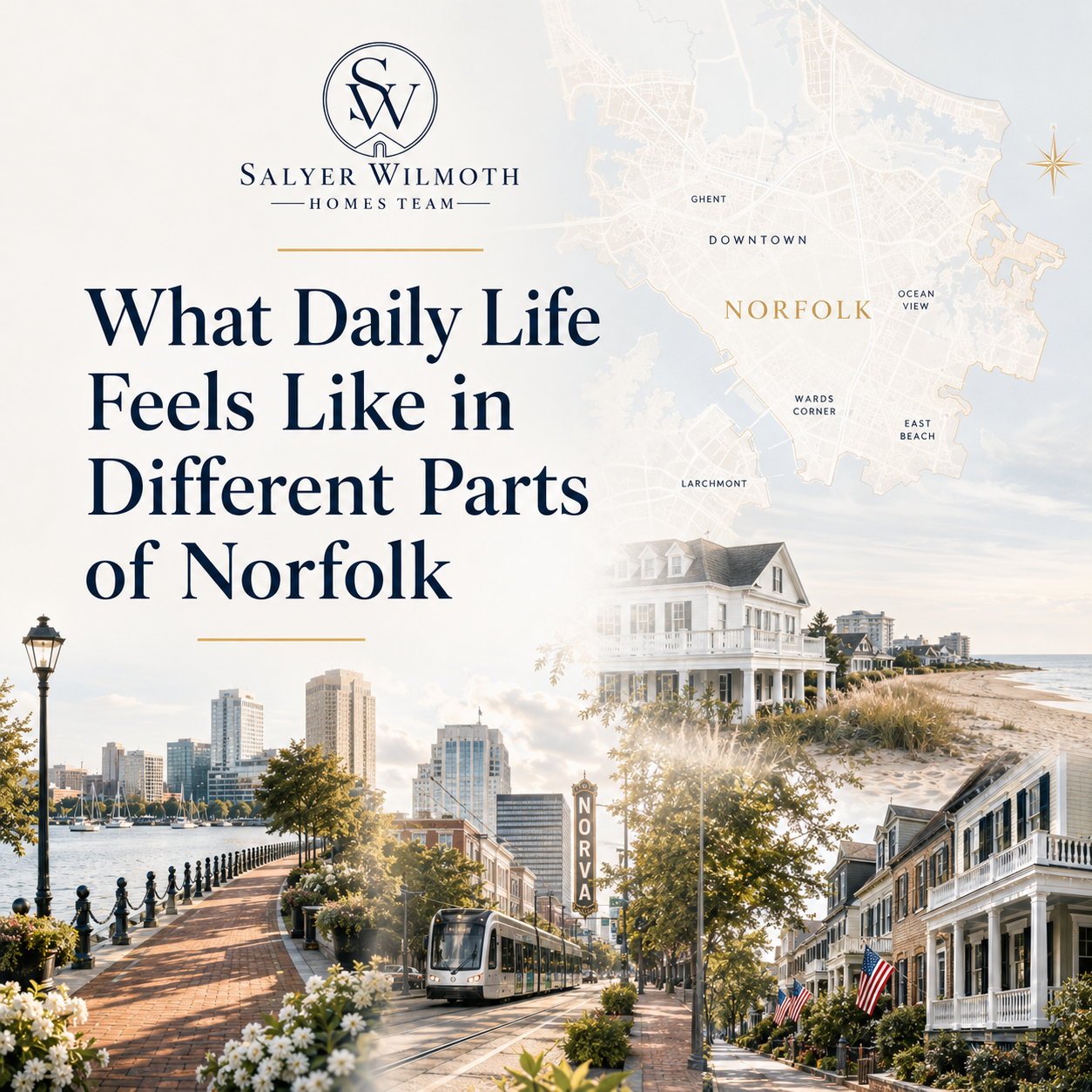
Daily life in Norfolk can feel very different from one area to another, even when homes are only a short drive apart. Some parts of the city offer a more urban, walkable rhythm close to restaurants, offices, entertainment, and waterfront activity, while others feel more residential, historic, coastal, or commute-focused. For buyers, the right fit is not just about choosing a Norfolk address. It is about understanding how the home, street, parking, traffic patterns, nearby amenities, flood considerations, and maintenance needs will affect everyday life after move-in.
Norfolk Is Not One-Size-Fits-All
Norfolk is one of those Coastal Virginia cities where daily life can change significantly from one part of town to another. A home may be only a few miles from another neighborhood, but the experience of living there can feel completely different based on commute patterns, parking, home style, nearby businesses, waterfront access, road flow, and the pace of the surrounding area. That is why buyers should look beyond listing photos and square footage when comparing homes in Norfolk. The better question is not simply, “Do I like this house?” It is, “Can I picture my actual daily life working well here?”
For some buyers, Norfolk’s appeal is the ability to live near restaurants, arts, entertainment, and waterfront activity. For others, the draw is a more residential setting with older homes, tree-lined streets, or access to the Chesapeake Bay. Some buyers care most about commute convenience, while others focus on how easy it feels to run errands, walk nearby streets, host guests, maintain a yard, or enjoy time outside. None of these priorities is right or wrong. The key is understanding how each part of Norfolk functions before making a decision.
This is also why a Norfolk home search should go deeper than the listing itself. A property can photograph beautifully and still feel different once you consider noise, access, traffic, parking, and daily flow. If you want a deeper look at those less obvious details, Norfolk Homebuying Beyond the Listing: Noise, Access, and Daily Flow is a helpful next read.
Daily Life in Downtown Norfolk
Downtown Norfolk tends to feel more urban, active, and connected to the city’s waterfront core. Buyers who are drawn to Downtown often like the idea of being near restaurants, offices, entertainment, events, hotels, waterfront views, and cultural destinations. Daily life here may involve walking to dinner, attending local events, living closer to business districts, or enjoying a more compact lifestyle with less emphasis on large private outdoor space.
The tradeoff is that Downtown living can also require buyers to think carefully about parking, building rules, street activity, noise patterns, and how comfortable they feel with an urban rhythm. Condos, apartments, townhomes, and renovated properties may appeal to buyers who want convenience and access, but every building and block can feel different. A smart Norfolk home search should include visiting at different times of day, checking parking expectations, understanding building fees if applicable, and thinking honestly about whether the energy of Downtown feels exciting or overwhelming for your daily routine.
Buyers should also pay attention to how the floor plan supports everyday living. In more urban homes, space may be used differently than in larger suburban properties, so layout, storage, entry flow, and room function matter. If you are trying to evaluate whether a home will actually work once you move in, The Floor Plan Test Most Buyers Don’t Realize They Need can help you look at a property more strategically.
Daily Life in Ghent
Ghent has a distinct historic and neighborhood-oriented feel, with a mix of older homes, apartments, local businesses, restaurants, and cultural access. Daily life in Ghent may feel more walkable and character-filled than in some other parts of Norfolk, especially for buyers who enjoy older architecture, nearby coffee shops, local dining, sidewalks, and a more established city-neighborhood atmosphere.
For buyers, the important thing is to look closely at the details behind the charm. Older homes can offer beautiful character, but they may also come with maintenance considerations, floor plan quirks, limited storage, smaller closets, older systems, or parking differences depending on the property. Ghent can be a strong fit for buyers who value personality and convenience, but it is still important to compare each home’s condition, layout, and long-term upkeep needs before assuming the lifestyle will be effortless.
If Ghent is already on your list, A Buyer’s Guide to Ghent in Norfolk, VA offers a more focused look at what buyers should know before narrowing their search in this part of the city.
Daily Life Near Ocean View and East Beach
Ocean View and East Beach offer a more coastal Norfolk experience, with access to the Chesapeake Bay, beachside scenery, restaurants, and a more relaxed waterfront feel. Daily life in this part of Norfolk may appeal to buyers who like being closer to the water, enjoying outdoor time, taking in bay views, or having a lifestyle that feels less centered around the downtown core.
At the same time, coastal living comes with practical questions. Buyers should look carefully at flood zones, insurance needs, stormwater conditions, exterior maintenance, wind exposure, parking, and seasonal traffic patterns. A home near the water can feel beautiful and peaceful, but the location should be evaluated with both lifestyle and ownership costs in mind. The best approach is to enjoy the appeal of the setting while still doing the practical due diligence that helps prevent surprises later.
For buyers comparing Norfolk’s bayfront lifestyle with other waterfront-adjacent options, Waterfront Proximity Near Norfolk or Virginia Beach: A Buyer’s Guide to Risk, Cost, and Lifestyle gives a helpful breakdown of what to consider before falling in love with a coastal location.
Daily Life in Freemason, Chelsea, and Nearby Historic Pockets
Freemason, Chelsea, and nearby historic pockets of Norfolk can offer a different kind of city experience. These areas may feel charming, established, and close to restaurants, breweries, waterfront views, medical corridors, arts districts, or Downtown depending on the exact location. Daily life can feel convenient without always feeling as busy as the most central parts of Downtown.
Buyers considering these areas should pay attention to street-by-street differences. One block may feel quiet and tucked away, while another may feel more active because of nearby businesses, traffic routes, or event activity. Historic charm can be a major draw, but it is also worth reviewing renovation quality, roof age, crawlspace or foundation conditions, parking access, and whether the home’s layout supports modern living. In Norfolk, the right home is often less about the neighborhood name alone and more about how that specific property sits within its surroundings.
This is where local knowledge becomes especially valuable. Online listings can show the home, but they rarely explain how the area feels at different times of day, how traffic moves, or what small details may affect daily life. For more on why those insights matter, Why Local Knowledge Matters More Than Buyers Realize When Choosing an Agent explains why the right guidance can make a major difference in a buyer’s decision.
Daily Life in Larchmont, Edgewater, and Colonial Place
Larchmont, Edgewater, and Colonial Place often come up for buyers who want a more residential Norfolk feel while still staying connected to city conveniences. These areas can offer tree-lined streets, older homes, sidewalks, nearby water features, and a calmer daily rhythm compared with more commercial or urban sections of the city. Buyers may be drawn to the sense of established neighborhood character, traditional home styles, and access to local routes.
The practical questions here often involve home condition, lot size, flood considerations, commute timing, and how the home functions for everyday life. Some properties may have classic charm but require updates. Others may offer more usable layouts, outdoor space, or renovated systems. Buyers should compare not only price and appearance, but also how easy it feels to leave in the morning, unload groceries, park, maintain the property, and use the home comfortably over time.
For many buyers, this is where a home’s emotional feel matters just as much as its features. A house can have the right number of bedrooms and still feel busy, cramped, dark, or difficult to live in. If you are trying to understand those subtle differences, How to Tell if a House Will Feel Calm or Chaotic Once You Move In is a useful companion piece to this guide.
Daily Life Near Major Roads, Bases, and Work Corridors
Some Norfolk buyers prioritize access more than atmosphere. Living near major routes, bridges, tunnels, shipyard areas, port activity, medical centers, universities, or military-related corridors can make daily life more convenient depending on where someone works or travels regularly. For these buyers, the right Norfolk location may be the one that reduces friction in the daily schedule.
However, access should be evaluated carefully. A home that looks convenient on a map may still involve traffic backups, bridge delays, limited turning options, noise, or parking challenges. Buyers should test the commute during real travel windows, not just rely on distance. It can also help to visit the property during morning, evening, and weekend hours to understand how the area feels beyond the showing appointment.
How Buyers Should Compare Norfolk Areas
When comparing different parts of Norfolk, buyers should avoid relying only on broad labels like “walkable,” “quiet,” “close to everything,” or “near the water.” Those phrases can mean different things depending on the buyer and the specific property. Instead, it is better to build a lifestyle checklist around your actual day.
Think about where you go most often, how you prefer to commute, how much outdoor space you want to maintain, whether you want to walk to local spots, how much storage you need, what kind of parking setup you prefer, and how comfortable you are with older home maintenance. A home that looks perfect online may not feel right once you test the drive, listen to the street, check the parking, or imagine your weekday routine.
This is also where local guidance matters. Norfolk has many areas with strong appeal, but the details can shift block by block. A buyer who understands those details early can make a more confident decision and avoid choosing a home based only on surface-level appeal.
Fair Housing-Friendly Note for Buyers
When comparing Norfolk neighborhoods, it is important to focus on objective, property-specific, and lifestyle-based factors rather than assumptions about who lives in an area. Fair Housing rules protect buyers and sellers from discrimination, so real estate guidance should not rank neighborhoods based on protected classes or steer buyers toward or away from areas based on personal characteristics.
A better and more helpful approach is to talk about commute routes, home types, flood considerations, maintenance needs, nearby amenities, price range, parking, noise patterns, walkability, waterfront proximity, and day-to-day convenience. These are practical factors that help buyers make informed decisions while keeping the home search fair, respectful, and focused on the property and lifestyle fit.
Frequently Asked Questions
What are the best areas to live in Norfolk, VA?
The best area in Norfolk depends on your daily routine, budget, preferred home style, commute, and lifestyle priorities. Some buyers may prefer the urban feel of Downtown, others may like the historic character of Ghent, while others may be drawn to the coastal feel of Ocean View or the more residential rhythm of areas such as Larchmont, Edgewater, or Colonial Place.
Instead of choosing based on a neighborhood name alone, buyers should compare commute routes, parking, flood considerations, home condition, walkability, nearby conveniences, and how each property supports everyday life.
What is it like to live in Downtown Norfolk?
Living in Downtown Norfolk can feel active, convenient, and connected to the city’s waterfront, restaurants, events, offices, and entertainment. It may appeal to buyers who want a more urban lifestyle and prefer being close to dining, culture, and local activity.
Buyers should also consider parking, building rules, street noise, event traffic, and whether condo or townhome living fits their long-term needs. If you are comparing Downtown Norfolk homes, a local walkthrough can help you understand how each block and building functions in real life.
Is Ocean View in Norfolk a good place to buy a home near the water?
Ocean View can be appealing for buyers who want beachside access, Chesapeake Bay scenery, and a more coastal daily lifestyle within Norfolk. Homes near the water can offer a relaxed setting, but buyers should look beyond the view and evaluate flood zones, insurance, exterior maintenance, wind exposure, and long-term ownership costs.
Before buying near the water, it helps to review property-specific details carefully and compare the lifestyle benefits with the practical responsibilities of coastal ownership.
What should buyers know about older homes in Ghent, Freemason, or Colonial Place?
Older homes in Norfolk can offer character, craftsmanship, and architectural charm, but buyers should pay close attention to condition, updates, layout, storage, parking, and major systems. Features such as older plumbing, electrical updates, crawlspaces, roofs, windows, and HVAC systems can affect comfort and future maintenance.
If you are drawn to historic Norfolk homes, work with a local real estate professional who can help you look beyond the charm and evaluate whether the home fits your lifestyle, budget, and long-term plans.
How do I choose the right Norfolk neighborhood for my lifestyle?
Start by mapping your actual routine. Look at where you work, shop, relax, commute, park, exercise, and spend most of your time. Then compare each Norfolk area based on commute flow, home style, outdoor space, walkability, flood risk, noise patterns, maintenance expectations, and price range.
A strong Norfolk home search should include both online research and in-person visits at different times of day. For guidance comparing Norfolk, Chesapeake, Virginia Beach, and nearby Coastal Virginia communities, connect with Salyer Wilmoth Homes Team for local insight before you start narrowing your list.
Thinking about buying in Norfolk or comparing it with Chesapeake, Virginia Beach, or nearby Coastal Virginia communities? A local conversation can help you understand how each area actually feels day to day before you choose your next home.
Michele Salyer, REALTOR®
📞 757-502-3671
“If you are looking to sell, Call Michele! If you are looking to acquire, I’m your hire!”
Atlantic Sotheby's International Realty
Equal Housing Opportunity