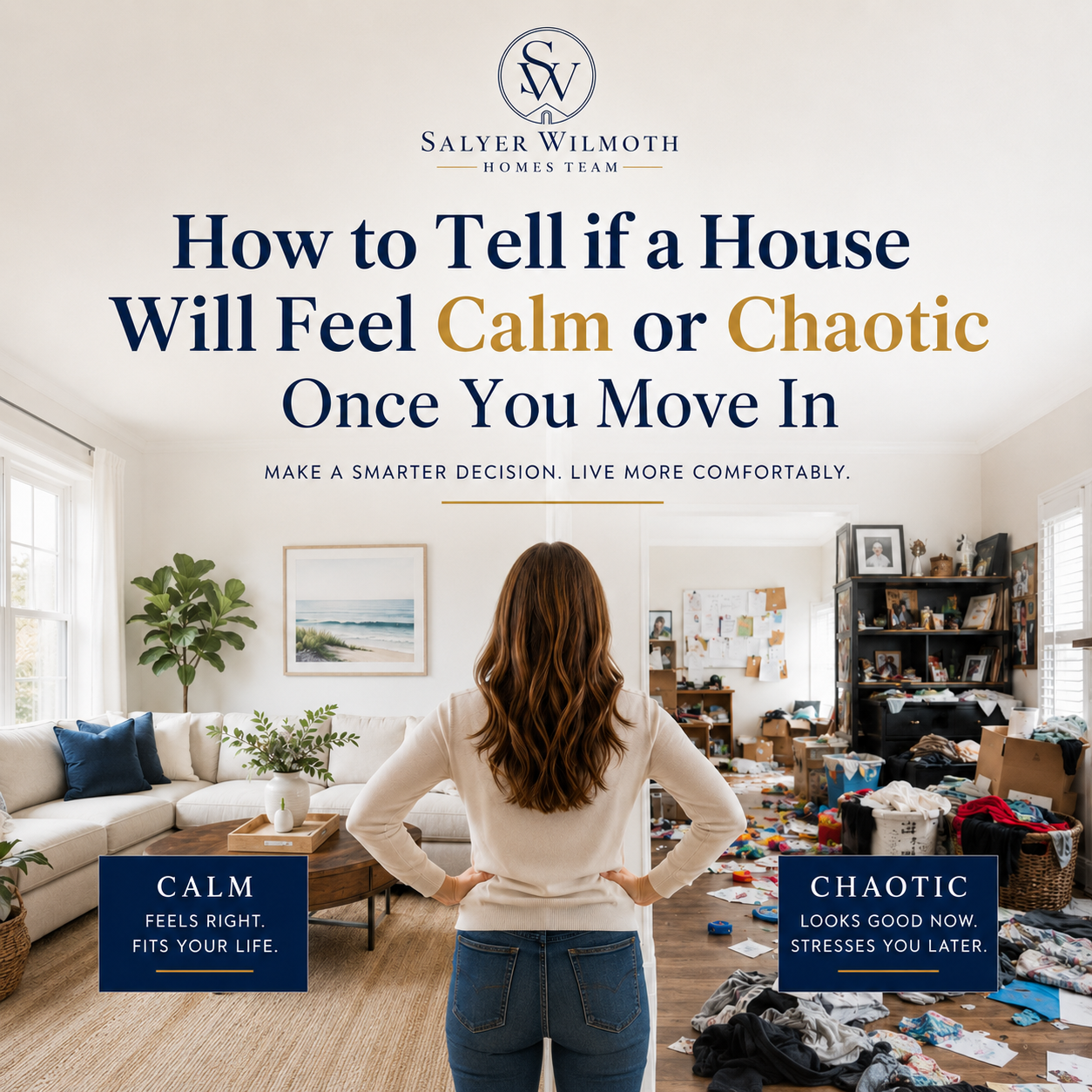
TL;DR
The calmest home is not always the newest, largest, or most beautifully staged one; it is the home whose layout, noise levels, storage, lighting, parking, maintenance needs, and everyday flow match the way you actually live after move-in. A house may look impressive in listing photos and feel exciting during a short showing, but daily comfort depends on practical details that are easy to miss when buyers are focused on finishes, square footage, or first impressions. Before making an offer, buyers should slow down and ask how the home will support ordinary routines like getting ready in the morning, unloading groceries, doing laundry, working from home, storing seasonal items, hosting guests, managing pets, and relaxing at the end of the day. A home that feels calm usually reduces friction, while a home that feels chaotic often creates small daily frustrations through awkward room placement, limited storage, loud surroundings, inconvenient parking, difficult upkeep, or a floor plan that does not fit real life.
Why a Home’s “Feel” Matters After Closing
A house can look beautiful in photos and still feel stressful once daily life begins. During a showing, buyers often focus on finishes, room sizes, countertops, paint colors, and curb appeal. Those details matter, but they do not always reveal whether the home will feel calm, functional, and comfortable over time. The real test is how the house supports everyday routines: getting ready in the morning, unloading groceries, doing laundry, working from home, hosting guests, storing seasonal items, managing pets, and winding down at the end of the day. A calm home usually has a layout that makes movement easy, enough storage to reduce clutter, manageable noise levels, practical room placement, and maintenance demands that feel realistic for the buyer’s lifestyle and budget. A chaotic home, on the other hand, may create friction through awkward traffic patterns, limited storage, inconvenient parking, poor lighting, loud mechanical systems, or spaces that look good but do not function well.
Start With the Way You Actually Live
The first step is to stop touring the house like a visitor and start walking through it like someone who already lives there. Imagine the home on a normal weekday, not just on a perfectly staged showing day. Where would you enter after work? Where would your keys, bags, shoes, mail, groceries, pet items, or children’s things go? Where would laundry pile up? Where would guests naturally gather? Where would you go for quiet? These questions help buyers move beyond emotion and evaluate the home’s actual function. This connects closely with The Floor Plan Test Most Buyers Don’t Realize They Need, because the way a home flows from room to room can matter just as much as the number of bedrooms, the size of the kitchen, or the square footage listed online.
Pay Attention to the Entry Points
The way you enter and leave a home can affect how calm or chaotic it feels every day. Look beyond the front door and think about the entrance you would actually use most often. If you park in the driveway or garage, ask yourself where keys, bags, shoes, coats, backpacks, mail, and groceries would go. A home may feel organized if there is a practical drop zone, mudroom, foyer closet, or nearby storage area. It may feel more chaotic if the main entry opens directly into a tight living space with nowhere to place everyday items. This does not mean the home is a poor choice, but it does mean you should plan how the space will function before deciding.
Study the Floor Plan Like a Daily Routine
A good floor plan should make daily movement feel natural. During a showing, walk through the home as if you already live there. Move from the bedroom to the bathroom, from the kitchen to the dining area, from the garage to the pantry, and from the laundry area to the bedrooms. Notice whether the layout feels smooth or interrupted. Long walks between frequently used spaces, narrow hallways, limited countertop landing areas, or bedrooms placed too close to noisy gathering spaces may affect comfort. In Hampton Roads homes, especially in older Norfolk properties, newer Chesapeake homes, and Virginia Beach condos, layouts can vary widely. The best choice depends on how the specific property supports your habits, not on assumptions about any city or neighborhood.
Listen for Noise Inside and Outside the Home
Noise can change the way a home feels once you move in. During a showing, pause for a few minutes without talking and listen. Pay attention to traffic sounds, HVAC noise, plumbing sounds, appliances, nearby construction, barking dogs, shared walls, garage doors, and footsteps between floors. In condos or townhomes, listen for noise from adjoining units or common areas. In single-family homes, notice whether major roads, driveways, outdoor equipment, or mechanical systems are close to bedrooms or living areas. A home does not need to be silent to feel calm, but the sound environment should match your comfort level and daily needs. For buyers looking in Norfolk, Norfolk Homebuying Beyond the Listing: Noise, Access, and Daily Flow is a helpful follow-up because it explains how sound, access, parking, and nearby activity patterns can affect the daily experience of living in a home.
Notice Natural Light and Lighting Flexibility
Natural light can make a home feel open and peaceful, but it should also be practical. Look at how light enters the home at different points of the day if possible. A bright room may feel beautiful during a showing but could become too warm, too exposed, or difficult for screen use depending on the orientation and window placement. A darker room may feel cozy but may need layered lighting to feel functional. Calm homes often have flexibility: natural light where it matters, window coverings where privacy or glare control is needed, and enough lighting options for cooking, reading, working, and relaxing.
Check Storage Before You Fall in Love With the Finishes
Storage is one of the biggest differences between a home that feels calm and one that feels cluttered. Open cabinets, closets, the pantry, linen storage, garage areas, attic access, and laundry storage. Ask yourself where holiday décor, cleaning supplies, luggage, sports equipment, pet items, tools, bulk purchases, and extra linens would go. A beautifully updated kitchen may still feel chaotic if there is not enough pantry space. A spacious primary bedroom may feel less functional if the closet does not fit your actual needs. Storage does not have to be perfect, but it should be realistic.
Look at the Kitchen’s Work Zones
The kitchen often determines the rhythm of the home. A calm kitchen usually has enough room for cooking, cleaning, food prep, storage, and movement without constant interruption. Notice the relationship between the sink, stove, refrigerator, dishwasher, trash area, and pantry. Check whether cabinet doors, appliance doors, and drawers can open without blocking each other. Think about where groceries would land, where dishes would be unloaded, and whether more than one person could move through the space comfortably. A kitchen can look stylish but still feel stressful if the work zones do not support daily use.
Think About Privacy Without Making Assumptions
Privacy is personal and should be evaluated through property features rather than assumptions about people or neighborhoods. Look at window placement, sightlines from the street, distance from neighboring structures, fencing, landscaping, bedroom locations, and the relationship between indoor and outdoor spaces. A home may feel calmer if bedrooms are set apart from main gathering areas, if windows can be covered without making rooms feel dark, or if outdoor spaces feel usable for your lifestyle. The goal is not to label an area as good or bad. The goal is to decide whether the specific home provides the privacy and comfort you want.
Evaluate Maintenance as Part of the Home’s Mood
A house can feel chaotic if the upkeep is more than you expected. During a showing, look closely at exterior materials, landscaping, gutters, crawl space access, roof age, HVAC age, windows, decks, fences, drainage, and visible signs of deferred maintenance. A larger yard, older home, waterfront-adjacent property, or home with extensive exterior features may offer lifestyle benefits, but it may also require more time, planning, and budget. If a home looks beautiful but has several upkeep signals, How to Spot a Home That Is Beautiful but High-Maintenance can help buyers look past the finishes and think more clearly about systems, exterior care, drainage, and long-term responsibility.
Watch for Clutter Triggers
Some homes create clutter because they lack the right support spaces. Common clutter triggers include no coat closet near the entry, no linen closet, limited bathroom storage, small laundry areas, no pantry, awkward garage access, minimal bedroom closets, and open living areas without hidden storage. During a tour, imagine the home on an ordinary weekday, not just on a staged showing day. If every everyday item needs to sit out in the open, the home may feel busier than expected.
Consider Parking and Arrival Flow
Parking can affect daily stress more than buyers sometimes expect. Look at driveway size, garage usability, street parking rules, guest parking, turning space, and how easy it is to unload groceries or children’s items. For condos, townhomes, and homes with shared parking arrangements, review the parking setup carefully. A home may feel calm when the arrival routine is predictable and convenient. It may feel chaotic if parking is tight, unclear, or far from the entrance you use most.
Compare Lifestyle Tradeoffs Before You Decide
A calm home for one buyer may feel inconvenient to another, which is why the decision should be based on your own routine, not just the way the home looks online. A condo may feel calmer for someone who wants less exterior upkeep, while a detached house may feel calmer for someone who wants more storage, parking flexibility, or outdoor space. A smaller home with a strong layout may feel easier to live in than a larger home with awkward transitions. Buyers comparing different property types may find Virginia Beach Condo or Chesapeake House? The Lifestyle Tradeoff Buyers Feel Later useful because it looks at how maintenance, space, rules, storage, and daily routines can shape the way a home feels long after closing.
Tour at the Pace You Would Actually Live
A rushed showing can make it easy to miss important details. Slow down and walk through the home with your normal life in mind. Where would you drink coffee? Where would work calls happen? Where would laundry pile up? Where would guests gather? Where would quiet time happen? Where would packages be delivered? Where would pets go in and out? The more honestly you tour, the easier it becomes to tell whether the home supports a calm lifestyle or creates small daily frustrations.
Work With an Agent Who Helps You Look Beyond the Listing
A thoughtful real estate agent can help buyers evaluate more than photos, finishes, and price. The right guidance can help you compare layout, condition, parking, maintenance, commute considerations, flood or drainage questions, resale potential, and the details that may affect how a home lives after closing. This should always be done through objective property information and buyer-directed priorities, not assumptions about people or communities. If you want a deeper look at why this kind of guidance matters, Why Local Knowledge Matters More Than Buyers Realize When Choosing an Agent explains how local expertise can help buyers make clearer, more confident decisions while keeping the process fair, factual, and focused on the home itself.
Frequently asked questions
How do you know if a house has good energy before buying it?
You can usually sense whether a house feels comfortable by looking at practical features rather than relying only on first impressions. Pay attention to light, sound, layout, storage, airflow, room placement, maintenance condition, parking, and how naturally you move through the space. A house with “good energy” for you is often one that supports your daily routines, feels manageable, and does not require constant workarounds.
What should I look for in a house that will feel peaceful after moving in?
Look for a layout that makes daily routines easier, storage that fits your belongings, comfortable noise levels, natural light that works for your lifestyle, and rooms that offer both gathering space and quiet space. You should also consider maintenance needs, parking, privacy, and how the home feels when you imagine an ordinary weekday. If you want help looking beyond the surface details, a local real estate advisor can help you evaluate how a home may live after closing.
Can a beautiful house still feel chaotic after move-in?
Yes. A beautiful house can still feel chaotic if it has limited storage, awkward traffic flow, noisy room placement, poor lighting, inconvenient parking, or maintenance needs that feel overwhelming. Staging and finishes can make a home look appealing, but daily function matters just as much. Before making an offer, it helps to look past the photos and ask how the home will support cooking, sleeping, working, relaxing, cleaning, and coming home each day.
How can buyers avoid choosing the wrong floor plan?
Buyers can avoid choosing the wrong floor plan by walking through the home as if they already live there. Test the path from the garage to the kitchen, the bedroom to the laundry area, the kitchen to the dining space, and the main living area to the bathrooms. Think about furniture placement, noise transfer, privacy, storage, and whether the layout fits your routines. For more local guidance before you tour, reach out to Salyer Wilmoth Homes Team for a buyer consultation.
What makes a home feel calm instead of cluttered?
A home usually feels calmer when it has enough storage, clear traffic flow, practical entry spaces, good lighting, comfortable room placement, and manageable upkeep. Clutter often happens when everyday items have nowhere to go or when the layout does not support how people actually live. If you are comparing homes in Chesapeake, Virginia Beach, Norfolk, or the greater Hampton Roads area, having a local agent help you evaluate function can make the decision feel much clearer.
A home should not only look good on the day you tour it. It should feel right for the way you plan to live once the boxes are unpacked. For thoughtful guidance before you make your next move, connect with Salyer Wilmoth Homes Team.
Michele Salyer, REALTOR®
📞 757-502-3671
“If you are looking to sell, Call Michele! If you are looking to acquire, I’m your hire!”
Atlantic Sotheby's International Realty
Equal Housing Opportunity