
Why Some Homes Sell Fast — and Others Sit on the Market

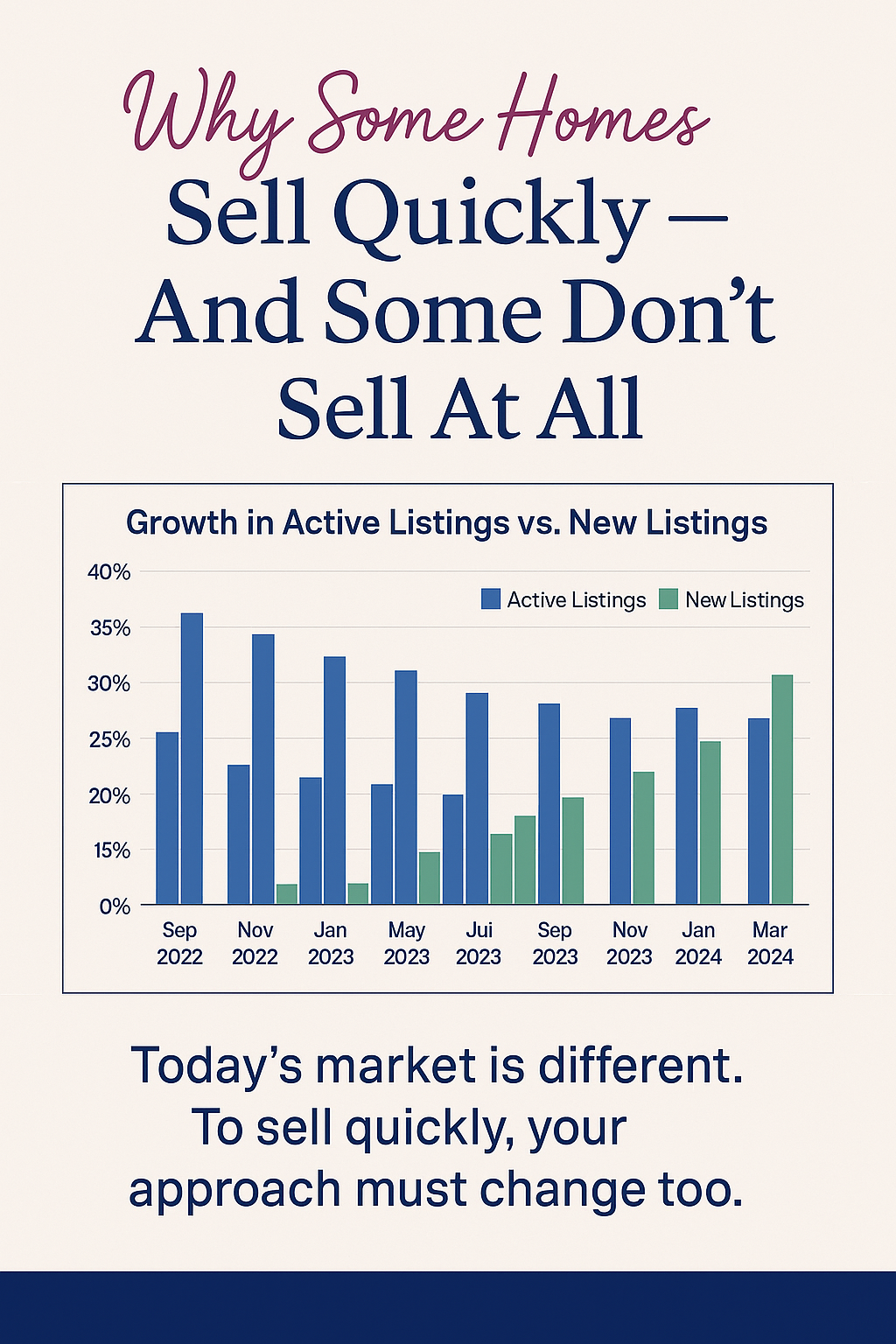
A few years ago, homes were flying off the market. With record-low inventory, nearly anything sold — and fast. But today’s real estate landscape looks different. Inventory is up nearly 20% compared to last year, and in many areas, supply has returned to pre-2020 levels.

So, what does that mean for sellers?
👉 Your home needs to stand out from the moment it hits the market.

🔍 Why Homes Sit on the Market

Most of today’s inventory growth comes from homes that are still active — the ones that haven’t sold yet — rather than new listings. According to Realtor.com, many of these homes are taking longer to sell, which tells us something important:
It’s not just about listing your home — it’s about how you list it.

Common reasons homes linger on the market include:

  • Pricing too high based on old market conditions
  • Skipping essential repairs or updates
  • Poor listing photos or staging
  • Limited showing availability
  • Weak marketing strategies

A few years ago, sellers could list “as-is” and still attract multiple offers. Not anymore. Today’s buyers are choosier, more informed, and have more options.

💡 What Makes a Home Sell Quickly

Selling quickly in this market isn’t about luck — it’s about strategy.
Here’s what successful sellers have in common:

  1. Pricing Realistically – A competitive price based on today’s market, not yesterday’s headlines.
  2. Curb Appeal and Condition – Small upgrades and clean presentation go a long way.
  3. Professional Marketing – High-quality photos, social media visibility, and listing optimization matter.
  4. Accessibility – The easier it is to show, the faster it sells.

Remember: your first few weeks on the market are crucial. That’s when your listing gets the most exposure online. Nail your presentation early, and buyers will act fast.

🤝 Why the Right Agent Makes All the Difference

Working with an experienced REALTOR® means having someone who understands local trends, buyer behavior, and pricing strategy. According to the National Association of REALTORS® (NAR), sellers who work with agents are twice as likely to get an offer within a month compared to those who list on their own.

An expert agent will:

  • Recommend the right listing price using local comparable sales
  • Help you prep and stage for maximum impact
  • Use professional marketing that reaches buyers where they’re searching

Bottom Line

Even with more homes for sale, your property can still sell quickly — if it’s priced right, presented beautifully, and marketed strategically.

If you’re thinking about selling in Hampton Roads, Chesapeake, or Newport News, let’s connect! I’ll help you position your home to attract attention — and offers — from day one.

If you’re looking to sell, call Michele! If you’re looking to acquire — I’m your hire!

Michele Salyer, REALTOR®
Salyer Wilmoth Homes | A Better Way Realty
📞 7575023671 | 🌐 www.salyerwilmothhomes.com

Oct. 30, 2025

Beautifully Updated 5-Bedroom Home for Sale in Hampton Near Langley AFB

🏡 Discover 28 St. Johns Court, Hampton, VA: A Beautifully Updated 5-Bedroom Home

Question: Looking for a move-in-ready home in Hampton with space, style, and updates throughout?
Answer: You’ll love this beautifully renovated 5-bedroom, 2½-bath home at 28 St. Johns Court — offering over 2,000 square feet of flexible living space designed for modern lifestyles.

What Makes This Home Stand Out?

Renovated in 2025, this property blends fresh design with functional comfort. The kitchen features white shaker cabinets, granite countertops, and stainless steel appliances — the perfect combination for any home chef. The new LVP flooring, plush carpet, and updated bathrooms with modern vanities and fixtures make every space shine.

🏠 How Is the Layout Designed?

The main level includes formal living and dining areas, a cozy fireplace, and even a bonus room ideal for an office, playroom, or creative space. The layout allows flexibility for families, remote work, or entertaining guests.

🌳 What’s Outside?

Enjoy outdoor living on a spacious deck and backyard — perfect for cookouts, relaxation, or weekend fun. The attached parking, gas utilities, and low-maintenance finishes make life here easy and enjoyable.

📍 Where Is 28 St. Johns Court Located?

This home sits in a prime Hampton location, close to Langley Air Force Base, Peninsula Town Center, shopping, dining, and schools. With quick access to major routes, your daily commute and weekend plans stay convenient.

💡 Why Buyers Love This Home

  • 5 bedrooms, 2½ baths, and over 2,000 sq ft
  • Fully updated kitchen and baths
  • Modern flooring and finishes throughout
  • Flexible floor plan with bonus room
  • Close to everything Hampton has to offer

If you’re searching for a move-in-ready home near Langley AFB, Peninsula Town Center, or downtown Hampton, this one deserves a look

📞 Schedule Your Showing 757-502-3671

If you’re ready to explore 28 St. Johns Court, call Michele Salyer — your local Hampton Roads real estate expert.
👉 “If you’re looking to sell, call Michele! If you’re looking to acquire, I’m your hire!”

Oct. 18, 2025

Market Update 2025: The Cost of Waiting & The Myth of Perfect

Market Update 2025: The Cost of Waiting & The Myth of Perfect

As 2025 winds down, new data from Fannie Mae, ICE, and NAR show encouraging signs for buyers — but also a cautionary tale for those waiting for “the perfect rate.” Mortgage rates have eased to around 6.3% from January’s 7.04% peak, and affordability is better than it’s been in over two years. Yet many are still waiting for rates to drop below 6%.

💰 The Cost of Waiting

Fannie Mae predicts rates may reach 5.9% by late 2026, but home prices are already climbing again. ICE reports national prices up 1.2% year-over-year as of September, and both Fannie Mae and NAR expect modest appreciation into 2026. Waiting another year could mean paying more for the same home — even if rates are slightly lower.

And when rates finally fall below 6%, competition will likely surge. History shows that every rate dip brings a wave of buyers — and bidding wars. Buying now, before that rush, offers better negotiating power and the chance to secure seller concessions or rate buydowns that may vanish in a hotter market.

⏳ The Myth of Perfect Timing

There’s no “perfect” market. Historically, mortgage rates have averaged 7–8%, so today’s mid-6% rates are still favorable. The real key isn’t timing the market — it’s timing your life. If you have stable income, manageable debt, and the right home fits your needs, it’s worth acting before prices and demand climb higher.

✅ The Bottom Line

Affordability has improved, seller flexibility is high, and market data suggests the cost of waiting could outweigh potential savings. The perfect time to buy isn’t when the rate hits a magic number — it’s when the numbers work for you.

If you’re ready to explore your options, let’s make it happen.
📞 Call or text Michele Salyer at 757-502-3671
💌 www.salyerwilmothhomes.com
Because if you’re looking to acquire, I’m your hire.


Meta Description:

Posted in Market Updates
Sept. 19, 2025

How to Hire a Real Estate Agent Who Puts Your Best Interest First as a Seller

TL;DR


Hiring the right real estate agent as a seller is about choosing someone who can protect your interests from the first pricing conversation to the final closing signature. A strong listing agent should have proven local experience, a clear pricing strategy, professional marketing, consistent communication, skilled negotiation, and full-service support before your home ever goes live. The goal is not just to list your home, but to position it correctly, attract serious buyers, manage showings and feedback, review offers carefully, negotiate terms that support your goals, and help you avoid unnecessary stress throughout the process. The best agent should feel like a trusted partner who explains your options clearly, gives honest advice, and works to help you sell with confidence.

Why choosing the right real estate agent matters when selling your home

When you decide to sell your home, choosing the right real estate agent is one of the most important decisions you will make. The wrong agent can cost you time, money, and peace of mind. The right agent can help protect your interests, position your home correctly, maximize your market exposure, and guide you through the selling process with confidence.

Selling a home is not just about finding someone with a license. It is about finding someone who understands your goals, knows your local market, explains the process clearly, and works to help you make informed decisions from listing to closing.

Look for proven local real estate experience

A real estate agent who understands your local market can give you a stronger selling strategy from the start. Every city, neighborhood, price point, and property type can perform differently, so local experience matters when it comes to pricing, marketing, and negotiation.

When interviewing an agent, ask about their recent experience selling homes in your area. You may want to ask how they determine listing price, what they are seeing in current buyer activity, and how your home compares to similar properties nearby.

An experienced local agent understands buyer demand, market timing, pricing trends, and the features that may help a home stand out. This can help your home be positioned more competitively and marketed to the right buyers.

Review the agent’s marketing plan

Today’s buyers often begin their home search online, so your agent’s marketing plan should go beyond simply placing your home on the MLS. A strong listing strategy should help your home get seen, understood, and remembered by potential buyers.

Look for a marketing plan that may include professional photography, video or virtual tours, strong listing descriptions, social media promotion, search-friendly online exposure, open house strategy, and targeted outreach to potential buyers or agents.

A strong marketing plan means your home does not just get listed. It gets noticed. The way your home is presented online can affect how buyers understand the layout, condition, light, flow, and overall value before they ever schedule a showing.

Ask about communication style before you list

Selling your home can become stressful when you do not know what is happening. A good listing agent should set clear expectations for communication early in the process.

Before hiring an agent, ask how often they will update you, whether they prefer phone, text, or email, and how they will keep you informed about showings, feedback, offers, deadlines, and negotiation updates.

An agent who prioritizes communication helps you avoid guessing. You should know what is happening, what the next step is, and when your strategy may need to adjust based on market response.

Evaluate their negotiation skills

Your real estate agent is your advocate during one of the most important financial transactions of your life. Their negotiation skills can affect your final price, contract terms, repair requests, seller concessions, closing timeline, and overall experience.

A strong agent should be able to explain offers clearly, help you compare terms beyond just the purchase price, and negotiate in a way that protects your goals. The best offer is not always the highest number on paper if the terms create unnecessary risk or uncertainty.

A skilled negotiator helps protect your bottom line, manage buyer requests, and keep the transaction moving toward a successful closing.

Look at their track record and reviews

An agent’s past client experiences can tell you a lot about how they work. Reviews, testimonials, and referrals can help you understand whether the agent communicates well, handles challenges professionally, and supports sellers throughout the process.

When reading reviews, do not only look at star ratings. Look for specific stories. Did the agent solve problems? Did they explain things clearly? Did they help the seller feel prepared? Did they stay engaged after the home went under contract?

A strong track record and positive client feedback can show that the agent consistently puts seller interests first and provides dependable support.

Confirm they offer full-service seller support

The best listing agents provide more than a sign in the yard. They help sellers prepare, position, and present their homes in a way that supports a stronger sale.

Full-service support may include staging guidance, preparation advice, contractor connections, repair coordination, pricing strategy, pre-listing recommendations, showing preparation, and help understanding which improvements may matter most to buyers.

Some sellers may also benefit from repair solutions that can be paid at closing, depending on the situation and available options. This kind of support can help reduce stress, improve home presentation, and make the selling process feel more manageable.

Make sure your agent listens to your goals

Your agent should not use a one-size-fits-all strategy. Selling because you are relocating, downsizing, moving closer to work, handling an estate, or preparing for a new chapter may require different timing, preparation, and negotiation priorities.

The right agent should ask about your goals before recommending a plan. They should explain your options clearly and help you understand the possible benefits and trade-offs of each decision.

Your agent should feel like a trusted partner, not someone pushing you toward a quick sale. The best working relationship is built on communication, strategy, honesty, and trust.

Frequently asked questions

What should I look for when hiring a real estate agent to sell my house?

When hiring a real estate agent to sell your house, look for proven local experience, a clear pricing strategy, a strong marketing plan, good communication habits, negotiation skills, and positive client reviews. You want someone who understands your market and can explain how they will help position your home for qualified buyers.

The right agent should also take time to understand your goals as a seller. Your timeline, financial priorities, home condition, and next move should all be part of the strategy.

How do I know if a listing agent is working in my best interest?

A listing agent who works in your best interest will communicate clearly, explain your options, provide honest pricing guidance, and help you make informed decisions instead of pressuring you. They should be transparent about market conditions, buyer feedback, offers, and possible risks.

You should feel comfortable asking questions and confident that your agent is focused on your goals, not just getting the home sold as quickly as possible.

What questions should I ask a real estate agent before listing my home?

Before listing your home, ask how the agent determines price, what marketing strategies they use, how they communicate with sellers, how they handle negotiations, and what support they provide before and after the home goes live.

You can also ask about their recent experience with homes similar to yours and what they would recommend to help your home stand out in the current market.

Why is local market experience important when selling a home?

Local market experience matters because real estate conditions can vary by city, neighborhood, price range, and property type. An agent who knows the area can help you understand buyer expectations, comparable sales, timing, and competition.

For sellers in Chesapeake, Virginia Beach, Norfolk, Suffolk, Newport News, and nearby Coastal Virginia communities, local knowledge can help shape a more realistic and strategic selling plan.

Should I choose the agent who suggests the highest listing price?

Not always. A high suggested listing price may sound appealing, but it should be supported by market data, comparable sales, buyer demand, and your home’s condition. Overpricing can sometimes cause a home to sit longer, reduce buyer interest, or lead to future price adjustments.

Choose an agent who can explain the pricing strategy clearly and honestly. A strong agent will help you balance your goals with what the market is likely to support.

Final thought

Hiring the right real estate agent is about more than choosing someone to list your home. It is about choosing a professional who can guide you, protect your interests, market your home effectively, and help you make confident decisions from start to finish.


If you are considering selling your home in Chesapeake, Virginia Beach, Norfolk, Suffolk, Newport News, or the surrounding Coastal Virginia area, Michele Salyer would be honored to put 20+ years of real estate experience to work for you.

Call/Text Michele Salyer, Realtor® at 757-502-3671
Visit: www.SalyerWilmothHomes.com


Looking to Sell? Call Michele. Looking to Acquire? She’s your Hire!

Sept. 15, 2025

Why the Right Price Will Sell Your Home Faster Than Patience Ever Could

When it comes to selling your home, pricing is everything. Many homeowners believe patience will eventually bring the perfect buyer, but the truth is, waiting often leads to frustration and reduced offers. Pricing your home correctly from day one attracts serious buyers, increases competition, and shortens time on the market.

Buyers today are informed and strategic. With online listings, market comparisons, and real-time data at their fingertips, they know immediately if a home is overpriced. If your property sits too long, it develops a stigma, and buyers start asking, “What’s wrong with it?” That perception often forces sellers to lower the price anyway—sometimes below what they would have received if they had priced it right initially.

A competitive price doesn’t mean underpricing. It means analyzing the local market, reviewing comparable sales, and working with an experienced agent to find the sweet spot where your home shines. The goal is to generate interest quickly, attract multiple offers, and create a sense of urgency among buyers. When priced correctly, your home could sell faster and for more money than you might expect.

Patience might feel safe, but it can cost you thousands. Homes that linger on the market often lead to extended carrying costs, added stress, and negotiations favoring the buyer. On the other hand, homes priced strategically at market value often sell within the first few weeks, saving you time and maximizing profit.

Your best ally is a trusted real estate agent who understands your local market trends, buyer demand, and pricing strategies. Together, you can position your property to sell faster—without relying on luck or endless waiting.

Aug. 19, 2025

How to Stage Your Home to Sell Fast in Hampton Roads

What Is Home Staging and Why Does It Matter?

Home staging is the process of preparing your home to appeal to the widest number of buyers. It highlights the property’s strengths, minimizes distractions, and creates a move-in-ready feel. Staged homes typically sell faster and for more money than unstaged homes.


How Do I Improve Curb Appeal Before Selling?

Curb appeal is the first impression buyers get when they pull up to your home. To boost it:

  • Trim shrubs and add fresh mulch

  • Power wash sidewalks and driveways

  • Repaint the front door

  • Add potted plants or flowers

👉 A neat, welcoming exterior makes buyers excited to see inside.


Should I Declutter My Home Before Staging?

Yes. Decluttering and depersonalizing are essential because buyers need to imagine themselves in the space. This means:

  • Remove personal photos, kids’ artwork, and collections

  • Clear countertops and minimize furniture

  • Organize closets and storage areas


Which Rooms Are Most Important to Stage?

Not all rooms carry the same weight. Focus on:

  1. Living Room – arrange seating to show flow and space

  2. Kitchen – clear counters, add fruit or flowers

  3. Primary Bedroom – neutral bedding, calm feel

  4. Bathrooms – spotless with fresh towels


How Can I Make My Home Feel Brighter and Bigger?

  • Open blinds and curtains for natural light

  • Replace old light fixtures

  • Paint walls in light, neutral colors

  • Use mirrors strategically to reflect light


What Small Staging Updates Give the Best ROI?

Affordable improvements with big impact include:

  • Fresh interior paint

  • New cabinet hardware

  • Modern lighting

  • Professional cleaning


Should I Hire a Professional Home Stager?

Hiring a professional stager can be a smart move, especially in competitive markets like Virginia Beach, Chesapeake, and Hampton Roads. A stager knows how to:

  • Arrange furniture for flow

  • Rent stylish pieces if needed

  • Highlight your home’s lifestyle features


Final Answer: Does Staging Help Homes Sell Faster?

Yes — staged homes usually sell quicker and for a higher price. Whether you DIY or hire a pro, staging ensures buyers see your home at its very best.


If you’re planning to sell in Chesapeake or Virginia Beach, VA, I can guide you through the staging process and marketing strategy that gets results.

📞 Call Michele Salyer at 757-502-3671 today to learn how staging can help you sell faster and for top dollar.

July 29, 2025

The Tale of Two Housing Markets: What’s Really Happening in Hampton Roads Real Estate?

The Tale of Two Housing Markets: Why Local Real Estate Conditions Matter More Than Ever

If you're wondering whether it's a good time to buy or sell a home in Hampton Roads—Chesapeake, Virginia Beach, Suffolk, and beyond—the answer really depends on where you’re looking. Across the country, we’re seeing a tale of two markets: in some places, buyers have the upper hand; in others, sellers are still firmly in control.

So, what’s driving these differences—and where does your neighborhood fit in?


Buyer’s Market vs. Seller’s Market: What's the Difference?

Buyer’s Market: This happens when there are more homes for sale than there are buyers actively shopping. Homes sit longer, sellers get fewer offers, and prices often become negotiable.

Seller’s Market: In this scenario, homes are in short supply, and buyers are competing—leading to faster sales, multiple offers, and increasing prices.

Right now, both of these conditions are happening—just in different places.


Where Is the Market Headed in 2025?

National data shows that the Northeast and Midwest are seeing strong seller markets, with homes moving quickly and prices continuing to rise. The South and West, including parts of Virginia, are shifting toward buyer-friendly territory.

Locally here in the Hampton Roads area, we’re seeing a mix. Some neighborhoods in Virginia Beach and Chesapeake are still experiencing multiple-offer scenarios, especially on homes that are updated and priced right. But areas with more inventory—like parts of Suffolk or Portsmouth—are showing signs of slower movement, giving buyers a bit more room to negotiate.


What Does This Mean for Home Prices?

In markets where demand still exceeds supply, prices are continuing to climb. But in areas where inventory has increased and buyer activity has cooled, prices are stabilizing—or even softening slightly.

If you’re a buyer looking in Hampton Roads, this could be the opportunity you’ve been waiting for. And if you’re a seller, don’t worry—most homeowners still have strong equity gains from the past few years, even if prices have plateaued a bit.


Why Local Expertise Is Everything Right Now

Even within a single zip code, market dynamics can vary drastically. That’s why it’s critical to work with a local real estate professional who understands what’s really happening in your neighborhood.

As your go-to Realtor® in Chesapeake, Virginia Beach, and surrounding cities, I help my clients:

  • Understand whether their area is favoring buyers or sellers

  • Set the right listing price or make a smart offer

  • Navigate changing market conditions with confidence


The Bottom Line

In a market as divided as this, local insights are your secret weapon. Whether you're thinking about selling your current home or buying your next one, having the right expert on your side makes all the difference.

📞 Call Michele Salyer at 757-502-3671
If you’re looking to sell—Call Michele!
If you’re looking to acquire—I’m Your Hire!


Let’s make your next move a smart one.

Posted in Market Updates
July 28, 2025

Mortgage Rates Then and Now: A Look Back—and What’s Ahead for 2025

Historic Mortgage Rates: Where They've Been and Where They're Headed

If you're thinking about buying a home, selling your current one, or simply watching the housing market, mortgage rates are probably at the top of your mind. As a trusted real estate agent in [Your Area, e.g., Chesapeake, VA], I’m often asked, “Will mortgage rates go down?” or “Is now a good time to buy or sell?” To answer these questions, it helps to look at where mortgage rates have been—and where they may be going.

A Look Back: Mortgage Rates Through the Decades

Mortgage rates have seen dramatic shifts over the past 50 years. Here's a brief look at how they've evolved:

  • 1970s: Rates hovered around 7–9%, but inflation pushed them higher.

  • 1980s: This decade saw the highest mortgage rates in U.S. history, peaking at over 18% in 1981. The Federal Reserve raised rates to battle inflation.

  • 1990s: Rates stabilized between 7–9%, offering more predictable borrowing costs for homebuyers.

  • 2000s: The early 2000s saw rates dip into the 6% range, then fall further after the 2008 financial crisis.

  • 2010s: This was the golden era for low mortgage rates. After the Great Recession, rates dropped below 5%, with some years hovering near 3–4%.

  • 2020–2021: Amid pandemic-related economic policies, rates hit historic lows, with the average 30-year fixed mortgage dropping below 3%.

Recent Changes: The 2022–2024 Rate Rebound

Starting in early 2022, inflation surged, and the Federal Reserve responded with a series of rate hikes. Mortgage rates followed, climbing sharply and reaching over 7% by mid-2023—the highest since 2002.

This sudden jump shocked buyers and sellers alike, causing affordability challenges and slowing market activity. However, it’s important to remember that a 6–7% rate, while high compared to recent years, is still historically moderate.

Where Are Mortgage Rates Headed?

Forecasting mortgage rates is part science, part art. Experts weigh factors such as inflation, economic growth, Federal Reserve policy, and global events. Here’s what current predictions suggest:

  • Late 2024–2025 Outlook: Many economists expect mortgage rates to gradually decline, potentially dipping into the 6% or even high 5% range by mid-to-late 2025 if inflation continues to ease.

  • Long-Term Trends: Rates are not likely to return to the sub-3% levels seen in 2020–2021. Those were extraordinary conditions. Instead, a 5–6% range may become the “new normal.”

What Does This Mean for Homebuyers and Sellers?

  • For Buyers: Waiting for the “perfect” rate might cost more in the long run if home prices rise. A slightly higher rate today might still be a smart move if it gets you into a home before prices climb again.

  • For Sellers: While higher rates may reduce the pool of buyers, serious and qualified buyers are still active—especially in strong markets like [Your Area].

  • For Both: Locking in a rate now and refinancing later is a strategy many buyers are considering to gain a foothold in the market without overpaying for rent.

Final Thoughts: Timing the Market vs. Time in the Market

Trying to “time the market” perfectly is nearly impossible. Instead, consider your personal and financial readiness. Mortgage rates will always fluctuate—but building equity, securing a stable housing payment, and investing in your future are timeless benefits of homeownership.

As your local real estate expert in [City/Region], I’m here to guide you through today’s market with expert advice, local insights, and proven strategies—no matter what the rates are.


Thinking of Buying or Selling a Home? Let’s Talk!
📞 Call/Text: 757-502-3671
📧 Email: michelesalyer89@gmail.com
🌐 Learn more at www.ilovesellinghouses.com

Jan. 17, 2025

How Much Home Equity Have You Gained? The Answer Might Surprise You

How Much Home Equity Have You Gained? The Answer Might Surprise You


Have you ever stopped to think about how much wealth you’ve built up just from being a homeowner? As home values rise, so does your net worth. And, if you’ve been in your house for a few years (or longer), there’s a good chance you’re sitting on a pile of equity — maybe even more than you realize.

What Is Home Equity?

Home equity is the difference between what your house is worth and what you owe on your mortgage. For example, if your house is worth $500,000 and you still owe $200,000 on your home loan, you have $300,000 in equity. It’s essentially the wealth you’ve built through homeownership. Right now, homeowners across the country are seeing record amounts of equity.

According to Intercontinental Exchange (ICE), the average homeowner with a mortgage has $319,000 in home equity.

Why Have Homeowners Gained So Much Equity?

The rise in home equity over the years can be credited to two key factors:

1. Significant Home Price Growth

Home prices have climbed dramatically in recent years. In fact, according to the Federal Housing Finance Agency (FHFA), over the past five years, home prices nationwide have risen by 57.4% (see map below):

a map of the united statesThis appreciation means your house is likely worth much more now than when you first bought it.

2. Longer Tenure in Homes

Data from the National Association of Realtors (NAR) shows people are staying in their homes for a decade (see graph below):

a graph of numbers and a number of peopleThis increased tenure means homeowners benefit even more from home values growing over time. That’s because the longer someone has lived in their house, the more that home’s value has grown, which directly increases equity.

And if you’re one of those people who’s been in their home for 10 years or more, know this – according to NAR:

“Over the past decade, the typical homeowner has accumulated $201,600 in wealth solely from price appreciation.”

The Benefits of Having Home Equity

What does that mean for you? It means your house might be your biggest financial asset — and it could open up some exciting opportunities for your future. Let’s break it down.

  • Moving to Your Next Home

Your equity could help you cover the down payment for your next home. In some cases, it might even mean you can buy your next house all cash.

  • Financing Home Improvements

Thinking about upgrading your kitchen, adding a home office, or tackling other projects? Your equity can provide the funds to make those improvements happen, increasing your home’s value and making it more enjoyable to live in too.

  • Getting a Business Going

If you’ve been dreaming about starting your own business, your equity could be the kickstart you need. Whether it’s for startup costs, equipment, or marketing, leveraging your home’s value can help bring your entrepreneurial goals to life.

Bottom Line

Whether you’re thinking about selling, upgrading, or simply want to understand your options, your home equity is a powerful resource. If you’re wondering how much equity you’ve built or how you can use it to meet your goals, let’s connect and explore the possibilities.

Jan. 16, 2025

One Homebuying Step You Don’t Want To Skip: Pre-Approval

One Homebuying Step You Don’t Want To Skip: Pre-Approval


There’s one essential step in the homebuying process you may not know a whole lot about and that’s pre-approval. Here’s a rundown of what it is and why it’s so important right now.

What Is Pre-Approval?

Pre-approval is like getting a green light from a lender. It lets you know how much they’re willing to let you borrow for a home. To determine that number, a lender looks at your financial history. According to Realtor.com, these are some of the documents a lender may ask you for during this process:

  • W-2s from the last two years
  • Tax returns from the last two years
  • Pay stubs from the last 30 days
  • Bank statements from the last 60 days
  • Investment account statements (if applicable)
  • Two years of history of where you’ve lived

The result? You’ll get a pre-approval letter showing what you can borrow. Keep in mind, that any changes in your finances can affect your pre-approval status. So, after you receive your letter, avoid switching jobs, applying for new credit cards or other loans, or taking out large sums of money from your savings.

How It Helps You Determine Your Borrowing Power

This year, home prices are expected to rise in most places and mortgage rates are still showing some volatility. So, since affordability is still tight, it’s a good idea to talk to a lender about your home loan options and how today’s changing mortgage rates will impact your future monthly payment.

The pre-approval process is the perfect time for that. Because it determines the maximum amount you can borrow, pre-approval also helps you figure out your budget. You should use this information to tailor your home search to what you’re actually comfortable with as far as a monthly mortgage payment. That way, you don’t fall in love with a house that’s out of your comfort zone.

How It Helps You Stand Out

Once you find a home you want to put an offer on, pre-approval has another big perk. It not only makes your offer stronger, it shows sellers you’ve already undergone a credit and financial check.

When a seller sees you as a serious buyer, they may be more attracted to your offer because it seems more likely to go through. As Greg McBride, Chief Financial Analyst at Bankrate, says:

“Preapproval carries more weight because it means lenders have actually done more than a cursory review of your credit and your finances, but have instead reviewed your pay stubs, tax returns and bank statements. A preapproval means you’ve cleared the hurdles necessary to be approved for a mortgage up to a certain dollar amount.”

Bottom Line

If you’re planning on buying a home, getting pre-approved for a mortgage should be one of the first things on your to-do list. Not only will it give you a better understanding of your borrowing power, it can put you in the best position possible to make a strong offer when you find a home you love. Connect with a trusted lender to learn more.

Jan. 2, 2025

Home Staging FAQ: What You Need To Know


You may have heard that staging your home properly can make a big difference when you sell your house, but what exactly is home staging, and is it really worth your time and effort?

Here are a few quick FAQs that can help you decide how much you should prioritize staging as you prep for your move.

What Is Home Staging?

Staging is the process of arranging and decorating your house to highlight its best features and make it as appealing as possible to potential buyers. It can range from simple touch-ups to more extensive setups, depending on your needs and budget.

How Does It Help Me Sell My House?

Studies show good staging does have an impact on your sale. Staging your house well can help you attract more attention from buyers, which ultimately helps it sell faster and maybe for a higher price than an unstaged home (see visual):

What Are My Staging Options?

Now that you see the value, let’s think through your options. The most common is leaning on your agent for their expert advice. They know what buyers like because they’re in showings all the time and hear that feedback first-hand. That expertise is crucial to getting your house market-ready. Basic staging with an agent usually means they give you insight into how you should:

  • Declutter and depersonalize by removing photos and personal items
  • Arrange your furniture to improve the room’s flow and make it feel bigger
  • Add plants, move art, or re-arrange other accessories

Full-service staging is another option if your house needs more hands-on attention. This is when you hire a staging professional or staging company to come in, make recommendations, and do the work for you. Going this route is more involved and that makes it more costly too. That’s because it can include renting furniture and decor to more fully transform a space.

How Do I Know Which One To Pick?

Not sure which one you need? You don’t have to figure that out on your own. Your real estate agent will help determine what level of staging will make the most impact on your house and market.

They can help you decide if professional staging is worth the investment, or if you can knock it out with their advice alone. And just so you know, here are some of the factors an agent will look at to figure that out:

  • Market Conditions: If the market is slower, going all in on staging can make your home look move-in ready and attractive to buyers who may otherwise be hesitant. If your local market is very active and homes are selling fast, you may be able to get by with doing less.
  • Your Home’s Condition: If your home is vacant or has a unique layout, using a professional stager who can bring in the right furniture and accessories may help buyers truly visualize its full potential.
  • Your Budget: Talk to your agent to get an idea of staging costs in your area, as it can be the difference between your house selling and sitting. But if your budget is tight or your home only needs minor updates, your real estate agent can help you think outside of the box by suggesting simple DIY staging tips to help your home look its best.

Bottom Line

Staging your house properly can make it much more attractive to buyers, but it’s not a one-size-fits-all solution, and every home shines differently. Let’s connect to talk through what your home really needs to stand out and sell for top dollar.