TL;DR
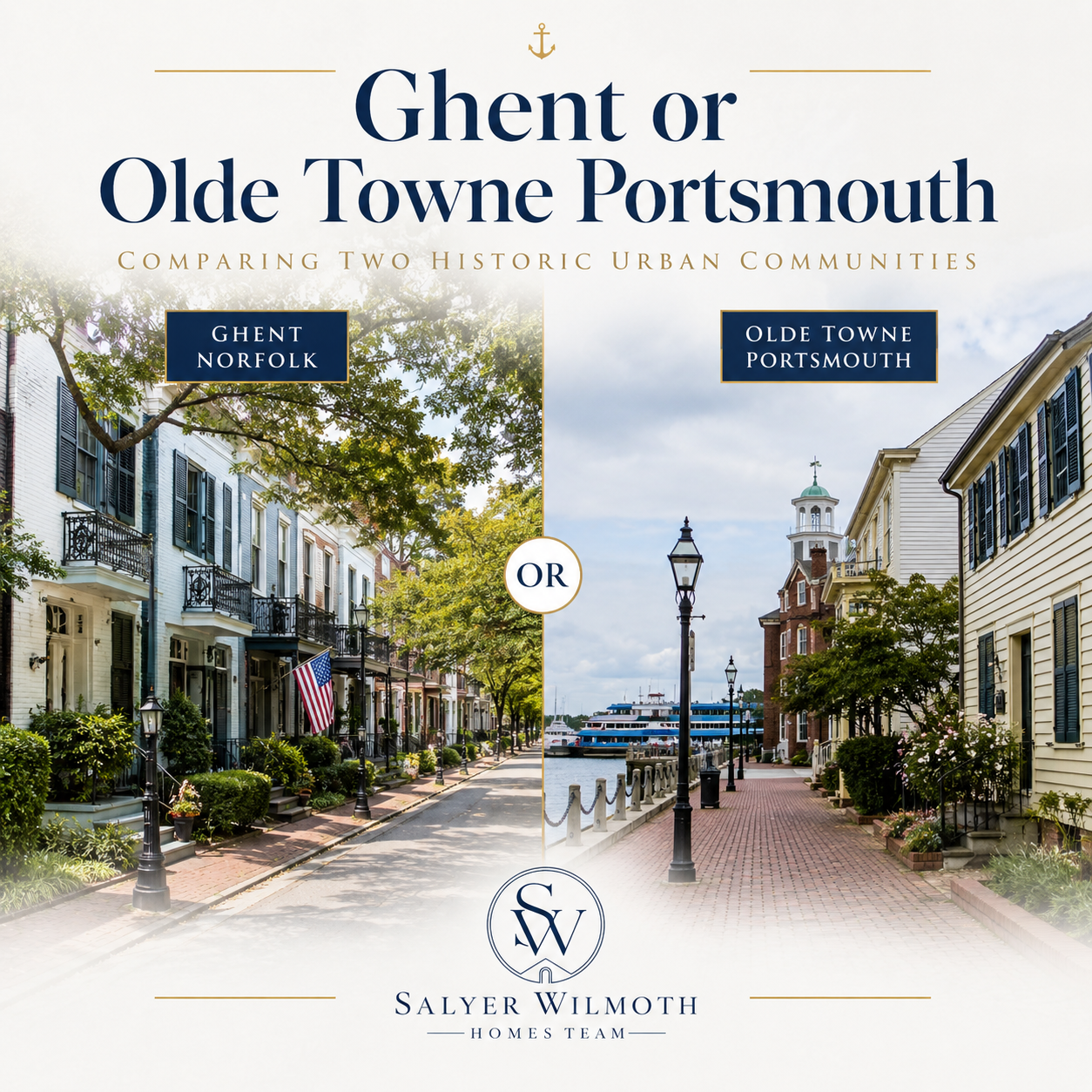
Ghent in Norfolk and Olde Towne Portsmouth both offer historic architecture, urban convenience, established streets, access to restaurants and cultural destinations, and a homebuying experience that feels different from a newer suburban community, but the better fit depends on the specific property and the buyer’s priorities because Ghent may provide a more continuous connection to Norfolk’s medical, cultural, dining, and downtown corridors while Olde Towne may appeal to buyers who value Portsmouth’s historic waterfront setting, High Street access, ferry connections to Norfolk, and a concentrated collection of period homes; before choosing between them, buyers should compare property type, renovation history, exterior-review requirements, parking, flood exposure, insurance, commute routes, public transportation, noise, storage, association obligations, accessibility, maintenance expectations, and total monthly cost rather than relying only on charm, reputation, or a short visit.
Why Buyers Compare Ghent and Olde Towne Portsmouth
Ghent and Olde Towne Portsmouth often attract buyers who want more than a conventional subdivision or recently built house. Both communities offer architectural character, proximity to established commercial and cultural areas, and a more urban daily rhythm than many suburban parts of Coastal Virginia.
The comparison is not as simple as deciding which community is more historic. Ghent’s locally designated historic district includes the Ghent and North Ghent National Register districts, which the City of Norfolk describes as planned neighborhoods built around the turn of the 20th century and influenced by City Beautiful and Beaux Arts planning. Olde Towne Portsmouth developed around one of the region’s historic seaports and is known for a substantial collection of period homes near the Elizabeth River waterfront.
The stronger question is how each location supports the way a buyer expects to live. Someone may prioritize walking to restaurants, medical facilities, cultural venues, or daily services. Another buyer may place greater value on waterfront access, ferry service, a particular historic-home style, or routes toward Portsmouth, Suffolk, Chesapeake, or Norfolk.
Neither community is universally better. The decision should come from comparing the exact home, ownership responsibilities, location, route, and financial picture.
How the Overall Setting Feels Different
Ghent is part of Norfolk’s larger urban network. Its residential streets connect with commercial corridors such as Colley Avenue and 21st Street, while Downtown Norfolk, medical facilities, museums, entertainment venues, and other city destinations are positioned nearby. The result can feel active and interconnected, although the experience changes depending on whether a property is near a commercial corridor, a busier road, a quieter residential block, or the edge of the district.
Olde Towne Portsmouth has its own compact urban identity centered around historic streets, High Street, the waterfront, civic buildings, museums, restaurants, and the Portsmouth side of the Elizabeth River. Some locations may feel closely connected to downtown activity, while others may feel more residential despite being only a few blocks away.
Buyers should avoid making a decision after one weekend visit. A property can feel different during weekday commuting hours, evening dining activity, scheduled events, ferry operations, deliveries, and ordinary residential routines. The questions in Norfolk Homebuying Beyond the Listing: Noise, Access, and Daily Flow are especially useful here because sound, parking, traffic movement, entry routes, and surrounding activity can matter as much as the home’s interior.
Comparing Historic Architecture and Available Home Types
Ghent may include historic detached houses, attached residences, townhomes, condominiums, converted buildings, and properties that have been renovated to different degrees. Buyers may encounter tall ceilings, hardwood floors, decorative trim, front porches, traditional room arrangements, masonry exteriors, or other details associated with older construction.
Olde Towne also offers historic architecture, but its visual character is closely tied to Portsmouth’s development as a port city. Depending on available inventory, buyers may find period houses, attached homes, renovated residences, condominiums, and properties with compact lots or urban-style outdoor space. The City of Portsmouth describes Olde Towne as having one of the largest collections of period homes in the corridor between Charleston and Alexandria.
Architectural appeal should not replace due diligence. Two homes that appear equally charming from the street can have very different renovation histories, system ages, structural conditions, parking arrangements, storage, flood considerations, and future repair budgets.
Buyers attracted to either location should read What Buyers Should Know About Older Homes in Norfolk Before Making an Offer. Although the article focuses on Norfolk, its questions about roofing, plumbing, electrical systems, crawl spaces, moisture, foundation conditions, permits, windows, HVAC equipment, and renovation quality are equally valuable when evaluating an older Portsmouth property.
Which Community Offers the More Connected Daily Routine?
Ghent may work well for buyers whose routines revolve around Norfolk. Depending on the property, restaurants, coffee shops, retail businesses, medical facilities, cultural destinations, and downtown employment areas may be accessible through a combination of walking, biking, transit, or a short drive.
That convenience can come with tradeoffs. Some properties may have limited private parking, smaller outdoor areas, nearby commercial activity, older building systems, association fees, or more street movement than a buyer expects. Distance on a map also does not guarantee that a particular destination will be comfortable to reach on foot from every Ghent address.
Olde Towne may offer a compact routine built around High Street, the waterfront, downtown Portsmouth destinations, and connections across the Elizabeth River. Hampton Roads Transit operates ferry service between Portsmouth and Norfolk, with stops serving the Portsmouth waterfront and Waterside in Norfolk. Service schedules can change by season and operating conditions, so buyers who expect to use the ferry regularly should test the trip and verify the current schedule rather than treating it as an abstract neighborhood amenity.
A useful comparison is to list the places you visit during a normal week and test them from actual properties in both communities. Compare the route to work, grocery stores, medical appointments, military installations, recreation, frequently visited businesses, and other destinations that matter to you.
Parking, Garages, and Outdoor Space Can Change the Decision
Parking deserves attention early in either search.
A Ghent property may offer a driveway, garage, assigned condominium space, shared parking arrangement, or street parking. Buyers should verify what legally conveys with the property, whether parking is deeded or assigned, whether permits apply, and how the street functions during evenings and weekends.
Olde Towne properties can also vary widely. Some may have private parking or rear access, while others may depend more heavily on on-street arrangements. Narrow lots, historic streetscapes, alleys, adjoining structures, and compact outdoor areas may influence how residents handle vehicles, deliveries, trash collection, guests, bicycles, and property maintenance.
During a showing, buyers should ask where each vehicle would go, whether the garage can accommodate a modern vehicle, how groceries would be unloaded, where guests would park, and whether outdoor space provides the privacy or usability they expect.
A beautiful historic façade will not compensate for a parking arrangement that creates frustration every day. The best property is the one whose practical details support the buyer’s routine after the excitement of the showing fades.
How Commutes From Ghent and Olde Towne Differ
Ghent may provide practical access to Downtown Norfolk, Sentara Norfolk General Hospital, Eastern Virginia Medical School, Old Dominion University, Naval Station Norfolk, and other Norfolk destinations, depending on the address and route. However, traffic timing, railroad crossings, events, construction, gate access, and the buyer’s work schedule can alter the actual trip.
Olde Towne may be useful for buyers traveling within Portsmouth or toward Norfolk, Chesapeake, Suffolk, shipyard-related employment, regional highways, or other Hampton Roads destinations. Reaching certain Norfolk locations may involve the ferry, a tunnel, a bridge, transit, or a combination of routes.
Buyers connected to a military installation should not compare the two communities using mileage alone. Naval Station Norfolk Commute Reality: How It Can Shape Your Home Search explains why route reliability, gate choice, work hours, tunnels, traffic patterns, and backup options may be more informative than the estimated drive time displayed during a quiet part of the day.
Drive the expected route from a specific property during realistic travel hours. Then test an alternative route. A home that appears farther away may produce a more manageable routine, while a geographically closer property may include delays that are not obvious from the listing.
Historic-District Rules Should Be Reviewed Before Buying
Historic-district designation helps preserve architectural character, but it can also affect what an owner may change on the exterior of a property.
Norfolk’s Architectural Review Board reviews exterior alterations, new construction, and some demolition within the city’s local historic districts. Approved work may require a Certificate of Appropriateness. The relevance of those rules depends on the property, the proposed project, and the boundaries of the applicable district.
Portsmouth also maintains historic-district design guidelines and a Historic Preservation Commission that reviews qualifying alterations to historic structures in districts including Olde Towne. Buyers planning to replace windows, modify porches, change exterior materials, construct additions, alter fences, or complete other visible work should consult the city before assuming a project will be approved.
Historic oversight is not automatically a disadvantage. It can help protect the visual character that attracted the buyer in the first place. However, it may affect project timing, material choices, contractor requirements, approval procedures, and renovation costs.
Before closing, buyers should determine whether the individual property is within a local historic district, which features are subject to review, whether previous work was approved, and whether their future plans appear compatible with applicable guidelines.
Flood Exposure, Insurance, and Coastal Maintenance Matter in Both Areas
Both communities are part of Coastal Virginia, and proximity to tidal water means buyers should evaluate flood and drainage information at the property level.
Olde Towne’s waterfront setting makes water proximity a visible part of the community, but flood exposure is not determined solely by whether a home has a water view. Ghent properties may also have property-specific drainage, elevation, flood-zone, or insurance considerations.
Buyers should review current flood maps, obtain insurance estimates, ask whether an elevation certificate exists, inspect crawl spaces and lower levels, evaluate lot drainage, and investigate available information about prior water intrusion. They should also consider how moisture, humidity, wind, and coastal weather may affect masonry, woodwork, roofing, windows, HVAC equipment, exterior paint, and metal components.
Waterfront Proximity Near Norfolk or Virginia Beach: A Buyer’s Guide to Risk, Cost, and Lifestyle provides a useful framework for comparing the appeal of a coastal setting with insurance, elevation, drainage, upkeep, access, and resale considerations.
A historic home near the water can be an excellent purchase when its condition, documentation, insurance costs, and maintenance responsibilities are understood. The goal is not to avoid coastal properties; it is to know what the setting may require.
Comparing Condominiums, Attached Homes, and Detached Houses
Property type may ultimately matter more than the community name.
A Ghent condominium may offer access to an urban Norfolk routine with less individual exterior maintenance, but the buyer may need to review association dues, reserves, insurance structure, parking, pet policies, rental restrictions, special assessments, accessibility, and responsibility for windows or building systems.
An Olde Towne condominium or attached property may offer a similar opportunity to live near historic streets and the waterfront without maintaining an entire detached structure. The governing documents and financial health of the association remain critical.
Detached historic houses may provide more control, privacy, outdoor area, and architectural individuality, but they may also place more responsibility on the owner for roofing, exterior materials, drainage, landscaping, foundations, mechanical systems, and historically appropriate repairs.
For a deeper look at Ghent’s specific housing variety and buyer considerations, A Buyer’s Guide to Ghent in Norfolk, VA offers additional context on condos, townhomes, older houses, parking, maintenance, and daily convenience.
Which Community May Offer the Better Long-Term Fit?
Long-term fit depends on what the buyer wants the property to do.
Ghent may be worth prioritizing when the buyer’s routine is closely tied to Norfolk destinations and the available property offers an acceptable balance of condition, parking, ownership costs, and urban access.
Olde Towne may deserve greater focus when the buyer values Portsmouth’s waterfront, High Street, ferry connection, historic seaport setting, and the architectural character of a compact downtown community.
Resale should still be evaluated property by property. Features that may influence future marketability include condition, renovation quality, parking, floor plan, storage, natural light, outdoor usability, association finances, flood-zone status, insurance affordability, exterior maintenance, accessibility, and proximity to the destinations future buyers may value.
The most recognizable community name does not guarantee the strongest purchase. A thoughtfully updated Olde Towne property with practical parking may work better than a Ghent property with unresolved maintenance and an inconvenient layout—or the reverse may be true.
A Fair Housing-Minded Way to Compare Ghent and Olde Towne
A responsible community comparison should focus on objective housing, property, financial, and lifestyle information rather than assumptions about the people living in either location.
Useful factors include home type, price, condition, accessibility features, parking, commute route, public transportation, proximity to destinations selected by the buyer, flood information, insurance estimates, taxes, association obligations, renovation rules, storage, outdoor space, maintenance requirements, and recent comparable sales.
Buyers seeking information about schools, public services, transportation, crime statistics, future development, zoning, or environmental conditions should be directed to official and neutral sources so they can evaluate the information according to their own priorities.
The goal is not to label Ghent or Olde Towne as the community for a particular type of person. The goal is to help each buyer compare properties consistently and decide which home supports their own routine, budget, comfort, and plans.
How to Compare Available Homes in Both Communities
Start by choosing two or three properties in each location within a similar price range. Comparing actual homes is more useful than comparing community names in the abstract.
Review the list price, property type, square footage, layout, condition, renovations, permits, major-system ages, parking, flood information, insurance estimate, taxes, association dues, utilities, accessibility, storage, exterior responsibilities, and expected repairs.
Tour the surrounding blocks at more than one time of day. Test the commute, ferry, transit route, or walking path you would realistically use. Listen from inside and outside the property. Review where vehicles, bicycles, deliveries, trash containers, and guests would go.
Then calculate the complete ownership cost. A lower purchase price may not create a lower monthly or long-term cost if the property requires substantial maintenance, higher insurance, association assessments, immediate repairs, or historically appropriate exterior work.
The strongest conclusion is rarely that Ghent is better than Olde Towne or that Olde Towne is better than Ghent. It is that one specific property supports the buyer’s priorities more effectively than the alternatives currently available.
Frequently asked questions
Which is better for homebuyers: Ghent or Olde Towne Portsmouth?
Neither community is universally better. Ghent may offer a stronger connection to Norfolk’s commercial corridors, medical facilities, cultural destinations, downtown area, and employment centers. Olde Towne may offer a stronger connection to Portsmouth’s waterfront, High Street, ferry service, civic destinations, and historic seaport setting. The better choice depends on the exact property, price, condition, parking, commute, flood considerations, maintenance requirements, and total ownership cost.
Is Ghent or Olde Towne Portsmouth more walkable?
Both communities may support walking to selected restaurants, businesses, cultural destinations, public spaces, and services, but the usefulness of that access depends on the exact property and the destinations the buyer expects to use. Buyers should test their actual routes rather than relying on a general walkability label. Salyer Wilmoth Homes can help compare available properties based on the destinations and daily routines that matter to the buyer.
What types of historic homes can buyers find in Ghent and Olde Towne?
Available properties may include detached historic houses, attached residences, townhomes, condominiums, converted buildings, and renovated older homes. Inventory, condition, architectural style, outdoor space, parking, and association structure vary significantly. Buyers should compare individual properties rather than assuming every home in a historic district offers the same features or maintenance responsibilities.
Is Ghent or Olde Towne better for commuting to Norfolk?
Ghent may provide a more direct starting point for many Norfolk destinations because it is already within the city, but the actual commute depends on the property, destination, schedule, parking, and road conditions. Olde Towne offers road and transit connections to Norfolk, including Elizabeth River ferry service, but route timing should be tested. Share your work location and normal travel hours with Salyer Wilmoth Homes to compare realistic routes from currently available properties.
What should buyers inspect before purchasing a historic home in either community?
Buyers should closely review the roof, foundation, crawl space, moisture conditions, drainage, masonry, windows, electrical system, plumbing, HVAC equipment, insulation, renovation history, permits, lead-based paint disclosures when applicable, flood information, insurance estimates, and any historic-district restrictions. Depending on the property, specialized evaluations may also be appropriate. Salyer Wilmoth Homes can help buyers organize the property documents and inspection questions that deserve attention before an offer or during due diligence.
Thinking about Ghent or Olde Towne Portsmouth? Let’s compare available homes using the property condition, historic-district responsibilities, parking, routes, ownership costs, and daily-life details that matter to your plans.
Michele Salyer, REALTOR®
📞 757-502-3671
“If you are looking to sell, Call Michele! If you are looking to acquire, I’m your hire!”
Atlantic Sotheby's International Realty
Equal Housing Opportunity